Long before Wicked hit the big screen, Sam Raimi made this lucrative (if not exactly beloved) Wizard of Oz movie that’s currently streaming on Disney+.
News of all things scary
A grizzled recluse’s sanity is threatened by late-night visitors in the trailer for Herman.
The psychological horror-thriller will be released on VOD on December 2 via Scatena & Rosner Films.
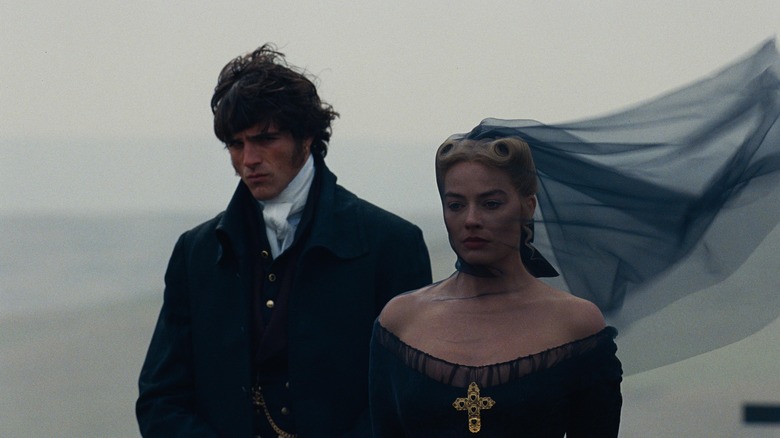
Set in a mountain cabin, an isolated survivalist confronts a mysterious calling from a dark force. Tormented and on the brink of giving up, a knock at the door keeps him alive.
As the winter storm intensifies and mysterious guests tempt his sanity, Herman must battle the darkness before it consumes him.
Writer-director Andrew Vogel makes his feature debut on the indie film.
Colin Ward (Mother’s Boys) stars in the title role alongside Lawson Greyson (V/H/S/Halloween), Soni Theresa Montgomery, and Alex James.
“This film has been an incredible journey, and I’m honored to have collaborated with so many talented and skilled artists,” said Vogel. “I am beyond thrilled that our independent film has found its home with S&R Films.”
“Herman is a bold and provocative debut that instantly stood out to us,” added S&R Films Managing Director Gato Scatena. “Andrew Vogel’s vision is both unnerving and deeply human, and we’re proud to partner with this extraordinary creative team to bring the film to audiences across North America.”
Suzann Toni Petrongolo & Andrew Vogel of VP Independent and Heliya Alam of LBM Pictures produce.

The post ‘Herman’ Trailer – Face the Darkness in Isolated Cabin Horror Next Month appeared first on Bloody Disgusting!.
A new season of “The Boulet Brothers’ Dragula: Titans” is underway, and the Boulet Brothers are enlisting some of their regular judges for a new holiday special arriving next month.
The Shudder Original Special The Boulet Brothers’ Holiday of Horrors will debut on December 16, 2025.
From Emmy-nominated television stars, producers, and directors The Boulet Brothers and David Dastmalchian (The Suicide Squad, Late Night with the Devil) comes a chilling holiday-themed horror special produced by Boulet Brothers’ Productions and Good Fiend Productions.
The holiday original features four original shorts, each written and directed by a different genre powerhouse: The Boulet Brothers, Dastmalchian, Akela Cooper (Malignant, M3GAN), and Kate Siegel (V/H/S/Beyond, The Haunting of Hill House).
The Boulet Brothers’ Holiday of Horrors anthology is said to blend “atmospheric horror, practical gore, and haunting holiday imagery into a new seasonal classic.”
The Boulet Brothers – Dracmorda and Swanthula – previously celebrated the holidays with a Halfway-to-Halloween special but are also huge fans of yuletide terror. The horror hosts previously shared their favorite holiday horror movies with Bloody Disgusting.
Check out fresh images from the new Holiday of Horrors special and look for it exclusively on Shudder next month.


The post ‘The Boulet Brothers’ Holiday of Horrors’ to Feature New Shorts from Kate Siegel, Akela Cooper, and David Dastmalchian appeared first on Bloody Disgusting!.
After kicking off the year with Heart Eyes, director Josh Ruben has found his next project.
Deadline reports that Ruben is attached to helm an adaptation of Matt Query and Harrison Query‘s horror novel Wilderness Reform for Paramount.
The plot centers on a wilderness camp for troubled teens that is plagued by mysterious events and disappearances, taking survival and discipline to a frightening extreme.
Ruben is overseeing a script draft by Steve Desmond & Michael Sherman (Knock at the Cabin).
Pet Sematary: Bloodlines writer-director Lindsey Beer will produce through her production company Lab Brew, which has a first-look deal with the studio, alongside Scott Glassgold through his 12:01 Films.
Published last year via Atria/Emily Bestler Books, the Wilderness Reform novel synopsis provides more insight into what we can expect from the feature:
“13-year-old Ben is sent to an isolated reform program for troubled teens by a juvenile court judge. But when he arrives at the camp, located on the edge of the vast wilderness of northwestern Montana, he immediately recognizes that there is something weird about the counselors. They’re too friendly and upbeat… yet Ben can tell there’s an undercurrent of menace.
“As he gets to know the boys in his cabin, he soon discovers that they each have far more going for them than whatever crime landed them there. And each has a different critical skill, one that could help them unearth what is really going on in this place—and how to make it out alive. They are inching ever closer to the truth, but the hidden evil beneath the camp’s surface will make itself known in order to deter them.”
Prior to Heart Eyes, Ruben helmed 2021’s Werewolves Within and 2020’s Scare Me, also writing and starring in the latter.

The post ‘Heart Eyes’ Director Josh Ruben to Helm ‘Wilderness Reform’ Horror Novel Adaptation appeared first on Bloody Disgusting!.
1985 was a hell of a year for Hong Kong cinema.
Classics like Heart of Dragon, My Lucky Stars, and Police Story were all released in the span of a few months, showcasing the multifaceted talents of stars Jackie Chan and Sammo Hung, and catapulting the long-time friends into stardom. All three films did big business at the box office, landing amongst the top five highest-grossing Hong Kong pictures of 1985, while also raking in critical praise both at home and internationally. The success of these movies was tremendous, but action wasn’t the only genre to win big that year.
Debuting a month before Police Story, Mr. Vampire garnered many of the accolades its contemporaries had received while also triggering a subsequent avalanche of sequels, spin-offs, and merchandising. An intoxicating blend of horror, comedy, and kung fu, the picture was also the introduction for many viewers abroad to the jiangshi, a terrifying undead creature found in Chinese folklore. While not the first cinematic portrayal of the monster, Mr. Vampire would play a huge part in creating an entire subgenre of Hong Kong horror centered on unibrowed Taoist priests (often played by veteran actor and stuntman Lam Ching-ying) battling hopping corpses dressed in the robes of a Qing dynasty-era mandarin. But while many of the movie’s spawn are entertaining in their own right, it’s the 1985 original that holds a special place in the hearts of many fans.

It follows Taoist priest, Master Kau (Ching-ying) and his two students Man-choi (Ricky Hui) and Chau-sang (Chin Siu-ho) who eke out a living exorcising evil spirits in Republican-era China (1912-1949). When asked by the wealthy Master Yam (Huang Ha) for assistance in the reburying of his father, Ren (Yuen Wah), the three jump at the potentially lucrative gig. However, after exhuming the corpse, Kau realizes that Yam’s father has transformed into a monster. They attempt to secure the beast, but it escapes and begins a rampage, infecting Choi in the process. While Kau tries to slow down his student’s transformation, Sang gets himself into some hot (and rather steamy) water with a seductive ghost named Jade (Pauline Wong). With both his pupils in danger and the deadly Ren still on the loose, Kau must save Choi and Sang while figuring out how to stop the hopping jiangshi before it can kill them all.
“The making of this film was a truly unforgettable experience,” recalled director Ricky Lau in an interview1 decades after the release of Mr. Vampire, and from the shadow that crosses his face as he says this, it sounds like the process was both a dream and a nightmare. Lau began his film career as a cinematographer for Sammo Hung, working on several of the filmmaker’s pictures throughout the early 80s. Looking for a new challenge, Lau approached his boss about the possibility of directing. Hung, who would go on to produce Mr. Vampire, agreed to give him a chance. Since horror was his favorite genre, Lau decided a fright flick would be the perfect arena for his first crack at the bat.
Several people, including Lau himself, would piece together what would become the script for Mr. Vampire (the tally of writers would eventually total three, with Barry Wong and Cheuk-Hon Szeto also contributing). For his part, much of what the director brought to the story was drawn from his childhood. Growing up, Lau’s uncle had been a Maoshan Taoist who had regaled him with many a spooky story drawn from China’s rich well of folklore. It’s from here that the idea of using the jiangshi as the film’s titular baddie was unearthed. However, the undead ghoul that would eventually appear in the film and the one we meet in the original lore are not identical.

“It has to be stressed that a jiangshi is not really a vampire, at least not in a sense that most people tend to understand the term,” writes Dr. Katarzyna Ancuta in her fantastic chapter2 featured in The Palgrave Handbook of the Vampire. She goes on to assert that the depictions we see of so-called “Chinese vampires” in various Hong Kong horror films are a westernized version of the jiangshi, a recontextualization of the creature through the lens of the classic European bloodsucker. In actuality, while they hold some similarities, they’re a different beast entirely.
First appearing in accounts as far back as the 12th century, the jiangshi can be found in several story collections charting the eerie and grotesque. In Pu Songling’s Strange Tales from a Chinese Studio (1766), we hear of a corpse reanimating and chasing a man through a village before getting its outstretched arms lodged into the trunk of a tree. A story in Yuan Mei’s anthology What the Master Would Not Discuss (1788) tells3 of a walking cadaver whose “face was withered and black like dried meat,” while another describes a monster with “unbearably foul” breath and hands that are “as cold and hard as iron.”
The 18th-century philosopher and writer Ji Yun also explored the jiangshi extensively in his work. He explains that they come in two varieties. The first category is weaker and consists of corpses that have come back to life due to proper burial rites not being followed. These are generally easier to dispatch. The second is far more destructive and terrifying. These “spastic” creatures have been reanimated by an outside source, such as a demonic spirit, and seek to drain those they encounter (often former friends and family) of their qi (their breath or essence). Yun describes them in chilling detail4: “While in the grave, their emotions have soured, their thoughts gone feral, and their rank bodies have fermented and stiffened into more monstrous possibilities.”
This consumption of lifeforce doesn’t appear across the board in depictions of the jiangshi in folklore, and in no accounts do we read of them hopping in the way we see their cinematic brethren do. What would eventually be presented in Mr. Vampire appears to be a coupling of Lau’s folk horror memories and characteristics that had been established five years earlier in Sammo Hung’s Encounters of the Spooky Kind (1980). From this marriage, many of the tropes we see today of the jiangshi – the hopping, the outstretched arms, their reliance on hearing over sight, and the era in which they dress – appear to have emerged.

Mr. Vampire’s production was a challenging one. Shot over the course of five months, it had run through its initial budget of HK$4.5 million halfway through filming, resulting in a sheepish Ricky Lau having to approach Sammo Hung for more money (the picture would eventually cost HK$8.5 million to make). It was filmed both on location in Taiwan and on one of production company Golden Harvest’s soundstages, and a strict 24-hour shooting schedule was followed. Cast and crew alike barely slept, navigating everything from set mishaps (there was a massive flood at one point) to constant retakes of stunts and fight scenes.
The latter in particular provided many issues for both Ricky Lau and actor Lam Ching-ying, who was doing double duty as co-choreographer of the film’s many combat scenes. In addition to the fact that minutes of an onscreen fight could take weeks on average to shoot, working with kung fu film staples like hanging wires and trampolines always presented challenges. Under no circumstances were either allowed to appear in a single finished frame of the film, so the crew would spray paint them to match the colors of whichever portion of the set they were in.

On top of the technical problems, there was the tremendous physical strain the actors were put through during production. Quite a toll was taken on their bodies, even for the most experienced martial artists. In an interview years later, Chin Siu-ho would speak of one shot where he would do a backflip off a platform several feet in the air. Asked to perform the stunt multiple times, he began to feel tremendous pain in one ankle with each subsequent landing, but kept this to himself. He chuckles now at the fact that they ended up using the first take of the stunt in the final product. He was treated well overall, maintains Siu-ho, but the standards for the movie were extremely high, and everyone was anxious to meet them.
Mr. Vampire made its Hong Kong premiere on November 2nd, 1985. During its initial midnight screenings, Ricky Lau was so anxious that he would hide in the lobby during the film’s first scenes and listen to how the audience would react. If laughter bubbled up through the theatre, he would breathe a sigh of relief, quietly slink in, and take a seat in the back row. “It was like a court verdict,” recalled Lau later. “Guilty or not guilty.”
The verdict in the end was guilty, and the sentence was dollar signs. Audiences loved the film, helping to make it the fifth highest-grossing Hong Kong movie at the domestic box office that year. At the 1985 Hong Kong Film Awards, it was nominated for no less than 11 awards, ultimately winning “Best Original Film Score.” Work began immediately on a follow-up, with Ricky Lau returning to the helm and Sammo Hung once again producing. Two more sequels were released, both featuring the same directing/producing partnership, and, for a time, a new Mr. Vampire film became a yearly occurrence.

“Jiangshi Mania” had officially arrived. In addition to the official Mr. Vampire sequels, there were countless spin-offs and lookalikes, all of which varied in quality and success. But as the public quickly learned, the now infamous monster could no longer be contained to the world of celluloid. Toys, board games, and other merchandise featuring the jiangshi began appearing on shelves both domestically and in countries like Japan and Taiwan. Phantom Fighter, a video game based on the first Mr. Vampire outing, was released for the Nintendo Famicom in 1988. This wouldn’t be the last the gaming world would see of the hopping vampire either, as the 1994 arcade classic Darkstalkers: The Night Warriors would introduce Hsien-Ko, a jiangshi with metal claws for hands. The character would reappear in several Capcom fighting games in the years to come.
Obviously, this explosion of success came as a wonderful surprise to the cast and crew who worked on the original Mr. Vampire. It’s not every day that something you create causes a pop culture phenomenon, after all, and there was no way they could have expected anything close to the reaction their picture was met with. But it’s a testament to what makes the film continue to play so well 40 years after its release. It’s an amalgamation of elements and tones that not only work deliciously together but also offer something for movie fans of any palate. What’s more, it executes these different styles beautifully, whether it’s slapstick comedy, bone-crunching kung fu, or heart-pounding horror.
However, it’s the jiangshi who captured the imaginations of so many audiences around the world; a piece of China’s past that has come to personify the Hong Kong horror genre for millions around the world.

 ︎︎︎︎
︎︎︎︎The post ‘Mr. Vampire’ at 40: Hong Kong’s Hopping Kung Fu Horror Comedy appeared first on Bloody Disgusting!.
The first project from Skydance’s new horror label Nocturna is They Will Kill You , starring Zazie Beetz (Joker, Wounds), and it has received its official MPA rating this week.
They Will Kill You has been rated “R” for “strong bloody violence, gore, language, and brief sexual content/nudity.“ The film will release in theaters on March 27, 2026.
The upcoming horror movie follows a woman who answers an ad to be a housekeeper in a mysterious New York City high-rise. The horror twist? “She doesn’t realize she is entering a community that has seen a number of disappearances over the years.”
Nocturna has yet to unveil a single image from They Will Kill You, but the film’s rating has us intrigued. Of course, the filmmaker behind this one has a strong background in splatstick style violence; his blood-soaked action comedy feature debut wasn’t afraid to get dark and ultra-violent.
Kirill Sokolov (Why Don’t You Just Die!) directs from a script co-written with Alex Litvak. The film also stars Myha’la (Bodies Bodies Bodies), Patricia Arquette, Heather Graham, and Tom Felton.
Nocturna is the new label from Andy Muschietti & Barbara Muschietti (It, It: Chapter Two).
Also look for Zazie Beetz in next year’s sci-fi comedy Good Luck, Have Fun, Don’t Die.
The post Zazie Beetz Horror Movie ‘They Will Kill You’ Rated R for Gore appeared first on Bloody Disgusting!.