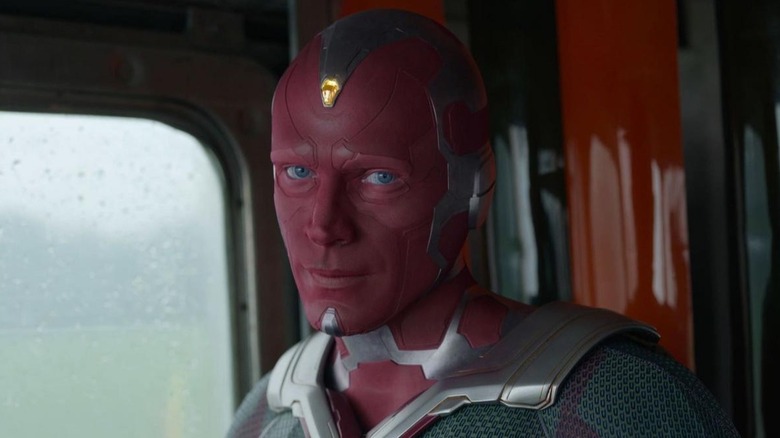
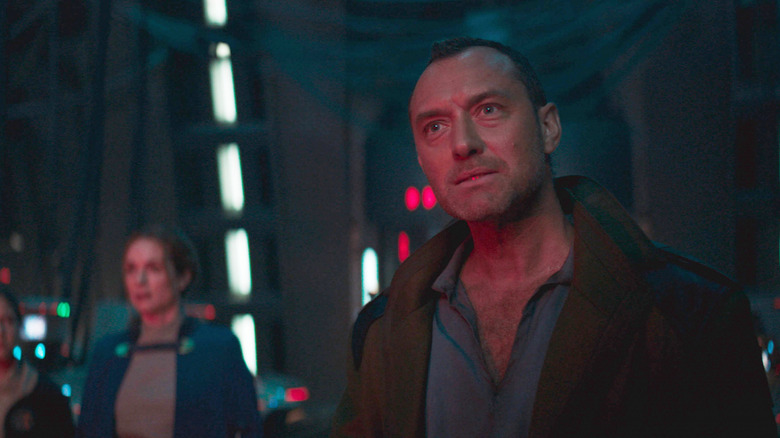
Jod (Jude Law) finally spills the (rather tragic) details about his backstory and ties to the Jedi in Star Wars: Skeleton Crew episode 8.
News of all things scary
Stories mutate over time, adapting to both storytellers and their audience in often unpredictable ways. This is precisely why folks will still flock to creature features about monsters they’ve seen a million times before, as it’s always fun to find out how filmmakers have managed to update the source material. And when it comes to classic monsters that have gone through cinematic makeovers, it’s hard to compete with the good-old vampire.
From foreign sex symbols to zombie-like hordes and even mindless bat-monsters, vampires have proven to be an oddly versatile creature for filmmakers of every disposition. And in honor of Robert Eggers’ Nosferatu remake revamping one of the most iconic depictions of blood-sucking ghouls in cinema history, we’ve decided to come up with a list celebrating six of the scariest vampire designs in horror!
As usual, this list is purely based on personal opinion, but be advised that we’ll be including vampires designs based solely on their individual scare-factor – not necessarily the quality of the movie they came from.
With that out of the way, don’t forget to comment below with your own vampiric favorites if you think we missed a particularly spooky design.
Now, onto the list…
6. The Reapers – Blade 2 (2002)

Guillermo del Toro has built a career out of reimagining classic monsters as both romantic and tragic icons, but it’s his second attempt at making vampires scary again that really stuck with me as a terrifying redesign. Depicted as vampire-hunting predators, the mutated Reapers look like the next step in Nosferatu evolution, with these artificial undead even being able to dislocate their jaws in order to better feed on their superhuman victims.
These innovative creatures clearly left a mark on Del Toro himself, with the filmmaker later repurposing many of the same ideas in The Strain, his multimedia collaboration with author Chuck Hogan. And while those vampires were also quite intimidating, I’ll always have a soft spot for the original Reapers.
5. Dwight Renfield – The Night Flier (1997)

I’m still not entirely sure if the made-for-TV Stephen King adaptation The Night Flier is a good movie in the traditional sense, but I still love the hell out of this weird experiment in aviation-related horror. Of course, Michael H. Moss’ Dwight Renfield is the real star of the show here, with his vampiric true form being much more interesting than the movie surrounding it.
Looking more like a demonic bat than most of the other entries on this list, the inhuman version of the titular Night Flier was responsible for quite a few nightmares back in the late ’90s (especially among the younger crowd that managed to catch the flick on late-night TV). Sure, the oversized prosthetic head and Bela Lugosi cape make Dwight look a little silly in from some angles, but I still think his overall design is genuinely frightening.
4. Shark-Toothed Vampires – Fright Night (1985)

An over-the-top horror-comedy about a horror-loving teenager battling against his vampiric neighbor, you’d be forgiven for expecting Fright Night to feature run-of-the-mill “draculas.” And yet, this ’80s classic happens to feature some of the most disturbing vampiric makeup in the history of film, with makeup supervisor Steve Johnson wanting these vampires to look more like ravenous sharks than mere bats.
Not only do the predatory teeth look intimidating, but the ripped jawline and ravenous snarl make their bite look pained, which is why I can’t help but include this design on the list. And while I certainly enjoy the 2011 remake, its digital transformations can’t hold a candle to the original.
3. Javier Botet’s Dracula – The Last Voyage of the Demeter (2023)

I understand why this standalone horror yarn is almost always truncated or even omitted entirely from most Dracula adaptations, but I’ve always thought that the The Captain’s Log was hands-down the most terrifying portion of Bram Stoker’s horrific opus.
That’s why it’s not surprising that the only feature-length adaptation of this part of the novel features one of the scariest depictions of Dracula in decades, with the predatory Count looking and acting a lot more like a purely demonic force of evil than a seductive foreigner. Not only do I adore the were-bat approach to his biology, but I also appreciate how Javier Botet managed to incorporate a certain sense of dark humor into his underrated performance.
2. The Original Count Orlok – Nosferatu (1922)

Over a century of remakes, memes and even watered-down cartoon cameos can’t quite overshadow the genuine terror evoked by Albin Grau and F.W. Murnau’s reimagining of Dracula. While the bald-cap and rat-like teeth may seem a little silly by modern horror standards, the demon’s elongated fingers and inhuman demeanor soon make it clear why it was once rumored that actor Max Schreck was secretly a real vampire in disguise.
Naturally, the degraded film stock and expressionist lighting do a lot of the heavy lifting here, with the dark ambience adding to the feeling that you’re watching a legitimately cursed film, but I believe the original Count Orlok boasts the only vampiric design that looks genuinely demonic. Don’t believe me? Check out this candid behind-the-scenes photograph from 1922.
1. Marlow’s Tribe – 30 Days of Night (2007)

We’ve seen hordes of hungry vampires before in films like The Omega Man and even Stake Land, but sheer numbers aren’t enough to make a group of blood-suckers scary. Thankfully, David Slade and his production team had an ace up their sleeve as 30 Days of Night benefited from some visually gnarly source material that depicted the northern tribes of Nosferatu more like prehistoric fiends.
While the cinematic vampires aren’t quite as scary as their comic-book counterparts (I mean, how can you compete with Ben Templesmith’s eerie artwork?), their shark-like eyes and inhuman jaws make these some of my favorite vampires in film.
The post Fanged Fury: 6 of the Scariest Vampire Designs in Horror Movies appeared first on Bloody Disgusting!.
You can fall in love with Terrifier 3 again on February 14 when Damien Leone‘s record-breaking slasher classic streams on SCREAMBOX, Cineverse’s streaming service for horror fans.
The streaming release of Terrifier 3 – distributed by Cineverse and its horror division, Bloody Disgusting – will include a new stunt “Terrify Your Heart: Art’s Bloody Valentines”.
In addition, on March 14 you can also stream ART ATTACK! The Dissection of Terrifier 3 – a new behind-the-scenes documentary feature offering fans an insider’s look into the making of Terrifier 3, which will debut on SCREAMBOX. An exclusive sneak peek of the feature aired during Terrifier 3’s return to theaters for a limited run during Christmas week.
After surviving Art the Clown’s Halloween massacre, Sienna and her brother are struggling to rebuild their shattered lives. As the holiday season approaches, they try to embrace the Christmas spirit and leave the horrors of the past behind. But just when they think they’re safe, Art the Clown returns, determined to turn their holiday cheer into a new nightmare. The festive season quickly unravels as Art unleashes his twisted brand of terror, proving that no holiday is safe.
Produced by Phil Falcone and written and directed by Damien Leone, Terrifier 3 stars David Howard Thornton, Lauren Lavera, Elliott Fullam, Samantha Scaffidi, Antonella Rose, Margaret Anne Florence, Bryce Johnson, Alexa Blair, Mason Mecartea, Krsy Fox, Clint Howard, Jon Abrahams with Chris Jericho, Daniel Roebuck, and Jason Patric.
Terrifier 3 wrapped 2024 with unprecedented success, grossing nearly $55 million at the U.S. box office and topping key EST/VOD charts. In addition to its strong theatrical run, the slasher masterpiece has performed well on home entertainment, debuting at No. 1 in Fandango’s rankings and getting as high as No. 2 with Microsoft and No. 3 on iTunes. The new release on physical media includes formats such as DVD, Blu-ray, 4K UHD + Blu-ray and 4K UHD + Blu-ray SteelBook and has quickly become a collector’s item.
Terrifier 2, the second film in the Terrifier franchise, also continues to be a hit on SCREAMBOX, ranking as the platform’s most-watched film in 2024.
“It’s no surprise that Terrifier 3 fans have come out to support this franchise at every turn,” said Cineverse Chief Content Officer Yolanda Macias. “Big and small screens alike are vibrant showcases for director Damien Leone’s creativity and vision. Wherever you watch, Art the Clown is literally terrifying.
“As of Feb. 14, audiences can immerse themselves in his world whenever they want on SCREAMBOX.”

The post ‘Terrifier 3’ – Fall in Love All Over Again on SCREAMBOX This Valentine’s Day! appeared first on Bloody Disgusting!.
Writer/Director Leigh Whannell’s Wolf Man, like 2020’s The Invisible Man, bears little resemblance to the Universal Monsters movie upon which it’s loosely based. Though it similarly centers on a man who returns to his ancestral home only to find himself grappling with a bizarre affliction after an equally strange animal attack, an inciting scene set in a rental truck bearing the name of Universal’s legendary makeup artist Jack Pierce and the year 1941, The Wolf Man‘s release year, serves as an early torch-passing signal not to expect a retread here.
Instead, Leigh Whannell reinterprets the horror classic from a modern lens, decimating all of the cinematic werewolf rules in the process. That alone makes Whannell’s interpretation of the Wolf Man mythos an ambitious yet polarizing effort.
The reluctant Wolf Man in this story is Blake (Christopher Abbott, Poor Things), introduced as a doting stay-at-home dad to young Ginger (Matlida Firth) despite a rather traumatic upbringing thanks to a strict, militant father (Sam Jaeger). So much so that Blake became estranged from his dad and had long come to terms with his death when dad suddenly went missing from his isolated Pacific Northwest home. When news arrives that Blake has inherited his father’s assets, it offers the perfect excuse to get out of the city with Ginger and his career-focused wife Charlotte (Julia Garner, Apartment 7A) in the hopes of smoothing out the mounting tension in his marriage.
Instead, the small family unit finds themselves fighting for their lives when a mysterious threat attacks.

(from left) Charlotte (Julia Garner), Blake (Christopher Abbott) and Ginger (Matilda Firth) in Wolf Man, directed by Leigh Whannell.
There’s a clean, straightforward symmetry to Wolf Man‘s narrative structure. The stunning but inhospitable stretch of rural Oregon wilderness introduced in the intense opening sequence bookends the story, introducing Blake’s deep-seated father issues and the course correction it prompted in Blake when nurturing his relationship with his own precocious child. Add in Charlotte’s complicated feelings over her struggle to balance her career and parenthood, and it becomes clear this is a family in turmoil before the horror arrives.
Yet, what, exactly, Wolf Man wants to say on generational trauma isn’t quite as clear because the family trio is plunged into an intense survive-the-night siege that leaves very little room for character arcs to breathe or develop. Garner’s Charlotte is given admirable room to prove her mettle as an adaptive survivalist, but less satisfying is her emotional arc as a mom and wife; there’s simply not much time in this sparse story to adequately bridge her early trepidations and jealousy to where the story leaves her.
It’s slightly less clunky when it comes to Abbott’s Blake, who bears more in common with The Fly‘s Seth Brundle than Lawrence Talbot. But whereas Seth found his body undergoing horrifying mutations over a period of time, poor Blake is rapidly changing over the course of one night. That’s the first overt sign that Whannell is scrapping all the lore as we know it; the entire movie is the transformation instead of a single quick sequence. Whannell finds inventive ways to interpret this, immersing viewers in Blake’s plight by letting us see through his changing eyes in some instances. There is also no shortage of grotesque body horror moments as Blake fights to maintain control of his faculties and doesn’t always win.
Christopher Abbott commits to the physical demands of this kind of insanity, including crawling on all fours or gnawing at an injured arm, without ever losing focus on Blake’s core humanity. It helps, even as Blake’s strange affliction and its gruesome nature feel far too perfunctory for a story about a family ultimately trying to cope with an inexplicable, life-altering illness.

Ginger (Matilda Firth, right) in Wolf Man, directed by Leigh Whannell.
Whannell’s bid to ground Wolf Man thoroughly in realism, right down to a creature design that evokes a diseased cryptid more than, well, a wolf man, creates a conflicting duality. Like Larry Talbot at odds with his encroaching primal beast, both halves seeking dominant control over his body, Whannell’s Wolf Man is a film at odds with itself. The sudden onslaught of a serious illness, one that rapidly ravages and metastasizes Blake’s body, effectively captures how violently time can be ripped away from families. Yet it becomes too rushed in setting this allegory over a single night when the family is also preoccupied by ongoing threats and obstacles. Whannell finds ways to mine suspense from an abandoned rural homestead, though not all of it effectively; a cat-and-mouse sequence in a barn is so underlit it’s tough to make out what’s happening on screen.
It yields a film that’s both thematically dense yet narratively stretched thin, with its sparse storytelling making it easy to dwell on the foreshadowing and predict obvious outcomes. Whannell is a talented filmmaker with bold ideas, but his Wolf Man is stretched far too thin for its many lofty ideas to the point where it lacks a firm identity. The filmmaker dismantles the lore and delivers a bold new take on the werewolf, smartly refusing to explain its rules, but it’s so wrapped up in its underserved characters and subtext that it forgets to be scary.
Wolf Man releases in theaters on January 17, 2025.

The post ‘Wolf Man’ Review – Leigh Whannell Dismantles Werewolf Lore with Ambitious Body Horror appeared first on Bloody Disgusting!.
Can you believe it’s been 35 years since a Gremlins movie rampaged up on the big screen? That movie was of course Joe Dante’s bonkers 1990 sequel to the 1984 classic, with the franchise more recently returning to life with two seasons of an animated prequel series: “Gremlins: Secrets of the Mogwai” in 2022 and follow-up “Gremlins: The Wild Batch” last year.
But is the animated series setting the stage for a return of the Gremlins to live action? According to a new article from Deadline today that takes an expansive look at Warner Bros. Motion Picture Group’s near future plans, a new Gremlins movie may indeed be coming soon.
Deadline’s report details, “Franchise hopes abound down the road in Lord of the Rings The Hunt for Gollum, Practical Magic 2, DC’s Clayface and Supergirl, Drew Goddard’s incoming script for a new Matrix, a new Gremlins from Christopher Columbus and a Goonies treatment.”
Christopher Columbus was of course the writer of the original Steven Spielberg-produced Gremlins, so it’s very exciting to hear that Columbus is back on board with the franchise. It was Columbus who not only wrote the Joe Dante-directed horror classic but also conceived the idea in the first place, which garnered the interest of Spielberg. The rest is pop culture history.
Six years after the release of Gremlins, Joe Dante brought the franchise to New York City with Gremlins 2 : The New Batch in 1990, which Key & Peele hilariously (and lovingly) lampooned in one of the show’s all-time great sketches. I bring this up because it’s the perfect encapsulation of everything that’s so great about Gremlins 2, a go-for-broke sequel in every sense.
And yes, all of that is in the actual movie.
But back to the topic at hand! Talk of a third Gremlins movie has come and gone several times over the years, and you can read all about that lengthy history over on the franchise’s official Wikipedia page. But we had first heard about a new script written by Columbus back in 2017, with that iteration of the script described as being both “twisted” and “dark.”
“I’m really proud of the script,” Columbus said in 2017. “It is as twisted and dark as anything, so we’ll see. It’s always a budgetary conversation when we’re going to shoot it. I wanted to go back to the really twisted sensibility of the first movie. I found that was a very easy place for me to fall back into and start writing again so hopefully we’ll see that movie soon.”
Stay tuned for more on the future of the Gremlins saga.

The post WB and Christopher Columbus Reportedly Planning New ‘Gremlins’ Movie appeared first on Bloody Disgusting!.
The movie Virus did not officially scuttle across screens until 1999, but its biomechanical horrors first sprang to life a bit earlier. The road to screen adaptation was not straightforward for Navy SEAL turned writer Chuck Pfarrer; he first pitched his high concept to Universal Pictures, only to then have it land at Dark Horse Comics. Upon the series’ success, Pfarrer tried his luck again with Universal. This time, though, producer Gale Ann Hurd was there to help get Virus optioned as well as find a potential director.
It was in 1995 that Universal first approached John Bruno about helming Virus. Initially, the visual effects artist was hesitant about directing a feature, and Pfarrer’s screenplay was a major factor in that uncertainty; he found it to be too dense and complicated for his liking. Yet after a talk with colleague and friend James Cameron, Bruno eventually accepted the offer, providing that he could make changes to the story. Bruno and Species franchise scribe Dennis Feldman revised the script together, which led to their changing the nationality of the haunted ship from Chinese to Russian, making the computer virus into an electricity-based entity from space, and generally adapting the original comic rather than Pfarrer’s newer treatment.
Spread across four issues, Dark Horse’s Virus (1992) follows the crew of the Electra as they first survive a Pacific typhoon, then battle the monsters lurking inside of a hulking and seemingly empty Chinese seacraft. Similarly, the movie has the diverse crew of the Sea Star, a dwindling tugboat captained by Donald Sutherland’s Everton, discovering the Vladislav Volkov and the biomechanoids aboard that, like their comic equivalents, cannot be allowed to escape via transmission. And helping Jamie Lee Curtis and William Baldwin’s characters evade death is now Joanna Pacula’s Nadia, the sole Russian survivor.

Image: A page from the Virus comic series, written by Chuck Pfarrer and illustrated by Howard Cobb.
The discrepancies between the cinematic adaptation and its source material are noticeable yet also nothing outrageous. Character names have largely been changed, with the exceptions of Foster (Curtis) and Richie (Sherman Augustus), but it is clear who everyone else is channeling, based on his or her function in the story. Leading man Steve Baker (Baldwin) is an approximation of his more macho parallel, Averil, and Apia is switched out with a deckhand named Hiko (Cliff Curtis). Pacula’s Nadia fills in for Mallone, the only other female character from the comic, and Sutherland’s Captain Everton endures that same horrific transformation in store for Captain Powell.
Naturally, the Virus comic plays out like a movie, given its beginnings and Pfarrer’s original intentions, however, the comic’s breakneck pacing does not leave room for anything besides constant emergency situations and adrenaline-fueled action. In addition, the scant downtimes have the characters barely pondering the origin or purpose of their adversaries. In the movie, though, a straight answer for the aliens’ arrival is given; they are, like the Sea Star crew, here to salvage. In their case, for spare body parts after deeming humans nothing more than a virus. While that bit of information might have been best inferred, moviegoers can appreciate the clarification.
Virus is dismissed as just another helping of streamlined genre fare, but in its defense, the movie attempted to add a shred of meat to a barebones plot. Reading the comic series helps make that distinction clearer. Nevertheless, for a more full-clad experience of the same story, S. D. Perry’s novelization does the job and then some.
Bruno expressed his approval in the tie-in book’s foreword: “The film was completed by the time I read the final novelization of Virus. I was ecstatic. Here was the story as I had always imagined it. Through all the various drafts of the screenplays. A seafaring tale with all the ideas (all the best ideas) completed as a continuous story, right there on the page. I could take my time to savor the moments. Taste them. I could spend time with Foster, Steve, or the Captain at my own pace. […] That is why I’m so happy with the way [Stephani] Danelle Perry finished the story, expanding on the original idea. Filling in the gaps. She made it her own. The way I hoped it would be.”

Image: The Virus novelization by S. D. Perry.
The Tor Books-published novelization was released in August of 1998 to coincide with the movie’s slated summer premiere. However, plans changed, and Virus was pushed to October before finally ending up in January of ‘99. The delay could have been owed to the fact that Curtis’ more highly anticipated horror pic, Halloween H20: 20 Years Later, was scheduled a week before Virus’ original opening date. And maybe bad buzz, following the first postponement, led to the ultimate destination of January a.k.a. a dumping ground month. Not everyone puts stock in the dump-months theory, but Virus’ glut of negative reviews — Roger Ebert compared the movie to the equally disliked Deep Rising, and Variety’s Joe Leydon called it “derivative” — only reinforce the notion.
Despite the movie’s bad press, S. D. Perry’s literary companion is an enjoyable read that, in part, surpasses its celluloid counterpart. That part in question, of course, pertains to those characters who came across as one-dimensional and underdeveloped on screen. As an alternative, Perry makes the cast more engaging. The story unfolds near exactly the same as it does in Bruno’s version, although now there is bonus insight into the Sea Star’s motley crew as they fend off the metallic menace.
What Bruno and Feldman had originally planned for Foster and her shipmates, in terms of characterization and background, was rescued from the cutting room floor and restored in the novelization. Perry conjured up a proper — not to mention dread inducing — journey before ever revealing the biomechanoids. In the meantime, the author probed the interiors of each Sea Star crewmember, exposing their flaws and innermost thoughts. Most everyone in this mixed lot is as testy and discontent as their screen variants, but now the source of that restlessness is transparent.

Image: The cast of Virus includes William Baldwin, Cliff Curtis, Sherman Augustus, Joanna Pacula and Jamie Lee Curtis.
The literary depiction of Foster, the ostensible protagonist of Virus, is hoping to forge her own path after only being known as an admiral’s daughter. Or as Richie likes to call her, a “rich bitch.” Truth be told, the Sea Star’s navigator resents her privileged upbringing as much as those around her, and that bitterness comes out during Foster’s flagrant defiance of authority. Particularly when she and Captain Everton butt heads over the chain of command. Then there is Everton who is, without question, an aggravating, sexist and conniving fellow, but he is both haunted and deadened by a failed marriage. The reminder of his unfaithful ex-wife is with him every day; she christened the Sea Star, and he never bothered to change the name.
Surprisingly, the character who Perry expounded on the most was Hiko Alailima. This extensive detailing resulted in a decent sum of Maori culture and family history. And based on the sizable spotlight she gave Hiko, it is possible that the author was trying to avoid the “noble savage” problem that often occurs with characters like Apia, Hiko’s analogous character in the comic. Also of note is how Hiko’s fate changed in the novelization; unlike in the movie, he survives along with Foster and Baker. This outcome was, presumably, due to Perry adapting a prior version of the screenplay, one proceeding the “jump scare” pick-up that later became the movie’s official ending.
Richie is another supporting character who receives more substantial attention in the novelization. On top of his unambiguous affinity for marijuana, Richie’s crucial change of heart happens more organically as well as affectingly in the book. As Richie hears Foster and Nadia’s screams of terror in the distance, he stops in his tracks to question his selfish actions; he reflects on that strange feeling of guilt stirring inside of him. Perry was wise to then articulate this sudden inner conflict: “He hadn’t needed [Foster and Nadia], that was for certain. But maybe they had needed him; maybe if he had stayed with them, they wouldn’t be screaming right now.” That internal dialogue adds just the right amount of weight to Richie’s typically off-putting character and makes his ultimate sacrifice all the more emotional.

Image: Donald Sutherland’s Virus character Captain Everton meets with the enemy.
Overall, the Virus novelization better portrays the ragtag quality of the Sea Star gang. This is an ensemble of misfits and lost souls who could not cut it in normal life anymore. Foster was habitually noncompliant, Richie’s substance affection got him booted from the Navy, Hiko never quite recovered from the loss of his parents, and Baker is commitment phobic. By airing everyone’s dirty laundry, though, Perry makes this cast of characters more accessible. The simple thrills of the humans’ clashes with the biomechanoids are undeniable, however, now there is more reason to root for them.
The major draw of Virus, in any form, is its collection of cybernetic creatures. The novelization’s own brand of nightmare fuel exists in potent spurts; Perry was morbid with each hazardous encounter. For instance, the lumbering eyesore that Richie and helmsman Woods (Marshall Bell on screen) spot early on is described as “alive, but it was only part human. The rest was metal and wire, cords and circuits set into flesh that was starting to decay. It was a man, half of his skull cleanly removed, the exposed brain glistening. Wires extended out from the gelatinous mass and twisted behind the creature. […] Cracked, dripping flesh hung from the skeletal fingers.” With vivid descriptions like that, it is easier to imagine those unnatural horrors within the Volkov.
Perry’s aptitude for gory details aside, Bruno’s movie remains the clear champion when it comes to manifesting the monsters. That menagerie of frankensteined mechani-freaks on display is touted as the flick’s one redeeming aspect — even the most disparaging critic could not help but be in awe of Steve Johnson and XFX’s craftsmanship. And not to be forgotten, Mayling Cheng’s immersive and impeccable production design also, and rightfully, comes up in the movie’s reappraisals. Without Cheng’s efforts, that solid mix of practical and digital artistry, one that elevates Virus a notch or two on the scale of sheer entertainment, would have a less atmospheric place to unfold.
Universal invested a sizable chunk of time and money into Virus, even going so far as providing it the sort of ancillary merchandise usually reserved for blockbusters. This included, on top of the novelization, a Europe-only video game and a line of toys. Needless to say, the movie underperformed, and it was ripped to shreds by audiences, critics, and later its own headliner. Jamie Lee Curtis has since said Virus is the “unbelievably bad movie” that she whips out whenever actors compare their worst-ever projects. So, indeed, there are shortcomings; from the writing to the characters, they are ever-present. Appreciators of horror and sci-fi pulp, however, can still admire the loud and flashy delivery, the array of special effects, and perhaps most of all, unique creature designs that have only gotten creepier with time.

Image: Jamie Lee Curtis’ Virus character Foster tries to escape Goliath.
The post ‘Virus’ – Revisiting the Comic, the Novel, and the Movie Jamie Lee Curtis Calls “Unbelievably Bad” appeared first on Bloody Disgusting!.