August 2024

‘The Primevals’ Review – Long Unfinished Stop Motion Movie Finally Releases 45 Years Later

In a time where CGI and other digital technology reign as the kings of cinema special effects, Full Moon Features has released a film with old school SFX and a production timeline nearly half a century-long, spanning from conceptualization to release, with The Primevals.

And this timeline length is no exaggeration. The road to this film’s release began with plot elements used in the 1968 short film Raiders of the Stone Ring by writer-director David Allen (Puppet Master II and The Howling) that evolved into a full-length film script by 1975 and then produced by Charles Band in 1978. Alas, pre-production saw some funding issues surface that postponed the project until filming commenced again in 1994, before finally being completed and released in 2023.

After learning of the existence of Yeti when one is killed in Nepal, Dr. Claire Collier (Juliet Mills) and her student Matt Connor (Richard Joseph Paul) head to the Himalayas to investigate its origin. After forming a team-up with a veteran tracker Rondo Montana (Leon Russom), researcher Kathleen Reidel (Walker Brandt), and local Nepali Siku (Tai Thai), they avalanche-slide into a place where Yetis aren’t the most unusual thing they’ll find.

They discover a hidden world with Cha-Ka from Land of the Lost-looking primates and a governing reptilian-esque race of aliens. And not just any aliens, but “ancient” aliens! That’s right, Allen and company were WAY ahead of their time since this was written way before the Ancient Aliens show and its popularity got anywhere near to becoming a thing.

Known for his SFX talents due to his admiration for legendary stop-motion animator Ray Harryhausen (Clash of the Titans and the classic Jason and the Argonauts), Allen developed an ambitious script that lies deep in a sea of creativity with a heavy emphasis on being a special effects-heavy showcase. Which should not be surprising considering that the script was co-written by fellow effects artist Randall William Cook (Lord of the Rings trilogy and The Gate). By the time the project was resumed in the ’90s, CGI was all the rage and far from the Harryhausen-inspired effects Allen had in mind when the film’s idea was originally conceived. Allen then saw a new vision for his film—prove that stop-motion animation can still have a place in the new era of CGI.

Budget and using stop-motion effects took a backseat to health problems, when he was diagnosed with cancer. Even through bouts of chemotherapy treatment through the years, Allen’s dedication to completing his project did not waver as he still worked on the film’s effects. Let that last sentence hold water with you readers—never let anything hold you back from trying to reach your goals. Unfortunately in this case, Allen did not live to see his project finished as he sadly passed away in 1999. But in 2018, Chris Endicott (Spider-Man: Homecoming, Deadpool), an animator who previously worked on The Primevals, went on a mission to finish Allen’s project with Charles Band and Full Moon.

Now you’ve just heard a pretty in-depth and inspirational backstory on The Primevals, but how is the actual film? It’s definitely not the best film you will watch all year, but what do you expect? Expository dialogue should be considered a main character because you’ll hear it a lot, and Mills is mainly the head coach calling all the plays. She and the characters overly explain everything to us seemingly all the time. When you have a complex plot and lack of funding to properly and clearly project things on screen in order to move a film along, that needs and is going to happen. Another drawback is that the film feels incomplete because based on what you just read above, it pretty much is. Again, most of this should be expected yet should also be noted.

But let’s talk about the positives now, besides the miraculous circumstances for this film being finished in just enough shape to see the light of day. First and foremost, the stop-motion effects are on-point and are going to hit the nostalgic feels for those of you who loved old school effects from King Kong and films with effects from an older time. You don’t get a ton of them, but the ones you do get are homeruns. The scenery is also beautiful, with production done in Romania and Italy. Another good thing is that the script goes against the grain by abandoning the usual cinematic plot point norms. Some examples are a seemingly obvious love story between Matt and Kathleen that does not develop or is even explored and an out-of-nowhere death of a major character in a family-friendly affair like this one.

The acting is passable too, especially Mills. Our other lead Richard Joseph Paul is a good actor, but he always looks so angry, no matter what role he is playing. In Under the Boardwalk (1989) he looks mad, in Nerds II (1987) he looks upset, in Vampirella (1996) he looks disgruntled. In this film, he acts way pissed too. It could be argued that his character Matt had his PhD thesis supporting Yeti existence previously rejected by Claire, only for him to be proven right by her once the dead one pops up, thus causing him to be bitter. But Claire instantly chooses him to go with her on this once-in-a-lifetime expedition as an extreme make good for her not believing his theory in the first place, yet Matt seems mad as hell throughout the entire film—even in the sad and dramatic scenes. He’s always yelling and damn near growling with every spoken line like he’s cutting an in-ring promo during an episode of WWE Raw.

If you decide to watch The Primevals, you should keep your expectations at bay going in and you’ll be fine. Considering its unique backstory, this should be viewed as a tribute to a talented, dedicated filmmaker and the realization of his passion project. It is such a feel-good story overall that it even inspired Endicott to finish the project for his former mentor Allen.

Its story also inspired fans to donate towards funding the project’s completion through Full Moon’s crowdfunding campaign. All these years later, they’ve helped it finally see the light of day.

3 skulls out of 5

The Primevals is available to watch now on Amazon Prime or can be purchased at the Full Moon Features website.

The post ‘The Primevals’ Review – Long Unfinished Stop Motion Movie Finally Releases 45 Years Later appeared first on Bloody Disgusting!.

‘Screamboat’ Teaser Trailer – David Howard Thornton Is a Killer Steamboat Willie!

The short film that introduced Mickey Mouse to the world, 1928’s Steamboat Willie entered the public domain this year, and the upcoming Screamboat turns the tale into a nightmare.

From the production teams behind Terrifier 2 and The Mean OneScreamboat is coming to theaters in 2025 via Iconic Events Releasing, with Terrifier, Terrifier 2 and Terrifier 3 star David Howard Thornton (“Art the Clown”) playing the film’s twisted version of Steamboat Willie. Indiewire debuted the official teaser trailer today. You can check it out below.

Director Steven LaMorte tells the outlet that the film’s version of Steamboat Willie is “a 100 percent in-camera practical creature,” with both a puppet and a costume being used.

In Screamboat, “A mischievous mouse stalks a group of New Yorkers on a late night ferry ride, unleashing murderous mayhem on a relaxing commute. Can the ship’s motley crew of travelers find a way to stop a killer creature who has developed a taste for tourists?”

Screamboat will feature a mix of practical creature effects, miniatures, and cutting edge virtual production to showcase its very mischievous monster slashing his way through a ferry of fear.”

The cast also includes Allison Pittel (“Stream”), Amy Schumacher (“The Mean One”), Jesse Posey (“Teen Wolf”), Jesse Kove (“Cobra Kai”), Rumi C Jean-Louis (“Hightown”) as well as Jarlath Conroy (Romero’s “Day of the Dead”) and Charles Edwin Powell (“The Exorcist III”).

A number of spectacular artists have joined the project, eager to bring LaMorte’s twisted version of Steamboat Willie to life. Christian Beckman‘s Quantum Creation FX, Inc. (The Last Voyage of the Demeter, The Book of Boba Fett) is creating the creature from designs by concept artist Christian Cordella (Avatar: The Way of Water, Spider-Man: No Way Home).

Produced by Amy Schumacher, Martine Melloul, and Steven LaMorte (the team behind The Mean One) in collaboration with horror heavyweights Steven Della Salla and Michael Leavy (Terrifier 2Terrifer 3, Stream), the film promises a hilariously horrific twist on Disney’s beloved mascot. Production is set to begin in Spring of 2024.

The post ‘Screamboat’ Teaser Trailer – David Howard Thornton Is a Killer Steamboat Willie! appeared first on Bloody Disgusting!.
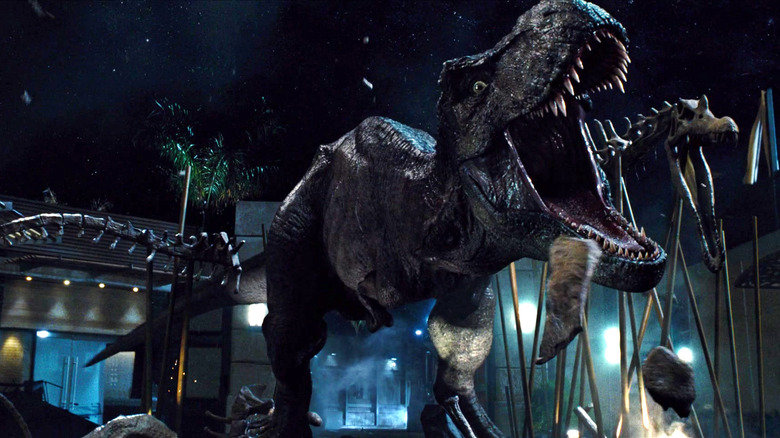
Jurassic World Rebirth Needs To Rescue The Franchise From Itself

Jurassic World Rebirth sounds like it could be a return to form, which is precisely what this dino franchise eneds.

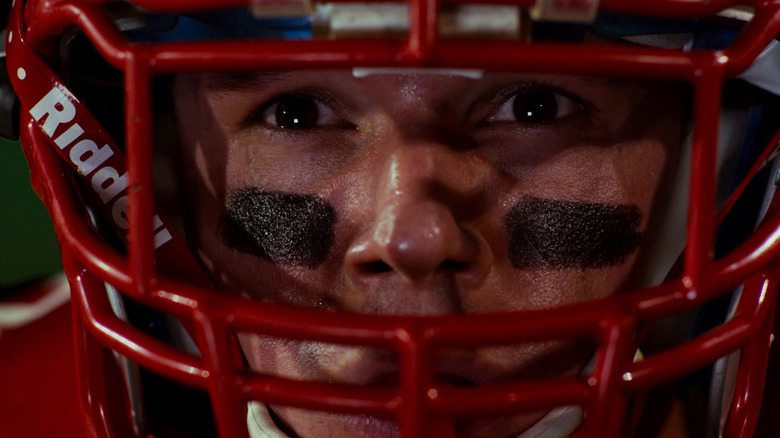
A 2014 Sports Drama Based On A Real-Life Story Is Climbing Netflix’s Top Charts

A decade after it was mostly ignored in theaters, a true story sports drama from 2014 has somehow found its way into Netflix’s top charts.

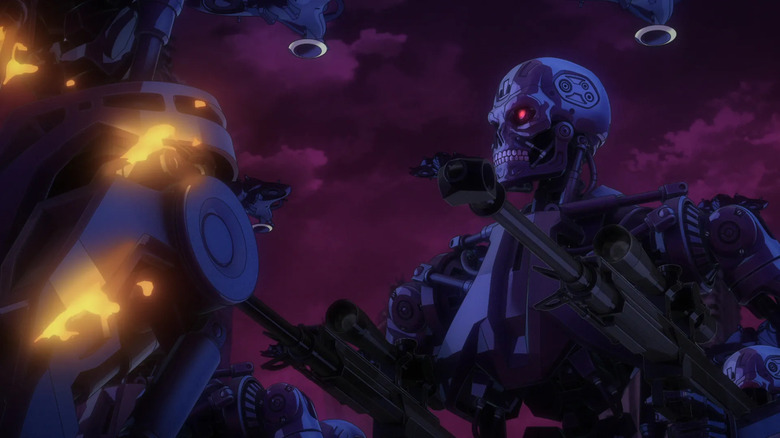
Terminator Zero’s Period Setting Somehow Makes The Anime Even More Terrifying

The new Netflix anime series Terminator Zero is largely set in 1997, but despite its period setting, the show taps into extremely modern fears.

Deadpool & Wolverine Photo Reveals How Chris Hemsworth’s Thor Cameo Was Really Shot

Thor actor Chris Hemsworth didn’t even know about his cameo in Deadpool & Wolverine, because he filmed it over a decade ago.

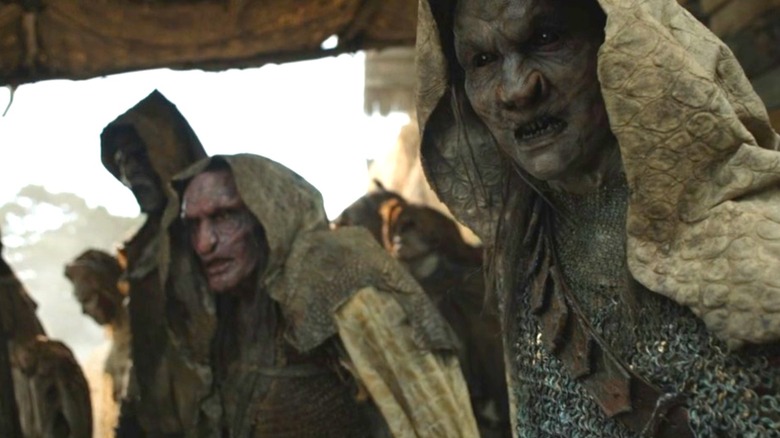
The Orc Baby In The Lord Of The Rings: The Rings Of Power Season 2, Explained

In the third episode of The Lord of the Rings: The Rings of Power season 2, we get our first look at an orc baby. Here’s what the Tolkien texts say about that.

Nothing Can Stop ‘Them!’ – Atom Bombs and Giant Ants at 70

The horror films of the 1950s are often relegated to two categories: space invaders and giant bugs. There is some truth in that generalization, but the reality is far more subtle with deep ties to the past along with the political climate of the decade itself. Both these categories can trace their lineage, at least in American film, back to two quintessential classics of the genre—Dracula and Frankenstein, but removed from spooky castles and unspecified European locales and placed squarely in the suburbs and cities of Cold War era America. Like Dracula, the alien invasion film examines the fear of “the other.” The so-called giant bug movies are really “science gone awry” movies and Frankenstein has been the template and ultimate expression of that idea since its publication in 1818. By the 1950s, the great scientific fear was nuclear power, specifically in the form of the atomic bomb and the radioactive fallout left it its wake. Them! remains one of the best and most enduring expressions of those fears. 

Them! began as a short story by George Worthing Yates about giant irradiated ants in New York’s subway tunnels before finding its way to producer Ted Sherdeman, who sold it to Warner Brothers. According to David J. Skal’s book Screams of Reason: Mad Science and Modern Culture, news of the bombing of Hiroshima made Sherdeman, who had served under General Douglas MacArthur during World War II,  physically ill, causing him to throw up in reaction. The original Yates script was deemed unfilmable due to budget considerations and Sherdeman transplanted the story to the New Mexico desert and the storm drain system beneath Los Angeles. Sherdeman’s screenplay was approved and handed over to director Gordon Douglas and producer David Weisbart with an intention to film it in 3-D and color, but by the time Them! went before the cameras, it was scaled back to 2-D black and white. Douglas described the original look of the giant ants to Skal saying, “I put green and red soap bubbles in their eyes[…]The ants were purple, slimy things. Their bodies were wet down with Vaseline. They scared the bejeezus out of you.” 

Though the change to black and white disappointed its director, it was probably for the best as the black and white photography gives the film a grittier, more reality-bound immediacy than the Warner color system of the time would have provided, allowing the film to stand the test of time to a greater degree. There is no doubt that, to modern eyes, the monstrous insects have lost some of their impact in light of advances in creature creation over the decades, but color may well have made that even more noticeable. Despite the limitations of the era, the film holds up remarkably well, less because of its monsters than due to its tight script, the gravity of its subject matter, and the effectiveness of its characters. Watching Them! for the first time in a very long time (so long that it practically qualifies as a first viewing), I was struck by how engaging the film remains throughout the entirety of its runtime. The intrigue and suspense of the story is ratcheted to a level that rarely lets up and holds the viewer firmly in its grasp. 

The film begins as a mystery when two police officers, Sgt. Ben Peterson (James Whitmore who would claim latter-day notoriety for his roles in films like The Shawshank Redemption and The Relic) and his partner Ed Blackburn (Chris Drake) discover a little girl (Sandy Descher) in a state of catatonia wandering alone through the New Mexico desert near White Sands. Their investigation leads them to a travel trailer that has been ravaged by something large and savage that has left behind a footprint that neither man can identify. As they search the premises, a bizarre, high pitched chirping sound emanates from the desert. They also come across the ruins of the general store, its proprietor has been killed and thrown into the cellar. In both cases no money or belongings have been taken, only sugar. Left behind to guard the store while Ben takes the little girl back to town, Ed again hears the high pitched whine before being killed offscreen.  

Of course, anyone who had seen the trailer or even the poster for Them! already knew the culprits were giant ants but this setup is remarkably strong. It is soon discovered that the little girl is the daughter of an FBI agent who had been vacationing with his family and FBI Agent Robert Graham, played by James Arness who had previously played the creature in The Thing and would soon go on to his greatest fame as Marshal Matt Dillon on Gunsmoke, is called in to join the investigation. Also joining the core cast are Dr. Harold Medford (Oscar winner for Miracle on 34th Street Edmund Gwenn) and his daughter Patricia (Joan Weldon) who arrive from the Department of Agriculture to examine a scientific theory that is not immediately disclosed. This is where the seeds of the underlying environmental and scientific responsibility message of the film begin to be sown. The elder Medford asks where the first atomic bomb tests were made. He is told that they were performed in the White Sands desert area where the little girl, the smashed trailer, and the ravaged general store were found.  

The first appearances of the giant ants in the desert are among the most indelible in 1950s horror. The first sees our small band all wearing safety glasses to protect their eyes from the whipping sand and one of Them rising over a dune above Weldon’s Dr. Pat Medford followed by her inevitable scream. The second is even more powerful with a giant ant holding a ribcage in its mandibles and releasing it onto a pile of bones that have gathered on the side of a gigantic anthill. The Fay Wray-ish scream that Pat lets loose in these early moments is perhaps a necessary, for the time, nod to the damsel in distress trope ubiquitous to most horror films of the era, but that soon gives way to her true character. After the discovery of the nest that is soon after barraged with missiles by Peterson and Graham, Pat takes control of the situation. She is a modern, take charge, professional woman who feels no need to explain herself to the men involved in the attempts to stop the ants. Her experience and expertise is invaluable to the success of the mission and she repels down inside the nest along with the small all-male crew despite Agent Graham’s chivalrous protests.  

The sequence inside the nest is one of the film’s best set pieces and fans of James Cameron’s Aliens (1986) will undoubtedly see the influence Them! had on that film. This is particularly true when the team discovers the queen’s chamber filled with eggs, some of them already hatched, and use flamethrowers to set them ablaze. This confirms the doctors Medford’s worst fears, that the gigantism of the ants was most likely “caused by lingering radiation from the first atomic bomb” and the giant ants have multiplied, producing more queens that will migrate to other areas and create more colonies, eventually taking over the world. Back in Washington, D.C., it is confirmed that, if they are not stopped, this will lead to the extinction of the human race within a year. 

Despite its expansion to a national scale, the film continues to tell its story through its small group of central characters. This is an extremely effective way to tell the story as it allows the film to remain personal and emotionally connected despite the global nature of the crisis. The climactic sequence in the Los Angeles storm drain system is all the more effective because our heroes, along with a large contingent of the U.S. Army, are searching for Mrs. Lodge’s (Mary Alan Hokanson) missing boys. As was often the case in the post-World War II, pre-Vietnam 1950s, the U.S. military is depicted as the ultimate in heroism and are the ones who save the day. Ironically, however, this was all caused by a weapon of war in the first place. 

The final moments of the film once again underscore the message wrapped up inside this entertaining package—the very real fears of nuclear weapons. As the nest adjacent to the L.A. River is being eradicated, Graham speculates to the younger Dr. Medford, “Pat if these monsters got started as a result of the first atomic bomb in 1945, what about all the others that have been exploded since then?” Pat can only answer, “I don’t know.” Her father, however, has a more philosophical and foreboding answer: “Nobody knows, Robert. When man entered the atomic age, he opened a door into a new world. What we’ll eventually find in that new world, nobody can predict.”  

For fans of science fiction and horror, it led to an unprecedented number of giant bug, human, and radioactive monsters. Following Them! came Tarantula (1955), The Deadly Mantis (1957), The Monster That Challenged the World (1957), Attack of the Crab Monsters (1957), The Amazing Colossal Man (1957), Attack of the 50 Foot Woman (1958), The Spider (1958), and of course the greatest giant atomic monster of them all Godzilla. There were other variations as well like The Incredible Shrinking Man (1957) which as the title suggests reversed the formula and The Fly (1958), another science gone awry parable that finds a scientist fused with a housefly during an experiment in teleportation. And its influence didn’t end with the 50s inspiring directly and indirectly animal attack and giant creature features for decades to come.

But messages and influence aside, Them! is just a damned entertaining movie. It moves like lightning and maintains its urgency from beginning to end. It crackles with energy and excitement, great characters and performances, and cool monsters, not to mention that iconic whining sound effect. Seventy years have passed since its release but even now, nothing seems to be able to stop Them!. 


In Bride of Frankenstein, Dr. Pretorius, played by the inimitable Ernest Thesiger, raises his glass and proposes a toast to Colin Clive’s Henry Frankenstein—“to a new world of Gods and Monsters.” I invite you to join me in exploring this world, focusing on horror films from the dawn of the Universal Monster movies in 1931 to the collapse of the studio system and the rise of the new Hollywood rebels in the late 1960’s. With this period as our focus, and occasional ventures beyond, we will explore this magnificent world of classic horror. So, I raise my glass to you and invite you to join me in the toast.

The post Nothing Can Stop ‘Them!’ – Atom Bombs and Giant Ants at 70 appeared first on Bloody Disgusting!.
‘Bigfoot’ – New Sasquatch Horror Movie in the Works from STX Entertainment

Director John Asher (Diamonds) is headed out into the woods to find Bigfoot, with Deadline announcing the upcoming Sasquatch horror movie in an exclusive report this week.

The site details the STX Entertainment and Citizen Skull Productions project, “In this latest addition to the bigfoot myth, a beast terrorizes a modern housing development in a small mountain town. The attacks lead to the town’s new sheriff fighting for her daughter’s life.”

Jordan Reid wrote the screenplay for Bigfoot.

[Related] The Grandaddy of Found Footage – ‘The Legend of Boggy Creek’ 50 Years Later

Interesting to note, Deadline’s report mentions that John Asher is actually the grandson of E.M. Asher, an associate producer on the classic films Dracula (1931) and Frankenstein (1931).

“Ever since the release of Jaws, moviegoers have been terrified of the water. Once they see Bigfoot, they’ll never go into the forest again,” Asher said in a statement to Deadline.

“When I read the script, I was absolutely blown away. This movie is incredibly terrifying. It’s going to keep audiences on the edge of their seats,” added Citizen Skull’s Mark Myers.

The post ‘Bigfoot’ – New Sasquatch Horror Movie in the Works from STX Entertainment appeared first on Bloody Disgusting!.
Dick Maas Turned His Own Elevator Horror Movie ‘The Lift’ into ‘The Shaft’ [Revenge of the Remakes]

While horror remakes are inevitable, its rare that international filmmakers are hired to helm American remakes of their originals. Even fewer filmmakers get to make not one, but TWO movies about sentient killer elevators (Killovators? Murdervators?). Lucky for us, Dick Maas laughs in the face of convention. His feature debut, The Lift, is a zany 1980s concoction of A.I. paranoia and cable-attached monsters, kickstarting his career as an odd duckling who cherishes a proper B-Movie script. Movies like Amsterdamned, Prey (aka Uncaged), and Sint would further cement his audacious brand of metropolitan nightmares that treat midnight movie storylines with higher prestige, only adding to the Dutchman’s legacy. 

Maas’ The Lift might seem like a strange choice for an American remake—a procedural thriller about corrupt elevator companies—but it’s hailed as one of the Netherlands’ premiere horror imports. Imagine an episode of The Twilight Zone with more sleaze: Maximum Overdrive for the blue-collar crowd. Maas’ movies take on a life of their own, so it’s no surprise that Warner Brothers quickly reached out about remake rights after The Lift’s release. He always intended to remake The Lift for American audiences, and boy howdy did he double down for his second treatment with 2001’s Cannes-premiering Down (which Artisan Entertainment released as The Shaft on DVD). 


The Approach 

‘The Lift’

Maas follows in the footsteps of other horror filmmakers who remade their own original works, like Michael Haneke (Funny Games), Takashi Shimizu (The Grudge), and Dean Alioto (Abduction: Incident in Lake County). Alioto turned his no-budget abduction flick into a UPN special that aired incognito like the radio play War of the Worlds; Haneke and Shimizu translated their Austrian and Japanese films into American versions. Maas’ approach — compared to Funny Games, which is almost a beat-for-beat recreation — sees the second chance as a means to grow bolder and grander. Everything gets upgraded: the number of floors his elevator can ride, the body count, and the film’s overall brutality. It’s almost like Maas viewed Down as a challenge to outdo himself around every turn, determined to repeat as little as possible. 

The 2001 update follows slacker Mark Newman (James Marshall), a fresh-faced METEOR elevator company employee. He’s partnered with his buddy Jeffrey McClellan (Eric Thal), the kind soul who secured him the much-needed salary gig. At the movie’s start, they’re called to investigate the 102-floor, 73-elevator Millennium Building after lightning strikes and causes three express elevators to fritz, nearly cooking a car full of perspiring pregnant women alive. After their investigation, Jeff reassures Millennium’s manager, Matthew Milligan (Edward Herrmann), that METEOR’s computer systems are working fine and there’s no trace of malfunction. Matthew breathes a sigh of relief and reinstates the elevators, but incidents involving the elevators keep happening. Mark, now suspicious of METEOR and his partner Jeff, starts working with Morning Post reporter Jennifer Evans (Naomi Watts) to uncover the truth — a truth involving German scientists, corporate cover-ups, and the President of the United States. 

Comparing The Lift to Down is like putting Bud Lite and Bud Ice side-by-side. Down is a more potent brand of B-movie sensibilities like Maas’ already pulpy-ambitious-snickery style after railing a few lines of cocaine. The Lift stays confined inside a smaller building; Deta Liften elevator technician Felix Adelaar (Huub Stapel) only has to contend with a few interlopers and minimal obstacles as he tries to defeat his goopy biochiped foe. Down imagines, “What if The Lift, but in the Empire State Building?” Maas holds nothing back — rollerbladers are spat off stories-high observation decks by elevators, the White House declares terrorist threats, children plummet to their deaths, so on and so forth. What exists in The Lift lays a groundwork for Down, but it’s never the ceiling — everything is multiplied times ten or twenty. 


Does It Work? 

‘The Shaft’

Down feels like the movie Maas might have wanted The Lift to be, but required more resources. Because he’s at the helm, the original’s pseudo-serious tone stays consistent, and embellishments play like organic evolutions. Maas’ filmmaking style stays canonical for better and worse, leaning into unbelievable indulgences with sky-high hopes. The Lift vs. Down feels very Rollerball (1975) vs. Rollerball (2002) in how Maas embraces the cinematic Wild West that is the late 1990s and early 2000s. The difference is that Maas thrives under conditions that allow Down to turn from The Lift into a military siege flick that’s also an ultra-violet science fiction satire at the same time. In a very Torque or Rollerball (2002) way, nonsense is at an all-time high — but Maas is the kind of childish madman who belongs in a 2000s sandbox playing with rocket launchers and severed heads. 

Maas doesn’t ditch everything from The Lift because why jettison what already works? Highlight moments like a security guard’s snail’s pace, torturous decapitation or a battered corpse falling through the elevator’s ceiling are recycled, since Maas wants to include nods for fans who’ve championed the original. It’s faithful down to the mannerisms of doofy sidekicks who back-peddle like a Looney Tunes character, horrified by their partner’s execution, or the number of blood drips on an upper-class elevator rider’s fitted jacket. A good remake still honors the original, and Maas doesn’t ignore how without The Lift, there’d be no Down. He’s adamant about making Down a unique, singular experience — but never forgets the remake’s roots. 

Mass dials the story a couple notches past eleven outside these nostalgic callbacks. The Lift depicts the elevators as devious goons at times, whereas Down accentuates their viciousness. The scene where a crammed elevator car full of tourist families, soda-slurping cubicle schlubs, and random pedestrians are thrown down an express shaft when the floor peels open like a flimsy tuna can lid has bodies slamming against steel support beams with no remorse — The Lift never gets close to that level of deadly spectacle. Maas brings “mas” violence, embracing the morbid absurdity of Down that’s present but subdued in The Lift. Even the original film’s fantastic smash cut from sweat-soaked elevator takers to a toy ambulance is redone with such a harder push, as the pregnant women who are nearly cooked alive by sauna temperatures reach the lobby, the doors open, and then WHAM — Maas cuts to a diner grill covered with sizzling Sunny Side Up eggs. 


The Result 

‘The Shaft’

I understand why Haneke remade Funny Games without any switch-ups — but I give Maas more credit for using his remake as an excuse to renovate what exists. Maas ensures The Lift will always be remembered for its eerily contained atmosphere, while Down mutates into a busier, more explosive, even more tongue-in-cheek take on fever-dream procedural horrors. Some might argue that the expanded scope hinders the narrative structure, failing to mimic Adelaar’s noose-tight sleuthing. Still, I’d insist Down better embraces the underlying hilarity of The Lift. I mean, the production secured rights to use Aerosmith’s “Love In An Elevator” as the end-credits song — Maas isn’t taking himself even a fraction as seriously. 

The way Down spirals out of control is ridiculous even by Snakes on a Plane or The Happening standards. There’s still the element of playing god with biologically-enhanced microchips, but it becomes a national disaster versus an under-wraps experiment in The Lift. Once POTUS gets involved, declaring an entire military takeover of the Millennium building in response to a perceived terrorist attack on New York City, Mark has to go “Reverse Die Hard” to destroy the now Kaiju-size beating heart of the elevators. Explaining the plot advancement of Down to non-horror fans might be grounds for an asylum stint, but it’s a shining example of how remakes can and should be so much more than generic copy and pasting. 

A stacked cast of character actors somehow holds the batty-as-all-hell conceit together, from Michael Ironside as a disgraced scientist and the film’s Dr. Frankenstein (Elevatorstein?) Gunter Steinberg to Ron Perlman as METEOR’s corrupt figurehead Adrian Mitchell. Dan Hedaya is who you want to play the cigar-chomping police lieutenant with an intense grudge against elevators — same for Edward Herrmann as the money-hungry tycoon who will stop at nothing to keep his elevators open and patrons spending happily. It’s a perfectly loopy cast down to four-time horror remake star Naomi Watts as the stereotypic go-getter reporter who trespasses in disguise as anyone from a janitor to a female elevator technician. James Marshall and Eric Thal might be the least known of the cast, but that’s honestly for the better. It’s easier to focus on the obscene entertainment value on display, even with soapy dramatic moments unfold with the subtlety of a primetime Telenovela. 


The Lesson 

‘The Shaft’

When it comes to international remakes, the original filmmakers should — in my opinion — always be offered the chance to direct if possible. We’re not talking about an American remake of an American movie that benefits from another filmmaker’s revisions. Foreign remakes typically erase subtitles and introduce a film anew to stateside audiences. Maas’ return as director ensures that Down retains the signature tonality, tact, and vision of The Lift as consistent with a singular filmmaker’s voice — as pure a remake’s representation of prior works can exist. Not only that, but Maas is allowed to show us the version of The Lift he thinks will best suit our American theaters, which makes Down a commentary on his perception of American cinema. When viewed as an outsider’s take on Hollywood around the 2000s, Down becomes an even more attractive examination. 


So what did we learn? 

  • Any remake that makes the jump to American theaters would benefit from having the original creators not only involved, but in charge. 
  • Remakes offer the chance to build upon originals; the best remakes don’t waste that opportunity. 
  • No idea is too [insert descriptor] to remake. 
  • Maas isn’t afraid to let his freak flag fly and goes even harder into his cynicism, whether that be bastard characters or conspiracy theories. 

If Down is B-Movie trash, I’m the raccoon in the dumpster happily feasting on its leftovers. Maas might give in to his baser instincts, whether that’s overdone misogynist dialogue thrown Watts’ way, characters reshaped into gropy perverts (David Gwillim’s blind Mr. Faith), but it’s all within what’s supposed to be an alternate America run by capitalism and assholes. What’s even harder to ignore is the film’s “terrorism in New York City” storyline with shots of the original World Trade Center, which played Cannes only a few months before 9/11.

The film wouldn’t be released on DVD until May 20th, 2003, with the aforementioned name change to The Shaft for reasons most likely tied to the terrorism angle. Maas had everything working against him regarding his remake’s release, but as far as wacky genre flicks go, Down deserves its rediscovery period. 

The post Dick Maas Turned His Own Elevator Horror Movie ‘The Lift’ into ‘The Shaft’ [Revenge of the Remakes] appeared first on Bloody Disgusting!.