April 2024

‘Longlegs’ – New Teaser Video for NEON Horror Movie Is Soaked in Cryptic Eeriness

The marketing campaign for NEON’s upcoming horror movie Longlegs isn’t getting any less strange, with a new poster and a video teaser arriving in our inbox this afternoon.

The poster is dubbed “Sweet: Part One” while the video is labeled “Sweet: Part Two,” and the latter features some new clips from the film along with a cryptic poem of sorts…

So close the crimson and clover

All gone now to the edge

Where the black begins

The long forked tongue hisses

This mysterious teaser seemingly refers to Maika Monroe’s character as “daughter of the seventh she,” and also notes: “Ever since she was a little girl she wanted to catch a killer.”

Stranger still is an “application process” that’s included with today’s press email. “The application process consists of the below-listed steps,” the email reads. “You must successfully complete each step of the process.” Let us know if you can make any sense of this…

You’ll also find the aforementioned poster art and teaser video below.

Longlegs is said to be “in the vein of classic Hollywood psychological thrillers.”

The upcoming serial killer horror movie marks the return of director Osgood Perkins (The Blackcoat’s Daughter, Gretel & Hansel). Nicolas Cage stars alongside Maika Monroe, with Monroe playing an FBI agent and Cage playing a serial killer.

Look for Longlegs only in theaters on July 12.

In the film, “FBI Agent Lee Harker (Monroe) is a gifted new recruit assigned to the unsolved case of an elusive serial killer (Cage). As the case takes complex turns, unearthing evidence of the occult, Harker discovers a personal connection to the merciless killer and must race against time to stop him before he claims the lives of another innocent family.”

The post ‘Longlegs’ – New Teaser Video for NEON Horror Movie Is Soaked in Cryptic Eeriness appeared first on Bloody Disgusting!.

Steven Spielberg Reportedly Making a UFO Movie with the Writer of ‘Jurassic Park’

Fresh off baring his soul and telling his own life story in the Oscar-nominated movie The Fabelmans, Steven Spielberg is reportedly headed back into the world of extraterrestrials!

Variety notes in a report this week that Spielberg will “likely make his next project a UFO film based on his own original idea,” set to be written by David Koepp (Jurassic Park).

Interesting to note, Koepp is himself returning to his early roots with the next installment in the Jurassic World franchise. He’ll be writing next year’s untitled new installment.

Steven Spielberg is of course no stranger to extraterrestrial encounters, directing two of the greatest alien movies of all time: Close Encounters of the Third Kind in 1977 and E.T. in 1982. It’s an arena he returned to in 2005, directing an adaptation of H.G. Wells’ War of the Worlds.

Even more recently, Spielberg’s Amblin Entertainment produced the Netflix docuseries “Encounters” last year, which explores true stories of human contact with otherworldly phenomena. You can stream all four episodes of “Encounters” over on Netflix right now.

Stay tuned for more on Spielberg’s mysterious new UFO movie as we learn it.

‘E.T.’

The post Steven Spielberg Reportedly Making a UFO Movie with the Writer of ‘Jurassic Park’ appeared first on Bloody Disgusting!.

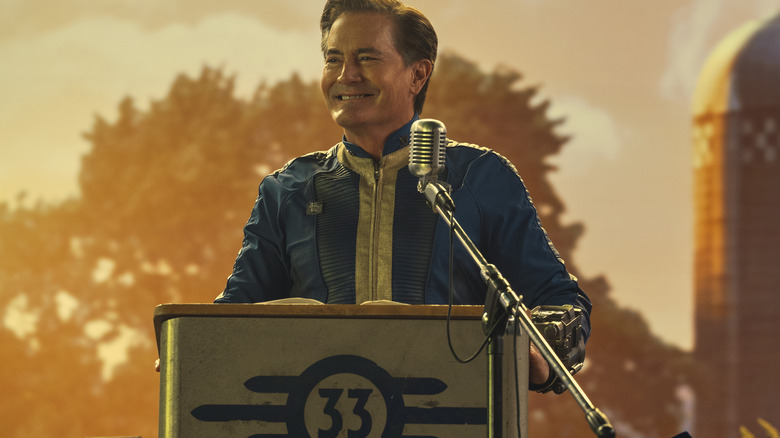
Fallout Dev Sets The Record Straight On Timeline Controversy

Does the Fallout TV series change the continuity of the games? Let’s investigate.

Heidi Gardner Will Never Shake That Viral Moment From SNL’s Beavis & Butt-Head Sketch

Heidi Gardner completely broke during Saturday Night Live’s Beavis and Butt-Head sketch with Ryan Gosling, and she’s talking about how it all happened.

‘Malevolence’: The Overlooked Mid-2000s Love Letter to John Carpenter’s ‘Halloween’

Written and Directed by Stevan Mena on a budget of around $200,000, Malevolence was only released in ten theaters after it was purchased by Anchor Bay and released direct-to-DVD like so many other indie horrors. This one has many of the same pratfalls as its bargain bin brethren, which have probably helped to keep it hidden all these years. But it also has some unforgettable moments that will make horror fans (especially fans of the original Halloween) smile and point at the TV like Leonardo DiCaprio in Once Upon a Time in Hollywood.

Malevolence is the story of a silent and masked killer told through the lens of a group of bank robbers hiding out after a score. The bank robbery is only experienced audibly from the outside of the bank, but whether the film has the budgetary means to handle this portion well or not, the idea of mixing a bank robbery tale into a masked slasher movie is a strong one.

Of course, the bank robbery goes wrong and the crew is split up. Once the table is fully set, we have three bank robbers, an innocent mom and her young daughter as hostages, and a masked man lurking in the shadows who looks like a mix between baghead Jason from Friday the 13th Part 2 and the killer from The Town That Dreaded Sundown. Let the slashing begin.

Many films have tried to recreate the aesthetic notes of John Carpenter’s 1978 classic Halloween, and at its best Malevolence is the equivalent of a shockingly good cover song.

Though the acting and script are at times lacking, the direction, score, and cinematography come together for little moments of old-school slasher goodness that will send tingles up your spine. It’s no Halloween, to be clear, but it does Halloween reasonably proud. The nighttime shots come lit with the same blue lighting and the musical notes of the score pop off at such specific moments, fans might find themselves laughing out loud at the absurdity of how hard the homages hit. When the killer jumps into frame, accompanied by the aforementioned musical notes, he does so sharply and with the same slow intensity as Michael Myers. Other films in the subgenre (and even a few in the Halloween franchise) will tell you this isn’t an easy thing to duplicate.

The production and costume designs of Malevolence hint at love letters to other classic horror films as well. The country location not only provides for an opening Halloween IV fans will appreciate but the abandoned meat plant and the furnishings inside make for some great callbacks to 1974’s The Texas Chain Saw Massacre. All of this is buoyed and accentuated by cinematography that you rarely see in today’s low-budget films. The film is shot on 35mm film by A&E documentary filmmaker Tsuyoshi Kimono, who gives Malevolence an old-school, grainy, 1970s aesthetic that feels completely natural and not like a cheap gimmick.

Malevolence is a movie that no doubt has some glaring imperfections but it is also a movie that is peppered with moments of potential. There’s a reason they made a follow-up prequel titled Malevolence 2: Bereavement years later (and another after that) that starred both Michael Biehn and Alexandra Daddario! That film tells the origin story of our baghead, Martin Bristol. Something the first film touches on a little bit, at least enough to give you the gist of what happened here. Long story short, a six-year-old boy was kidnapped by a serial killer and for years forced to watch him hunt, torture, and kill his victims. Which brings me to another fascinating aspect of Malevolence. The ending. SPOILER WARNING.

After the mother and child are saved from the killer, our slasher is gone, his bloody mask left on the floor. The camera pans around different areas of the town, showing all the places he may be lurking. If you’re down with the fact that it’s pretty obvious this is all an intentional love letter and not a bad rip-off, it’s pretty fun. Where Malevolence makes its own mark is in the true crime moments to follow. Law enforcement officers pull up to the plant and uncover a multitude of horrors. They find the notebooks of the original killer, which explain that he kidnapped the boy, taught him how to hunt, and was now being hunted by him. This also happened to be his final entry. We discover a hauntingly long line of bodies covered in white sheets: the bodies of the many missing persons the town had for years been searching for. And there are a whole lot of them. This moment really adds a cool layer of serial killer creepiness to the film.

Ultimately, Malevolence is a low-budget movie with some obvious deficiencies on full display. Enough of them that I can imagine many viewers giving up on the film before they get to what makes it so special, which probably explains how it has gone so far under the radar all these years. But the film is a wonderful ode to slashers that have come before it and still finds a way to bring an originality of its own by tying a bank robbery story into a slasher affair. Give Malevolence a chance the next time you’re in the mood for a nice little old school slasher movie.

Malevolence is now streaming on Tubi and Peacock.

The post ‘Malevolence’: The Overlooked Mid-2000s Love Letter to John Carpenter’s ‘Halloween’ appeared first on Bloody Disgusting!.

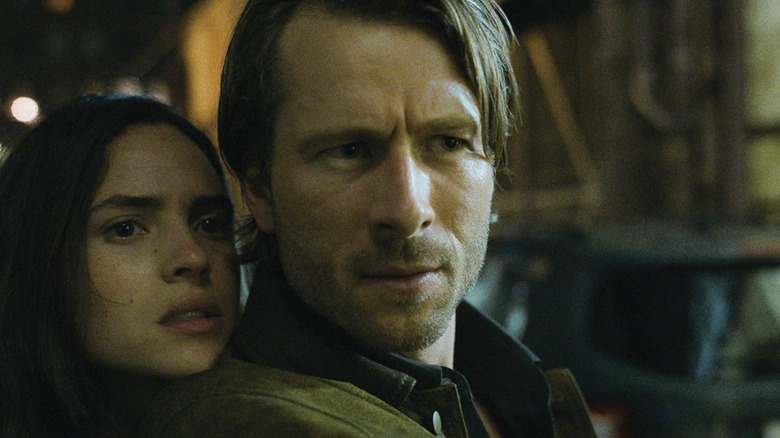
Edgar Wright’s Next Film Will Give Glen Powell His Biggest Test Yet

Glen Powell has been a romantic lead, a square-jawed historical figure, and a lovable jerk on screen. Edgar Wright’s The Running Man will give him a new test.

First Omens and Immaculate Conceptions: Pregnancy Horror Is Having a Moment

WARNING: The following contains major spoilers for Immaculate and The First Omen.

Horror has always served as a frightening mirror to reality. In his 1981 treatise on the genre Danse Macabre, author Stephen King writes, “we make up horrors to help us cope with the real ones”; it seems scary movies have been helping us do that since the earliest days of storytelling. Modern examples include The Texas Chain Saw Massacre (1974) now considered a reaction to the 1973 oil crisis, Dawn of the Dead (1978) which stands as a horrific condemnation of consumerism, and the explosion of the torture porn subgenre in the wake of 9/11. As the United States enters a new phase of fear, two films have converged in an exploration of horrific pregnancy caused by religious abuse. As reproduction becomes more dangerous, Michael Mohan’s Immaculate and Arkasha Stevenson’s The First Omen both follow nuns impregnated against their will and forced to carry fetuses intended to save the world. 

It’s no coincidence that both films hit at a time of increased threat to reproductive rights. The 2022 Dobbs decision plunged the United States into medical chaos and rescinded the right to bodily autonomy for millions of women. A pregnant person’s access to care now depends on her zip code and laws regulating routine medical procedures are creating gynecological deserts which threaten the health and safety of all women. The opinions of politicians and lawyers weigh more than those of doctors and strangers have the right to challenge a person’s private medical decisions. Regardless of belief or ideology, the reality is that childbirth in the US is less safe than it was two years ago and becoming pregnant feels more like a horror movie with each passing day. Both films explore this horrific atmosphere by taking us to convents where women have willingly given their lives to the Lord. But even in this restrictive environment forced impregnation is an egregious violation and innocent women are treated as nothing more than available wombs. 

Though their stories vary wildly, both Immaculate and The First Omen begin in similar places. Two novitiates fly to Italian convents and prepare to take vows of poverty, chastity and obedience. Cecilia (Sydney Sweeney) has just moved into an abbey that doubles as an assisted living facility when she discovers that she is pregnant seemingly by immaculate conception. At first honored as a holy vessel, she quickly becomes a prisoner on the grounds, forced to carry whatever has been placed inside her womb. Serving as a mirror image to Cecilia, Stevenson’s novitiate Margaret (Nell Tiger Free) is still preparing to join the cloth when a priest approaches her with an ominous warning. As the pieces of this sinister story fall into place, Margaret realizes that she is pregnant with the devil’s child. She quickly gives birth to twins; an unnamed baby girl and a boy who will come to be known as Damien. Only concerned with her male offspring, the murderous clergy steal the baby and place him in the arms of an American ambassador, hoping to spread their dark influence across the world. 

Nell Tiger Free as Margaret - The First Omen review

‘The First Omen’

Both films show the trauma of pregnancy and the violent nature of birth, but neither story concerns itself with the resulting babies. Aside from brief glances, these stories belong to the mothers and it is their experiences that bring the horror. However, the characters they engage with care only for the contents of their wombs. When Cecilia is attacked and nearly killed by a fellow sister, doctors immediately check the status of her pregnancy. They’re relieved to see that the fetus is fine, but the frightened young woman reminds them that she is not. She asks to be seen by an outside doctor and must fake a life-threatening miscarriage to be taken seriously. Margaret faces similar abandonment moments after giving birth. A priest carries her son to a waiting crowd and it’s not until she calls for the child she just delivered that they remember she’s still in the room. Both films also feature a pregnant woman pleading for release through a locked door – a haunting parallel to the experience of being trapped in an unwanted pregnancy. 

It’s important to note that neither woman gives consent for their conditions. We don’t see the moment Cecilia conceives, but we eventually learn that a priest dabbling in genetics has impregnated her with the ancient DNA of Jesus Christ. Margaret has been bred under a specific set of circumstances to create a mother capable of bearing the Antichrist. To achieve this evil goal, her fellow clergy drug and assault her in a hideous ritual that has been repeated many times before. Both Cecilia and Margaret have chosen a life of chastity and neither woman shows anything but horror at the traumatic months of gestation to come. Even though they have willingly dedicated their lives to God, they are forced to give up their bodies as well, sacrificing their mental and physical health for babies they never expected or wanted. 

Immaculate unfolds in three chapters, mirroring the major stages of a typical pregnancy. Sometime during the second trimester, Cecilia notices that she has lost a tooth. Likely a nod to superstitions about the loss of one tooth per child, this harrowing moment also reflects a larger truth. Growing and birthing another human being forever changes a person’s body. In addition to more well-known symptoms like nausea and postpartum depression, expectant mothers also experience gum disease, carpal tunnel syndrome, nosebleeds, and hair loss. Even the size of a woman’s feet have been known to change after giving birth. As her due date nears, Cecilia watches with trepidation as her belly begins to move on its own. While this can be an exciting feeling with a wanted child, Mohan presents these baby kicks with horror. An alien being has taken root inside Cecilia’s belly. Her body has been commandeered by a stranger and she can do nothing but wait for it to emerge. It’s easy to remember the bookends of pregnancy – conception and birth – forgetting that the pregnant person is “with child” every minute of 280 days. Mohan shows us the messy details in the middle and reminds us that reproduction is so much more than two isolated events. 

Sydney Sweeney Immaculate

‘Immaculate’

Also during the second trimester, Cecilia goes through what appears to be a miscarriage. She wakes up screaming and notices heavy blood pouring from between her legs. The frightened mother-to-be begs a priest to take her to a hospital and wails that she doesn’t want to die. This terrifying scene likely hits home to any woman who’s ever suffered pregnancy loss. The brutal experience is often marked by heavy bleeding as the body tries to expel the nonviable fetus. If emergency care does not follow, the mother could die due to excessive blood loss. If the uterus is not cleared of all fetal tissue, sepsis, infection, organ failure, and death may follow. We eventually learn that Cecilia has faked this miscarriage to escape the convent. With chicken’s blood covering her legs, she runs through a field as two priests drag her back to an idling car. While Cecilia’s life is not in immediate danger, this scene presents a horrifying reality playing out across the country. Cecilia simply wants medical care, but the men in control of her fate must believe that she is minutes away from death before they will act. 

Margaret only has a few hours to experience her awful pregnancy, but her labor is intense. Due to the baby’s demonic parentage, her belly rapidly balloons as the unholy twins expand inside her. On the chosen hour, she experiences debilitating spasms and falls to her knees as fluid gushes from between her legs. Cecilia’s water also breaks in the film’s final act, preceding a daring escape while she experiences active labor. After murdering her caretakers, she staggers through the convent halls seeking to kill anyone who stands in her way. But as she goes on her righteous rampage, contractions start to rip through her body. It’s a powerful depiction of this unique type of pain. The massive cramps drown everything else out and Cecilia has no choice but to wait for the current contraction to abate. She may be running from a murderous priest who will surely cut open her stomach and leave her for dead, but even then, the pain is so great that it stops her in her tracks. 

In addition to the trauma of labor, both films accurately depict the brutality of birth. While delivery can be a beautiful process, many women report a shockingly violent experience. Moments after her belly enlarges, Margaret is strapped to a gurney and rolled into a secret operating room. Stoic faces ignore her pleas for help and inject her with drugs to calm her down. Ominous medical tools are presented as instruments of torture and Margaret watches in helpless horror as the surgeons begin their work. They cut into her belly and jostle around inside her abdomen as they search for a membranous sac containing the twins. This terrifying scene reflects the experience of cesarean birth. Numb from the rib cage down, it’s still possible to feel the surgeon’s hands moving your body from side to side, rearranging internal organs and clearing a passage to pull out the baby.

The First Omen 2024 directed by Arkasha Stevenson

‘The First Omen’

Cecilia experiences a different kind of birth – arguably the film’s most powerful scene. After escaping the convent, she finds herself on the edge of a cliff surrounded by wilderness. The camera hovers inches from her face as she bears down and screams through her final contractions. The baby soon passes out of her body and Cecilia desperately tries to recapture her breath. Though we hear tiny coughs and gurgles from the product of her womb, we never see the so-called savior’s face. Cecilia severs the umbilical cord with her teeth and steps away from the reddish-brown creature wriggling on the ground. After locating a heavy rock, she braces herself and then slams it down on the newborn creature. This shocking moment perfectly captures her rage at this tiny stranger. She did not give permission for a fetus to grow inside her and she resents the way it has turned her life upside down. 

Both films explore the concept of good and bad women by following nuns who draw the line at sacrificing their wombs. Margaret tells a misunderstood orphan that she is not “bad,” explaining, “They just tell you that you are because you’re not doing what they want you to do.“ The Catholic church has been telling these two women what to do since birth. They have always been governed by someone else’s religious ideals and given no choice in the way they live out their own faith. As long as Cecilia and Margaret are playing their assigned roles in a hellish plot, they are considered good, even holy. But the minute they exert any will of their own, they are vilified and targeted for death. Another nun tells Cecilia that “suffering is love,” hoping to convince her to allow the abuse of her body. But suffering is only love when it is a choice. Cecilia never chose to be in this position and what happens to her can only be considered punishment. She and Margaret are punished simply because they have fertile wombs – a powerful reflection of what it feels like to be a woman in the US today. 

When Margaret realizes she has been impregnated, she immediately asks for an abortion, insisting, “I need it out of my now.” While upsetting, this sentiment is familiar to millions of women facing pregnancy in a country where religious ideology has taken precedence over medical care. Both films explore these relatable horrors and follow women who refuse to let their bodies be sacrificed to someone else’s understanding of God. Traumatized, assaulted, and violated in every conceivable way, Margaret and Cecilia attempt to murder their unholy offspring with varying levels of success. Though horrific, their actions challenge a patriarchal system that sees them as nothing more than vessels for reproduction. Neither woman renounces her faith and both stand against the hypocrisy that would harm one child of God to produce another. Though their stories end in different places, both women decide that a church that doesn’t care about the mother does not deserve the child. 

Sydney Sweeney horror

‘Immaculate’

The post First Omens and Immaculate Conceptions: Pregnancy Horror Is Having a Moment appeared first on Bloody Disgusting!.

Your Favorite Character Actor Just Joined Netflix’s Wednesday Season 2

Netflix’s Wednesday season 2 just added Steve Buscemi to the cast.

‘Byte’ Trailer – Indie Horror Movie Downloads an App That Turns People into Werewolves

In the wake of Larry Fessenden’s werewolf movie Blackout releasing at home just last week, werewolf horror returns with the indie film Byte being unleashed later this week.

After its world premiere at the HorrorHound Film Festival in March, we’ve learned that Byte will be available April 18 on streaming platforms. Watch the official trailer below.

“In a concept generated for today’s Gen Z audience, the film follows a group of college-aged friends who become concerned when one of them discovers a mysterious phone app that turns users into werewolves. Meanwhile, a spate of violent killings plagues the city.”

Kayden Bryce, Marshall Vargas, Carlie Allen, Stephen Nicholas Knight, Debbie Scaletta, Bill Schroeder, Cali Jacobs, Candela Orio, Amanda Yanzanny, and Chris Hahn star.

Eddie Lengyel (Mother Krampus 2, American Poltergeist: The Curse of Lilith Ratchet) directs and produces from his screenplay. Fellow producer is Marie Lengyel. Jeff Miller (Ouija House) and Ronnie D. Lee (The Toybox) executive produce. Mick Kunz shot and edited the film.

“I think our concept of ‘technology meets werewolves’ is something audiences will dig,” producer Jeff Miller said in a statement. “Grab a pizza, sit back, and enjoy!”

Byte is a co-production between Millman Productions, Fright Teck Pictures, and Ron Lee Productions. In addition to the trailer, you’ll also find the upcoming film’s poster art below.

The post ‘Byte’ Trailer – Indie Horror Movie Downloads an App That Turns People into Werewolves appeared first on Bloody Disgusting!.

‘Into the Storm’ – Appreciating the Found Footage Disaster Movie 10 Years Later

Our planet can be absolutely terrifying. From unpredictable earthquakes to monstrous storms, there’s really no shortage of ways in which our cosmic home can kill us. And yet, our species perseveres, with humanity going so far as to entertain itself by telling stories about how we can overcome – or at the very least survive – the fury of nature. In fact, these stories have become so prevalent in popular culture that disaster movies are known to be one of the most profitable genres in all of cinema, and while some audiences remain critical so-called “disaster-porn,” I’d argue that the best of these films are really about the endurance of the human spirit.

And if you’re planning on telling a story about people coming to terms with how fragile they are when confronted with nature, why not place the camera in the hands of your own main characters? I mean, a found footage natural disaster movie seems like a really obvious idea when you stop to think about it, with the down-to-earth point-of-view requiring a much smaller budget while also having the added benefit of placing viewers directly in the thick of things. With that in mind, why is it that the underrated 2014 thriller Into the Storm remains the only serious attempt at such a project?

A rare example of a found footage flick with no ties to the supernatural, this unusual disaster movie was the brainchild of producer Todd Garner, with his story being inspired by real survivor and storm-chaser footage that showcased the power of rogue winds from a decidedly modern (not to mention vulnerable) perspective. Hiring screenwriter John Swetnam to turn his idea into a fleshed-out screenplay, the two then proceeded to look for studios interested in funding their collaboration.

Eager to produce a large-scale summer blockbuster that didn’t require an effects budget comparable to a small country’s GDP, New Line Cinema ended up purchasing the rights to the duo’s then-untitled spec script and set the project up with a $50 million production budget. They then hired Final Destination 5 director Steven Quale to helm the picture due to his previous experience with VFX mayhem, with shooting taking place in Michigan as a rag-tag team of digital artists from several different companies worked together to bring these simulated tornados to life.

In the finished film, we follow an ensemble of high-schoolers and storm-chasers (with the cast featuring the likes of Richard Armitage, Matt Walsh, Arlen Escarpeta and even Sarah Wayne Callies) as the small town of Silverton, Oklahoma comes under siege by an unprecedently dangerous storm. As tornados proceed to wreak havoc in town, some folks race to save their loved ones while others aim to profit off the destruction, with the plot unfolding through shifting points of view ranging from hillbilly YouTubers to professional camera crews.


SO WHY IS IT WORTH WATCHING?

Much like Jaws when it comes to shark movies, any tornado-based thriller will inevitably wind up being compared to Jan de Bont’s Twister. And with a “definitive” take on the subject already in existence, the smartest thing a filmmaker can do to shake up the formula is change how this kind of story is presented.

This is precisely why I think Into the Storm deserves a lot more credit for daring to remix familiar genre beats in ways that make them feel fresh again. Not only does the more intimate perspective enhance the existing thrills of watching characters attempt to survive ridiculously powerful tornados, but it also makes everything feel that much more believable – and consequently scarier.

I mean, the original script was already based on Garner and Swetnam’s fascination with the ever-increasing amount of raw disaster footage available online (not to mention freak weather phenomena brought on by accelerated climate change), so it feels appropriate that the finished product uses its gritty aesthetic to bring audiences closer to the real horrors of a natural disaster.

The shifting points of view also help to paint a better picture of the chaos and its victims, as it’s much easier to empathize with people when you’re right there in the middle of things alongside the rather than observing them from far away like they’re the inhabitants of a Roland Emmerich-owned ant farm. And while the script admittedly doesn’t do a very good job of fleshing these characters out, a naturally charismatic cast mostly makes up for that.

Lastly, this wouldn’t be much of a disaster flick without a convincing disaster, so it’s fortunate that Into the Storm manages to extract the most out of its relatively “small” budget when it comes to special effects. The digitally recreated whirlwinds are impressive in their own right (especially the larger ones towards the end), but I really appreciate the filmmakers’ choice to invest in a number of practical sets to really sell the extent of the destruction.


AND WHAT MAKES IT HORROR ADJACENT?

Into the Storm found footage movie

Having practically been raised by video stores and television, I grew up on a steady diet of popular disaster movies. And while I’ve always enjoyed these films, I was never particularly scared by them. The exaggerated spectacle almost always meant that the destruction felt more fun than terrifying, and that’s why I think the subdued thrills of Into the Storm make it worth a watch even though it occasionally stumbles over its own premise.

Like I mentioned earlier, found footage seems naturally suited for telling large-scale stories through a believable lens, and in a post-9/11 world where every angle of every tragedy makes its way online, it makes sense that the scariest way of experiencing a movie about such events is through the eyes of the victims themselves.

We may have seen many of these story beats before (such as comedy relief characters underestimating the danger that they’re in or parents desperately racing to save their irresponsible children in a cautionary tale from hell), but it’s much easier to ignore clichés when the film does such a good job of establishing that doesn’t take place in an exaggerated hyper-reality where Dwayne Johnson will show up to save the day (even if certain characters end up being sucked into a flaming tornado that looks like it came straight out of Doom).

Hell, there’s one particularly horrific scene where an anti-tornado vehicle and its driver get lifted into the air so high that we can see the clear skies beyond the storm, and while this would have felt comical in any other context, the POV presentation turns this moment into a living nightmare as the camera begins to point down and the vehicle enters freefall.

That being said, I’ll be the first to admit that Into the Storm has some serious authenticity issues in the found footage department. From teleporting cameramen to impossible angles and serious continuity blunders (not to mention perfect audio quality in absurdly loud weather conditions), Quale’s lack of commitment to the format often ruins the immersion factor. That’s why I’ve come to appreciate this film as more of a blueprint for future found footage disaster flicks instead of as a great movie in its own right.

At the end of the day, Into the Storm doesn’t even come close to dethroning Twister as the definitive tornado movie, but it doesn’t really have to. Sometimes, a film’s willingness to experiment with familiar ideas is enough to warrant a second look, and I’m thoroughly convinced that found footage fatigue is largely responsible for the flick’s poor critical reception back in 2014. However, if you can overlook some overly-familiar tropes and logical inconsistencies, I still think this weird little disaster flick is worth tracking down.


There’s no understating the importance of a balanced media diet, and since bloody and disgusting entertainment isn’t exclusive to the horror genre, we’ve come up with Horror Adjacent – a recurring column where we recommend non-horror movies that horror fans might enjoy.

The post ‘Into the Storm’ – Appreciating the Found Footage Disaster Movie 10 Years Later appeared first on Bloody Disgusting!.