April 2024

‘A Haunted House’ and the Death of the Horror Spoof Movie

Due to a complex series of anthropological mishaps, the Wayans Brothers are a huge deal in Brazil. Around these parts, White Chicks is considered a national treasure by a lot of people, so it stands to reason that Brazilian audiences would continue to accompany the Wayans’ comedic output long after North America had stopped taking them seriously as comedic titans.

This is the only reason why I originally watched Michael Tiddes and Marlon Wayans’ 2013 horror spoof A Haunted House – appropriately known as “Paranormal Inactivity” in South America – despite having abandoned this kind of movie shortly after the excellent Scary Movie 3. However, to my complete and utter amazement, I found myself mostly enjoying this unhinged parody of Found Footage films almost as much as the iconic spoofs that spear-headed the genre during the 2000s. And with Paramount having recently announced a reboot of the Scary Movie franchise, I think this is the perfect time to revisit the divisive humor of A Haunted House and maybe figure out why this kind of film hasn’t been popular in a long time.

Before we had memes and internet personalities to make fun of movie tropes for free on the internet, parody movies had been entertaining audiences with meta-humor since the very dawn of cinema. And since the genre attracted large audiences without the need for a serious budget, it made sense for studios to encourage parodies of their own productions – which is precisely what happened with Miramax when they commissioned a parody of the Scream franchise, the original Scary Movie.

The unprecedented success of the spoof (especially overseas) led to a series of sequels, spin-offs and rip-offs that came along throughout the 2000s. While some of these were still quite funny (I have a soft spot for 2008’s Superhero Movie), they ended up flooding the market much like the Guitar Hero games that plagued video game stores during that same timeframe.

You could really confuse someone by editing this scene into Paranormal Activity.

Of course, that didn’t stop Tiddes and Marlon Wayans from wanting to make another spoof meant to lampoon a sub-genre that had been mostly overlooked by the Scary Movie series – namely the second wave of Found Footage films inspired by Paranormal Activity. Wayans actually had an easier time than usual funding the picture due to the project’s Found Footage presentation, with the format allowing for a lower budget without compromising box office appeal.

In the finished film, we’re presented with supposedly real footage recovered from the home of Malcom Johnson (Wayans). The recordings themselves depict a series of unexplainable events that begin to plague his home when Kisha Davis (Essence Atkins) decides to move in, with the couple slowly realizing that the difficulties of a shared life are no match for demonic shenanigans.

In practice, this means that viewers are subjected to a series of familiar scares subverted by wacky hijinks, with the flick featuring everything from a humorous recreation of the iconic fan-camera from Paranormal Activity 3 to bizarre dance numbers replacing Katy’s late-night trances from Oren Peli’s original movie.

Your enjoyment of these antics will obviously depend on how accepting you are of Wayans’ patented brand of crass comedy. From advanced potty humor to some exaggerated racial commentary – including a clever moment where Malcom actually attempts to move out of the titular haunted house because he’s not white enough to deal with the haunting – it’s not all that surprising that the flick wound up with a 10% rating on Rotten Tomatoes despite making a killing at the box office.

However, while this isn’t my preferred kind of humor, I think the inherent limitations of Found Footage ended up curtailing the usual excesses present in this kind of parody, with the filmmakers being forced to focus on character-based comedy and a smaller scale story. This is why I mostly appreciate the love-hate rapport between Kisha and Malcom even if it wouldn’t translate to a healthy relationship in real life.

Of course, the jokes themselves can also be pretty entertaining on their own, with cartoony gags like the ghost getting high with the protagonists (complete with smoke-filled invisible lungs) and a series of silly The Exorcist homages towards the end of the movie. The major issue here is that these legitimately funny and genre-specific jokes are often accompanied by repetitive attempts at low-brow humor that you could find in any other cheap comedy.

Not a good idea.

Not only are some of these painfully drawn out “jokes” incredibly unfunny, but they can also be remarkably offensive in some cases. There are some pretty insensitive allusions to sexual assault here, as well as a collection of secondary characters defined by negative racial stereotypes (even though I chuckled heartily when the Latina maid was revealed to have been faking her poor English the entire time).

Cinephiles often claim that increasingly sloppy writing led to audiences giving up on spoof movies, but the fact is that many of the more beloved examples of the genre contain some of the same issues as later films like A Haunted House – it’s just that we as an audience have (mostly) grown up and are now demanding more from our comedy. However, this isn’t the case everywhere, as – much like the Elves from Lord of the Rings – spoof movies never really died, they simply diminished.

A Haunted House made so much money that they immediately started working on a second one that released the following year (to even worse reviews), and the same team would later collaborate once again on yet another spoof, 50 Shades of Black. This kind of film clearly still exists and still makes a lot of money (especially here in Brazil), they just don’t have the same cultural impact that they used to in a pre-social-media-humor world.

At the end of the day, A Haunted House is no comedic masterpiece, failing to live up to the laugh-out-loud thrills of films like Scary Movie 3, but it’s also not the trainwreck that most critics made it out to be back in 2013. Comedy is extremely subjective, and while the raunchy humor behind this flick definitely isn’t for everyone, I still think that this satirical romp is mostly harmless fun that might entertain Found Footage fans that don’t take themselves too seriously.

The post ‘A Haunted House’ and the Death of the Horror Spoof Movie appeared first on Bloody Disgusting!.

‘Trap’ – Official Trailer Previews a Wild New Horror Experience from M. Night Shyamalan

Just two months after his daughter Ishana Night Shyamalan debuts on the big screen with horror movie The Watchers, M. Night Shyamalan is back with his new thriller Trap.

M. Night Shyamalan’s new thriller for Warner Bros. – the sixteenth movie in his Oscar-nominated career thus far – is headed to movie theaters nationwide on August 9, 2024.

Watch the official trailer below to begin a twisted new mystery-box experience, which features performances by rising music star Saleka Shyamalan as fictional pop star Lady Raven.

In the upcoming thriller starring Josh Hartnett, “A father and teen daughter attend a pop concert, where they realize they’re at the center of a dark and sinister event.”

As the official trailer for Trap reveals, the pop concert is actually an elaborate trap designed to catch The Butcher, a sadistic serial killer who has been evading authorities.

Hartnett had recently described the mysterious film as “very bizarre” and “very dark.”

According to IMDb, the cast for Trap also includes Hayley Mills, Marnie McPhail, Vanessa Smythe, Saleka Shyamalan, Scott Ian MacDougall, Kristi Woods, and Cali Lorella.

Trap is the first film Shyamalan has made under his new deal with Warner Bros., which has been described as a “multi-year first-look directing and producing agreement.”

The film is produced by Ashwin Rajan, Marc Bienstock and M. Night Shyamalan.

The executive producer is Steven Schneider.

The post ‘Trap’ – Official Trailer Previews a Wild New Horror Experience from M. Night Shyamalan appeared first on Bloody Disgusting!.
Director Quentin Tarantino Is No Longer Pursuing The Movie Critic As His Final Feature

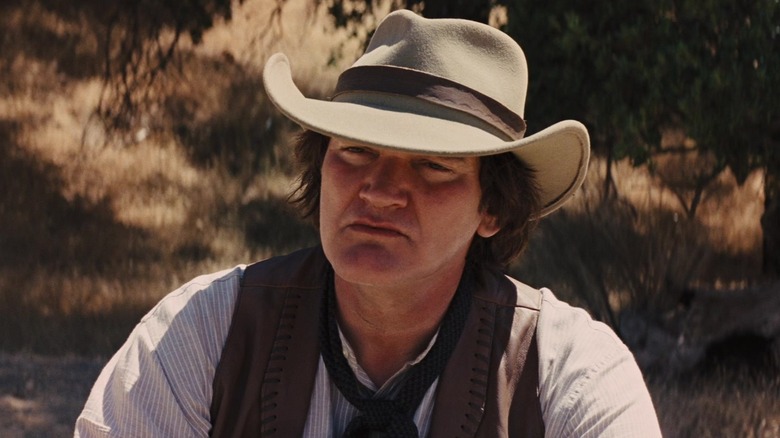
The Movie Critic was slated to be director Quentin Tarantino’s final film, but it’s looking like he’s having second thoughts.

X-Men 97 Reveals Who Attacked Genosha, And It’s Not Who You Think

The latest episode of X-Men ’97 gives us answers about the Genosha attack.

The Acolyte Will Include A Lightsaber Battle That Could Top Star Wars’ Best Fights

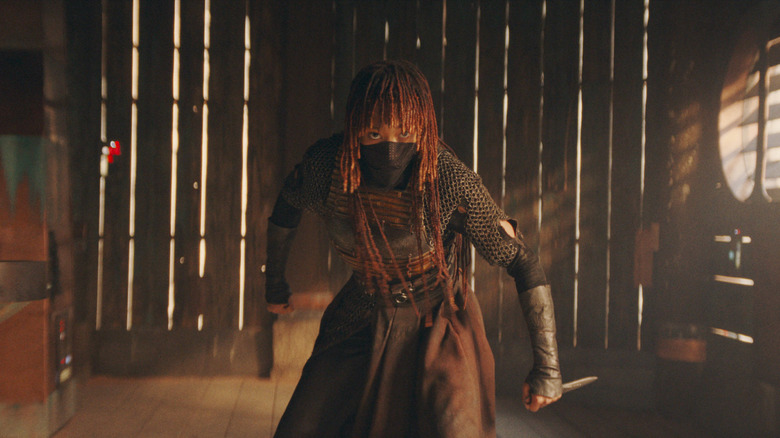
Watch out, Darth Maul; The Acolyte cast and crew are gunning to deliver some of the best lightsaber battles ever seen in a live-action Star Wars project.

Cool Stuff: Let Mondo’s Daria & Jane Figure Set Cure Your Low Self-Esteem (For Everyone Else)

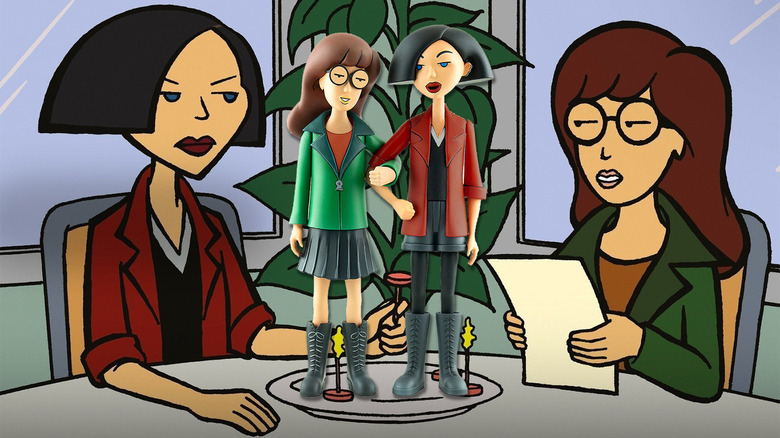
“La, la, la, laaaa, la. La, la, la, laaaa, la.” Mondo has released two collectible figures in honor of the beloved MTV animated series Daria. Check them out!

America’s Most Legendary Film Festival Is Looking For A New Home After 40 Years

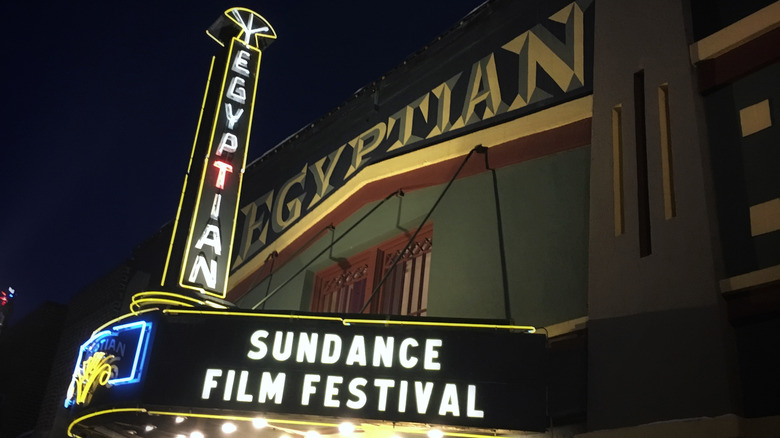
Huge film festival shake-up: the Sundance Film Festival is looking to leave Park City, Utah.

Five Serial Killer Horror Movies to Watch Before ‘Longlegs’

Here’s what we know about Longlegs so far. It’s coming in July of 2024, it’s directed by Osgood Perkins (The Blackcoat’s Daughter), and it features Maika Monroe (It Follows) as an FBI agent who discovers a personal connection between her and a serial killer who has ties to the occult. We know that the serial killer is going to be played by none other than Nicolas Cage and that the marketing has been nothing short of cryptic excellence up to this point.

At the very least, we can assume NEON’s upcoming film is going to be a dark, horror-fueled hunt for a serial killer. With that in mind, let’s take a look at five disturbing serial killers-versus-law-enforcement stories to get us even more jacked up for Longlegs.


MEMORIES OF MURDER (2003)

This South Korean film directed by Oscar-winning director Bong Joon-ho (Parasite) is a wild ride. The film features a handful of cops who seem like total goofs investigating a serial killer who brutally murders women who are out and wearing red on rainy evenings. The cops are tired, unorganized, and border on stoner comedy levels of idiocy. The movie at first seems to have a strange level of forgiveness for these characters as they try to pin the murders on a mentally handicapped person at one point, beating him and trying to coerce him into a confession for crimes he didn’t commit. A serious cop from the big city comes down to help with the case and is able to instill order.

But still, the killer evades and provokes not only the police but an entire country as everyone becomes more unstable and paranoid with each grizzly murder and sex crime.

I’ve never seen a film with a stranger tone than Memories of Murder. A movie that deals with such serious issues but has such fallible, seemingly nonserious people at its core. As the film rolls on and more women are murdered, you realize that a lot of these faults come from men who are hopeless and desperate to catch a killer in a country that – much like in another great serial killer story, Citizen X – is doing more harm to their plight than good.

Major spoiler warning: What makes Memories of Murder somehow more haunting is that it’s loosely based on a true story. It is a story where the real-life killer hadn’t been caught at the time of the film’s release. It ends with our main character Detective Park (Song Kang-ho), now a salesman, looking hopelessly at the audience (or judgingly) as the credits roll. Over sixteen years later the killer, Lee Choon Jae, was found using DNA evidence. He was already serving a life sentence for another murder. Choon Jae even admitted to watching the film during his court case saying, “I just watched it as a movie, I had no feeling or emotion towards the movie.”

In the end, Memories of Murder is a must-see for fans of the subgenre. The film juggles an almost slapstick tone with that of a dark murder mystery and yet, in the end, works like a charm.


CURE (1997)

Longlegs serial killer Cure

If you watched 2023’s Hypnotic and thought to yourself, “A killer who hypnotizes his victims to get them to do his bidding is a pretty cool idea. I only wish it were a better movie!” Boy, do I have great news for you.

In Cure (spoilers ahead), a detective (Koji Yakusho) and forensic psychologist (Tsuyoshi Ujiki) team up to find a serial killer who’s brutally marking their victims by cutting a large “X” into their throats and chests. Not just a little “X” mind you but a big, gross, flappy one.

At each crime scene, the murderer is there and is coherent and willing to cooperate. They can remember committing the crimes but can’t remember why. Each of these murders is creepy on a cellular level because we watch the killers act out these crimes with zero emotion. They feel different than your average movie murder. Colder….meaner.

What’s going on here is that a man named Mamiya (Masato Hagiwara) is walking around and somehow manipulating people’s minds using the flame of a lighter and a strange conversational cadence to hypnotize them and convince them to murder. The detectives eventually catch him but are unable to understand the scope of what’s happening before it’s too late.

If you thought dealing with a psychopathic murderer was hard, imagine dealing with one who could convince you to go home and murder your wife. Not only is Cure amazingly filmed and edited but it has more horror elements than your average serial killer film.


MANHUNTER (1986)

Longlegs serial killer manhunter

In the first-ever Hannibal Lecter story brought in front of the cameras, Detective Will Graham (William Petersen) finds his serial killers by stepping into their headspace. This is how he caught Hannibal Lecter (played here by Brian Cox), but not without paying a price. Graham became so obsessed with his cases that he ended up having a mental breakdown.

In Manhunter, Graham not only has to deal with Lecter playing psychological games with him from behind bars but a new serial killer in Francis Dolarhyde (in a legendary performance by Tom Noonan). One who likes to wear pantyhose on his head and murder entire families so that he can feel “seen” and “accepted” in their dead eyes. At one point Lecter even finds a way to gift Graham’s home address to the new killer via personal ads in a newspaper.

Michael Mann (Heat, Thief) directed a film that was far too stylish for its time but that fans and critics both would have loved today in the same way we appreciate movies like Nightcrawler or Drive. From the soundtrack to the visuals to the in-depth psychoanalysis of an insanely disturbed protagonist and the man trying to catch him. We watch Graham completely lose his shit and unravel as he takes us through the psyche of our killer. Which is as fascinating as it is fucked.

Manhunter is a classic case of a serial killer-versus-detective story where each side of the coin is tarnished in their own way when it’s all said and done. As Detective Park put it in Memories of Murder, “What kind of detective sleeps at night?”


INSOMNIA (2002)

Insomnia Nolan

Maybe it’s because of the foggy atmosphere. Maybe it’s because it’s the only film in Christopher Nolan’s filmography he didn’t write as well as direct. But for some reason, Insomnia always feels forgotten about whenever we give Nolan his flowers for whatever his latest cinematic achievement is.

Whatever the case, I know it’s no fault of the quality of the film, because Insomnia is a certified serial killer classic that adds several unique layers to the detective/killer dynamic. One way to create an extreme sense of unease with a movie villain is to cast someone you’d never expect in the role, which is exactly what Nolan did by casting the hilarious and sweet Robin Williams as a manipulative child murderer. He capped that off by casting Al Pacino as the embattled detective hunting him down.

This dynamic was fascinating as Williams was creepy and clever in the role. He was subdued in a way that was never boring but believable. On the other side of it, Al Pacino felt as if he’d walked straight off the set of 1995’s Heat and onto this one. A broken and imperfect man trying to stop a far worse one.

Aside from the stellar acting, Insomnia stands out because of its unique setting and plot. Both working against the detective. The investigation is taking place in a part of Alaska where the sun never goes down. This creates a beautiful, nightmare atmosphere where by the end of it, Pacino’s character is like a Freddy Krueger victim in the leadup to their eventual, exhausted death as he runs around town trying to catch a serial killer while dealing with the debilitating effects of insomnia. Meanwhile, he’s under an internal affairs investigation for planting evidence to catch another child killer and accidentally shoots his partner who he just found out is about to testify against him. The kicker here is that the killer knows what happened that fateful day and is using it to blackmail Pacino’s character into letting him get away with his own crimes.

If this is the kind of “what would you do?” intrigue we get with the story from Longlegs? We’ll be in for a treat. Hoo-ah.


FALLEN (1998)

Longlegs serial killer fallen

Fallen may not be nearly as obscure as Memories of Murder or Cure. Hell, it boasts an all-star cast of Denzel Washington, John Goodman, Donald Sutherland, James Gandolfini, and Elias Koteas. But when you bring it up around anyone who has seen it, their ears perk up, and the word “underrated” usually follows. And when it comes to the occult tie-ins that Longlegs will allegedly have? Fallen may be the most appropriate film on this entire list.

In the movie, Detective Hobbs (Washington) catches vicious serial killer Edgar Reese (Koteas) who seems to place some sort of curse on him during Hobbs’ victory lap. After Reese is put to death via electric chair, dead bodies start popping up all over town with his M.O., eventually pointing towards Hobbs as the culprit. After all, Reese is dead. As Hobbs investigates he realizes that a fallen angel named Azazel is possessing human body after human body and using them to commit occult murders. It has its eyes fixated on him, his co-workers, and family members; wrecking their lives or flat-out murdering them one by one until the whole world is damned.

Mixing a demonic entity into a detective/serial killer story is fascinating because it puts our detective in the unsettling position of being the one who is hunted. How the hell do you stop a demon who can inhabit anyone they want with a mere touch?!

Fallen is a great mix of detective story and supernatural horror tale. Not only are we treated to Denzel Washington as the lead in a grim noir (complete with narration) as he uncovers this occult storyline, but we’re left with a pretty great “what would you do?” situation in a movie that isn’t afraid to take the story to some dark places. Especially when it comes to the way the film ends. It’s a great horror thriller in the same vein as Frailty but with a little more detective work mixed in.


Look for Longlegs in theaters on July 12, 2024.

Longlegs serial killer

The post Five Serial Killer Horror Movies to Watch Before ‘Longlegs’ appeared first on Bloody Disgusting!.
‘Nightwatch: Demons Are Forever’ Trailer Teases the Return of Familiar Faces and an Unsettling New Killer

Shudder is bringing the 1994 Danish thriller Nightwatch and its surprise sequel, Nightwatch: Demons Are Forever, to streaming next month. A new trailer gives a closer look at the intense sequel, including the return of a familiar face in original Nightwatch star Nikolaj Coster-Waldau.

Look for Nightwatch: Demons Are Forever to arrive on May 17, 2024.

Check out the new trailer below, which ties back to the 1994 thriller to set up intense new thrillers and an unsettling psychopath on the loose.

Original cast members Kim Bodnia and Ulf Pilgaard, along with Nikolaj Coster-Waldau, reunite and reprise their roles from the 1994 film, which inspired the 1997 U.S. remake starring Ewan McGregor.

About the sequel: “22-year-old medical student Emma (Fanny Leander Bornedal) has just taken a job as the night watch in the same forensic department where her parents were once almost killed by the famed psychopathic police inspector Wörmer. The events led to her mother’s suicide, and her father Martin (Nikolaj Coster-Waldau) has turned to tranquilizers to suppress the memories. Determined to investigate what exactly happened to them, Emma tracks down and confronts Wörmer, only to unintentionally reawaken his bloodthirst and ignite a violent revenge on everyone who sealed his destiny years ago.”

The sequel was written/directed by Nightwatch‘s creator, Ole Bornedal.

Producers include Thomas Heinesen, Christel C.D. Karlsen, and Signe Baasch. Nightwatch: Demons Are Forever was executive produced by Katrine Vogelsang, Henrik Zein, Peter Nadermann, and Doris Schrenner.


For even more horror news and releases, keep up with The Bloody Disgusting Podcast, a weekly horror movie discussion podcast that breaks down the current trending news in the genre, gives a rundown of recent new releases on streaming and VOD, and even offers a listener line where fans can weigh in on the weekly topics. All in a short 60-minute or less episode format, meaning you can get horror’s highlights delivered right to your ears without much time commitment. Think of it as your easily digestible weekly roundup of all things horror.

Catch new episodes every Wednesday on your favorite podcast apps.

The post ‘Nightwatch: Demons Are Forever’ Trailer Teases the Return of Familiar Faces and an Unsettling New Killer appeared first on Bloody Disgusting!.
Hidden Treasures: Rediscovering the Horror-Comedy Gems of Bob Hope and Paulette Goddard

1939 is often called Hollywood’s Greatest Year, and it is indisputable that a huge number of America’s greatest classics were produced in that single year. A usually ignored element of that greatness is that 1939 was also the year that Hollywood resumed production on horror films after a two-year pause. In late 1936 two major factors led to the practical death of the genre: the Laemmle family, of whom Carl Laemmle’s, Jr. was horror’s greatest advocate, lost control of Universal and the British Board of Censors began enforcing the “H” certificate, which for all practical purposes banned horror for its target audience in Britain. The loss of this lucrative market combined with dropping box-office receipts and mounting pressure from American religious groups, Hollywood saw no reason to continue producing horror. The phrase “horror is dead” has often been thrown around over the decades but in 1937 and 38, it was actually true.

Then in 1938, Emil Umann (surely one of horror’s great unsung heroes) of the Regina theater in Beverly Hills programed a triple feature of Frankenstein, Dracula, and Son of Kong (quickly dropping the third film to add more showings) and business boomed proving to Hollywood that horror was still in demand. In 1939, Universal broke its horror silence with the release of Son of Frankenstein. Paramount, who had also been an important voice in horror in the early thirties, opted for a different track, combining a remake of a classic silent horror film with one of its most popular comedic actors, Bob Hope, and teaming him with a rising star, Paulette Goddard. The pair appeared in two horror comedies together, The Cat and the Canary in 1939 and The Ghost Breakers in 1940. Though usually overshadowed by the string of Abbott and Costello meet the Monsters movies produced by Universal in the late forties and fifties, these films all but invented the horror-comedy as we know it.

Of course, humor had been in horror movies before, James Whale was particularly adept at this, but The Cat and the Canary is something different, combining the laughs and chills in a way that had not been seen before. It begins at an old, crumbling mansion on the Louisiana bayou where a group of relatives gather to hear the reading of Cyrus Canby Norman’s will at midnight on the tenth anniversary of his death. If that sounds cliché that is entirely the point. Hope’s character of actor Wally Campbell even points out that it is. “Midnight, the alligators…the heirs, and the family lawyer all gathering to hear the reading of the will. It reminds me of a lot of the melodramas and murder mysteries I played in.” And there are many more tropes than that including the old spinster housekeeper who believes the house is haunted, a portrait with the eyes cut out through which the villain observes the heroine, secret passageways behind bookcases, cobweb-filled cellars, a treasure hunt, an escaped maniac from a local asylum, and a couple murders here and there. The difference is that the characters in the movie know they are clichés and use them to their advantage. In fact, The Cat and the Canary is one of the first self-referential horror films—it was “meta” almost sixty years before Scream.

The story of The Cat and the Canary had been around for quite some time by 1939. It began life as a play by John Willard in 1922 and had already been made into two films, the first in 1927 under the original title, and in 1930 as The Cat Creeps (not to be confused with the 1946 film that is something else entirely), and was remade once again in 1978. Most versions of the story are straightforward murder mystery/horror stories, which is one of the reasons why the 1939 film is so special. One of the elements that makes the film brilliant is that most of the characters and situations are serious, and only Hope is the comic foil.

‘The Cat and the Canary’

The visual style is very much in line with classic horror films and director Elliot Nugent seems to be taking his cues from great horror directors who came before like F.W. Murnau and James Whale. The film is absolutely dripping with the kind of atmosphere horror fans would expect and the scares are genuine. I would argue that these two films are more frightening than in the brilliant Abbott and Costello Meet Frankenstein (1948), which leans much more toward the comedy. In The Cat and the Canary there are huge stakes and real danger involved. The killer takes out two people and very nearly a third. Also, there is never a moment to disprove the ghosts the housekeeper Miss Lu (Gale Sondergaard) believes in, a dead body drops out of a passageway, and shadows creep and crawl over the walls like the vines and moss that cover the outside of the Norman mansion.

Bob Hope is then dropped into this scenario and offers a performance that in itself balances realism, fear, and humor. Wally Campbell is a classic scaredy-cat that pretends to be a heroic lead, a tradition that would carry on in more exaggerated forms with actors like Jerry Lewis and Don Knotts, and in characters like Shaggy from Scooby-Doo. Campbell even draws attention to this fact with the line “I always joke when I’m scared. I kind of kid myself into being brave.” He is also a voice for the audience, pointing the clichés out to his fellow characters before the audience can groan at them, thereby subverting the tropes and keeping the mystery engaging. Again, a similar idea to Randy (Jamie Kennedy) in the Scream films. Hope even has something of a “straight man” in several scenes in the character of Cicily (Nydia Westman) who sets up several punchlines for the comedian. “Don’t big empty houses scare you?” she asks. “Not me, I used to be in Vaudeville,” comes his quick response. Another great exchange as the two are making their way into the darkened cellar is “Do you believe in reincarnation? You know, that dead people come back?” she asks. “You mean like Republicans?” he quips.

In the film’s vein of commenting on its own plot, just as Hope asks where his leading lady is, she enters—Joyce Norman, played by Paulette Goddard. At the time, Goddard was best known as Charlie Chaplin’s co-star in Modern Times (1936) and as his wife in real life. She also starred in George Cukor’s The Women earlier in 1939 and would go on to co-star in Chaplin’s The Great Dictator the following year. In The Cat and the Canary, she is a classic leading lady of the thirties—beautiful, sometimes in distress, but more often modern, self-possessed, and perfectly capable of taking care of herself. Though Hope is not the classically handsome leading man, the two have an undeniable chemistry and it is believable that they would fall for each other in the world of the film. Her role is not particularly comedic, but the audience is easily won over by her considerable warmth and charm.

‘The Ghost Breakers’

Hope and Goddard were reunited for The Ghost Breakers the next year. Despite its title and trailer featuring “Chief Exterminator” Bob Hope behind a desk full of phones answering one with “Ghost Breakers. You make ‘em, we shake ‘em,” bears practically no resemblance to the Ghostbusters films. In it, Mary Carter (Goddard) has inherited a supposedly haunted mansion off the coast of Cuba. Hope plays Lawrence “Larry” Lawrence (“my middle name is Lawrence too. My folks had no imagination.”), a radio personality who runs afoul of some gangsters and stows away in Mary’s trunk on the ship to Cuba along with his valet, Alex (Willie Best). Once in the Cuban mansion, the three of them meet up with zombies, ghosts, and voodoo curses. The sequences in the house are most effective, filled with plenty of laughs but also genuine chills. The comic timing between Hope and Best is impeccable, rivaling the best comedy teams of the age. However, the film is marred by some of the racial attitudes and stereotypes of the voodoo religion of the time which make portions of the film difficult to watch. This is unfortunate considering how truly brilliant much of the film is.

The success of these films led to one more pairing of the two stars in Nothing but the Truth in 1941, a comedy without any horror elements in the mix. It is often said that horror and comedy are perhaps the hardest genres to do well and doing them well at the same time is nearly impossible. In the history of film there is Abbott and Costello, Joe Dante, John Landis, Sam Raimi, and a handful of others that have really been able to pull off truly great horror comedies. Unfortunately, The Cat and the Canary and The Ghost Breakers have too often been overlooked for their ingenuity and influence (the latter with some reason) but are worthy of being rediscovered 85 years after their release. Fortunately, they are more available now than they have been with Blu-ray releases available through Kino and on some streaming platforms.

There is a sequence in The Cat and the Canary in which Hope and Goddard follow a series of clues to discover a diamond necklace, the true Norman family treasure, hidden away in a secret compartment. Finding hidden gems among the dust and cobwebs is a bit what a movie lover feels discovering new favorites. I had that feeling discovering these treasures, and what a joy they were to find. There have been very few masters of the horror-comedy subgenre, either in front of or behind the camera, but Hope and Goddard deserve to be mentioned alongside the greats.

‘The Ghost Breakers’


In Bride of Frankenstein, Dr. Pretorius, played by the inimitable Ernest Thesiger, raises his glass and proposes a toast to Colin Clive’s Henry Frankenstein—“to a new world of Gods and Monsters.” I invite you to join me in exploring this world, focusing on horror films from the dawn of the Universal Monster movies in 1931 to the collapse of the studio system and the rise of the new Hollywood rebels in the late 1960’s. With this period as our focus, and occasional ventures beyond, we will explore this magnificent world of classic horror. So, I raise my glass to you and invite you to join me in the toast.

The post Hidden Treasures: Rediscovering the Horror-Comedy Gems of Bob Hope and Paulette Goddard appeared first on Bloody Disgusting!.