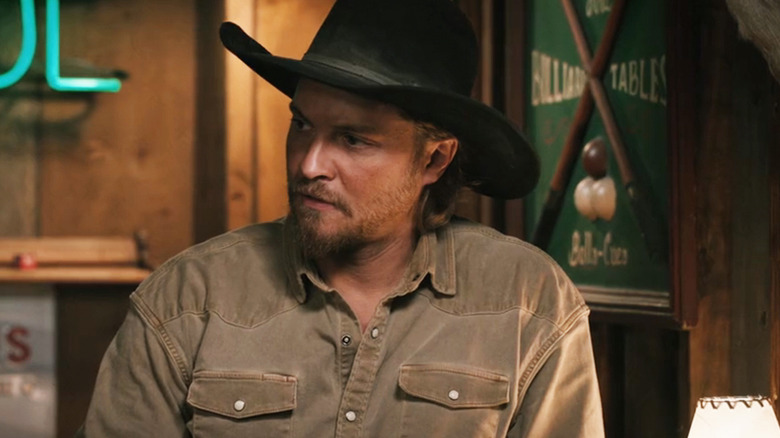
Yellowstone actor Luke Grimes admitted he was shocked about a Marshals storyline involving one of the main Yellowstone cast members.
News of all things scary
Some people read “horror movies” as synonymous with “scary,” but the vast majority of films in the horror genre are far from frightening. Most aren’t even trying to be scary as they’re instead looking only to entertain, thrill, and occasionally startle. These are all worthy goals, but when a horror movie sets out to unsettle and scare… and then actually succeeds? Well, that’s something special right there.
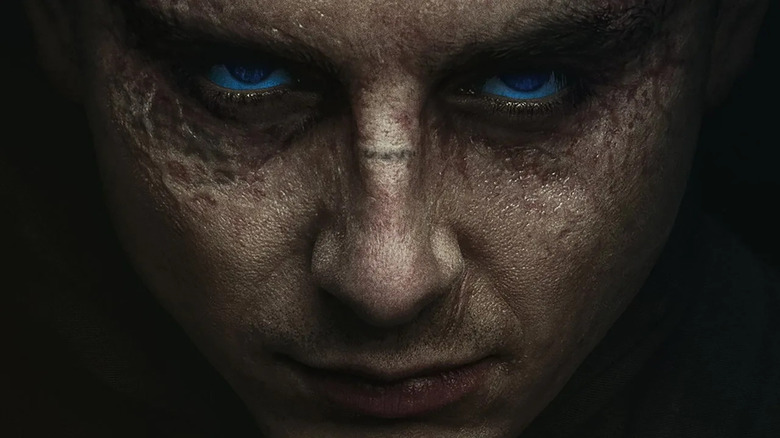
There are various ways in which a filmmaker might try to unnerve viewers, and the most difficult is arguably atmospheric. 1974’s Messiah of Evil may be a low-budget feature, but it’s a masterclass in capturing a disturbing and disquieting sense of place. Its eerily empty seaside town just seems off, and when its occupants do arrive, all pasty-faced and quiet, the film’s increasingly upsetting atmosphere finds incredible terror in mundane locales like supermarkets and movie theaters.
Fans of the film should seek out the “Father’s Day” segment of 2016’s Holidays and Mickey Keating’s Offseason (both coincidentally starring the great Jocelin Donahue) for some similar vibes. Now keep reading to see what I heard on the commentary for…
Commentators: Genre film experts Kim Newman and Stephen Thrower

1. The film went through various titles during production, including The Second Coming and The Blood Moon. It was also released at various points as Return of the Living Dead – a short-lived venture quickly shot down by George Romero’s lawyers – Dead People, Revenge of the Screaming Dead, Blood Busters, and Return of the Damned.
2. The man running and dying before the title card drops is future filmmaker Walter Hill.
3. Co-writer/director Willard Huyck attended UCLA alongside the likes of George Lucas and John Milius, and all three competed against each other with short films in a film festival at the time. The Los Angeles Times’ review of the fest singled out Huyck’s short as the best of the bunch.
4. Huyck never found his peers’ level of success as a director, but he did go on to direct 1986’s Howard the Duck. He had more luck as a writer alongside his fellow co-director/writer Gloria Katz, and went on to co-write American Graffiti, Indiana Jones and the Temple of Doom, and more.
5. Katz’s brother, Stephen Katz, is the film’s cinematographer, and he went on to shoot The Blues Brothers, I’ll Always Know What You Did Last Summer, and more.
6. Newman draws a line, of both style and themes, between this film and other “counter culture-inflected, slightly Lovecraftian” movies like The Witch Who Came from the Sea, Let’s Scare Jessica to Death, and the work of French filmmaker Jean Rollin.
7. “There’s a kind of wry wit to this film, but the characters exist in this sort of [Michelangelo] Antonioni J.G. Ballard-type ennui as they drift to their dooms,” says Newman, and this kind of line is exactly why you get him and Thrower on your commentaries.
8. Thrower adds that the dialogue walks a fine line between the pretentious and the more Lovecraftian, literary means of communication. “If you try to speak Lovecraft out loud, it’s kind of difficult to bring that off without adopting a very melodramatic persona to do it.”
9. Huyck and Katz were locked out of the editing room after they finished filming, but what followed wasn’t “a hack job.” The people who stepped in clearly knew what they were doing and made their best efforts to complete the film and stay true to its intentions.
10. We watch as Laura (Anitra Ford) walks through an eerily empty town, and Thrower comments that the feeling we get from it is sadly relatable these days after we’ve all been through the pandemic lockdown.
11. Newman suggests there’s been some debate over the years as to what exactly the “monsters” are in the film. Zombies, vampires, possessed people, a cult… “It’s good that you can’t define” what exactly these folks have become. Part of that, of course, could be due to the filmmakers being unable to film the intended, bigger, more clarifying ending.
12. The score is by Phillan Bishop, and they talk about how it’s among the early electronic scores in cinema. They mention a few more examples, including Alfred Hitchcock’s The Birds, and a common thread between them is their place in the horror genre, something that speaks to the genre’s typical low budgets more than anything else.
13. Gloria Katz cameo at 55:35 as the woman selling tickets at the movie theater.
14. The film on the theater marquee is 1950’s Kiss Tomorrow Goodbye, a James Cagney crime picture, that was chosen strictly for the terrifically appropriate title.
15. They reach the film’s most memorable scene – Toni (Joy Bang) takes a seat in an empty theater only for the seats to fill up behind her as the trailers play – and Thrower recalls a similar incident he experienced. In his case, he had gone to see Mario Bava’s Shock, took a seat in a fairly full theater, and turned around barely ten minutes into the film to realize that he was the only one there.
16. “If you really tap into the mood of it, then it really does start to pay off,” says Thrower regarding the film’s slow burn that explodes with legitimate horror at various points, like the supermarket and theater scenes.
17. The edits during both the supermarket kill and theater kill drive home one of the film’s themes on rampant consumerism consuming us all. As Laura is eaten, we get cuts to the empty supermarket aisles, and when Toni is attacked, we see shots of empty theater seats and a concession stand.
18. The stunt performer set ablaze towards the film’s climax is Buddy Joe Hooker, who went on to have a long, distinguished career in stunts as both a performer (Prophecy, The Entity, The Guardian) and a second-unit director (Mannequin, Gleaming the Cube, and Vanilla Sky).
19. They agree that the only real disappointment here is that the film’s ending wasn’t completed and was instead hobbled together by producers and editors after the fact. The bookends here, that Arletty (Marianna Hill) is simply a crazy woman recounting her madness via voiceover – as opposed to these events having really happened – do feel like an unfortunate afterthought.

“It’s that strange moment when the political revolution of the sixties has died away and fizzled out, but all the love children and hippies are left trying to work out what to do next.”
“People tried to do Lovecraft in the sixties, but in a way that made me think they’d never read a Lovecraft story.”
“I think that’s true of this house as a whole; it looks incredible, but you’re supposed to find it unnerving and off-putting.”
“If the camera panned away from the youthful shenanigans of American Graffiti and went down a different street, you might find the beginnings of the horror developing in this story.”
“Another theme in this film is that cops are useless.”
Keep up with more horror commentary breakdowns here.
The post 19 Things We Learned from the ‘Messiah of Evil’ Commentary appeared first on Bloody Disgusting!.
A toxic coven comes undone in director Meredith Alloway‘s feature debut, Forbidden Fruits.
The Diablo Cody-produced horror satire is an adaptation of playwright Lily Houghton’s stageplay Of the Women Came the Beginning of Sin and Through Her We All Die, with Alloway and Houghton co-writing.
The film, like the play, follows a witchy femme cult in a trendy retail store who are forced to face their own poisons with the arrival of a new employee.
One of the first notable changes to Houghton’s stage play is that some of the film’s characters are doomed to a bloody fate; the friendships descend into violence.
“There were no deaths in the play,” Meredith Alloway revealed when speaking to Bloody Disgusting ahead of Forbidden Fruits‘ premiere at SXSW. “I think the highest stakes are that the girls working at the store, basically, one of them steals a baby pink thong, and it starts a mutiny. It’s hilarious. It’s hilarious.

“When I read Lily Houghton’s play, Of the Women Came the Beginning of Sin and Through Her We All Die, I got to get the whole title out, what I was drawn to, and I think you of all people will understand that we’ve kind of been in a movement of horror directed by women that is revenge movies, for the most part. I love that. I think that we needed to go through that phase where I could think of so many movies that feature revenge in relation to a man. It’s still in relation to a guy.
“When I read this play, I was like, ‘There’s no relation to any men.‘ There’s Norman in the play. I believe he’s the only man in the play, and he’s also a character in the film. I was like, ‘This feels radical. This feels like something that I could spend the next couple of years of my life exploring.’
“When I met with Lily, I was like, ‘What if we take how violent female relationships can feel, how intense, dark, and beautiful female breakups can feel, and what if we use body horror to sort of elevate it?‘ So that was, I think, the avenue that was the most interesting part to me.”
It’s worth noting that Alloway doesn’t just add kills to Houghton’s source material; she makes them count with shocking violence. That includes one showstopper that feels right at home in the world of Final Destination.

Photo courtesy of Sabrina Lantos. An Independent Film Company and Shudder release.
Alloway did her homework to ensure it looked gnarly. “I unfortunately did my research. Even in the script, it says this could technically happen; don’t look it up. I mean, we go a little hyperbolic, of course, because we’re having fun. But yeah, I mean, I think that’s the fun thing about writing kills is going, ‘Why don’t I start with a seed of my own anxiousness?‘”
Also updated in Forbidden Fruits is the setting, Lili Reinhart‘s Apple has full reign of both store Free Eden and the entire mall. Alloway injects stylistic flourishes, complemented by a production design that feels almost removed from time.
The filmmaker also credits her cinematography for making the setting pop.
“Something I will say, working with Karim Hussain, who’s a dream and I’m such a fan of his work with Infinity Pool and Possessor, I knew that he could elevate a mall. I knew that he would go, ‘We’re not going to make this look like shit. We’re going to make this feel magical.‘ The biggest thing that we were up against was that the lights stayed on in the mall. The fluorescents are always on. So this idea of, especially horror film set in malls, of this, it’s all dark and just one neon sign at the end. Nope. The lights are on at all times. It is capitalism in your face, wasting electricity all the time. We leaned into that.”
Forbidden Fruits‘ self-contained story does leave things slightly ajar for an expansion of this film’s deeply messy and murderous women, something Alloway would be game to tackle if the situation presented itself.
“I think that’s really the root of the stories I’m telling. We see the crimes that women, particularly, commit, and we don’t ever really get, well, what led them there? I think a lot of my stories exist in that landscape.”
Independent Film Company and Shudder will release Forbidden Fruits in theaters everywhere on March 27, 2026.

The post ‘Forbidden Fruits’ Director Meredith Alloway Added Memorable Kills to Witchy Play Adaptation [Interview] appeared first on Bloody Disgusting!.
Lionsgate has landed The Death Roll, a survival horror-thriller spec script written by Kas Graham & Rebecca Pollock (Stolen Girl), Deadline reports.
Glen Powell will executive produce with Dan Cohen via their Barnstorm banner, alongside Bryan Haas (The Order) of Chasing Epic Pictures.
The film follows a couple whose dream vacation turns into a nightmare when they encounter the unexpected: an invasive 15-foot saltwater crocodile.
Barnstorm’s Ryan Schwartz will serve as executive producer, with Chelsea Kujawa and Maria Ascanio overseeing the project for Lionsgate.
Powell and Cohen are also producing A24’s “Texas Chainsaw Massacre” TV series developed by JT Mollner (Strange Darling).

Glen Powell in ‘The Running Man’
The post Glen Powell to Produce Killer Crocodile Thriller ‘The Death Roll’ for Lionsgate appeared first on Bloody Disgusting!.
It’s no secret that Kevin Williamson is a big fan of Wes Craven’s Scream 4 (which he wrote), so much so that his original hope was to use the franchise’s fourth installment and its new mythology as the springboard for a brand new trilogy of Scream movies back in 2011.
Williamson recalled in a recent chat with CinePop, “Scream 4 was about Emma Roberts and her character Jill. In my original conceit, Jill survived and went to college. And in college… she got away with it all… and she was now the new Sidney. The new celebrity victim. And she was loving it. And someone figured her out, and started killing all the people in her life. In order for her not to be exposed as the killer, she had to find the killer. And that was Scream 5.”
Of course, Jill ended up being killed off in Wes Craven’s Scream 4, and the character hasn’t appeared in the franchise since. But Kevin Williamson reveals in a new chat with Happy Horror Time that he tried to get Emma Roberts back for a cameo in Scream 7!
[Related] Bloody Disgusting’s Definitive Ranking of All 7 Movies in the ‘Scream’ Franchise!
Directed by Williamson, Scream 7 features cameos from past Ghostface killers including Stu Macher, Roman Bridger, and Nancy Loomis, each of them appearing on screen in the form of AI-created videos made by the film’s new Ghostface characters. But those cameos weren’t actually AI, as Matthew Lillard, Scott Foley, and Laurie Metcalf returned to film the videos.
And if Kevin Williamson had his way, Emma Roberts would’ve also appeared in that video montage as her Scream 4 character, Jill Roberts – the cousin of Sidney Prescott.
Williamson tells Happy Horror Time, “Since it was Sidney related, I felt like 1 through 4 needed to be represented. I desperately wanted Emma Roberts. Because that movie’s not represented. And I wanted her so badly. And I asked her like three times. But… the schedule or something didn’t work. It just didn’t work out for her. She couldn’t make it.”
Williamson reveals that he also tried to get Timothy Olyphant back to cameo as his Scream 2 killer, Mickey Altieri. He notes, “I think we reached out to him, but he couldn’t do it.”
[Related] Kevin Williamson Details ‘Scream 7’ Alternate Ending!
SPOILER ALERT
KEVIN WILLIAMSON tells us which other Ghostface killers he wanted to bring back in #scream7
— Happy Horror Time
(@HappyHorrorTime) March 16, 2026
The post Kevin Williamson Tried to Get Emma Roberts to Cameo in ‘Scream 7’ as ‘Scream 4’ Killer appeared first on Bloody Disgusting!.
Whether they’re behind the camera or in front of it, women have always been a part of horror. As actors, filmmakers, and producers, women have been instrumental in making the horror genre so incredible and relatable.
While there is more diversity now in horror than ever before, there is still progress to be made to ensure women’s voices are heard. You know the old saying, “a woman’s work is never done.”
Australian film critic, historian, and author Alexandra Heller-Nicholas has published nine books on cult, horror, and exploitation cinema with a focus on gender politics. She is a member of the advisory board for the Miskatonic Institute of Horror Studies and holds a Ph.D. in Screen Studies from the University of Melbourne and is an Adjunct Professor at Deakin University.
Published in 2020, Alexandra’s book 1000 Women in Horror, 1895-2018 is an extensive love letter to both the stars and the women who have been too often ignored, who have made contributions to the horror genre and influenced it to become what it is today.
Donna Davies is an award-winning documentary filmmaker based in Nova Scotia who has established herself as a voice in the horror genre with documentaries like Pretty Bloody: The Women of Horror (2009), Nightmare Factory (2011), and Fanarchy (2015).
Directed by Davies, the documentary 1000 Women in Horror brings Alexandra Heller-Nicholas’ book to the screen and features interviews with Roxanne Benjamin (There’s Something Wrong With the Children), Akela Cooper (M3gan), Mary Harron (American Psycho), Kier-La Janisse (Woodlands Dark and Days Bewitched: A History of Folk Horror), Nikyatu Jusu (Nanny), Roseanne Liang (Shadow in the Cloud), Annalise Lockhart (Inheritance), Toby Poser (Mother of Flies), Sara Risher (A Nightmare on Elm Street), Gigi Saul Guerrero (Satanic Hispanics), Kate Siegel (Hush), Jenn Wexler (The Sacrifice Game), and more. Showcasing the extraordinary women who have innovated horror cinema since 1895, the documentary explores the evolution of women in horror and how their work has been fundamental to the genre and its success.
Bloody Disgusting had the pleasure of talking with Alexandra Heller-Nicholas and Donna Davies about teaming up to create the documentary 1000 Women in Horror, why women are drawn to horror movies, representation of women in the horror space, and the role of gender politics in genre film.

Bloody Disgusting: This is such an essential book and documentary. There are so many amazing women in horror. Alexandra, how did you go about choosing the women to be included?
Alexandra Heller-Nicholas: The book started out as 100 Women in Horror and then became 500 Women in Horror and then became 1000 Women in Horror [laughs]. That’s a true story. The original proposal was pitched as 100 Women Horror, and I ended up just giving up, and that’s kind of the joke of the book and the joke of the documentary. Of course, there are more than 1000 women in horror. Once I sort of surrendered to that as a provocation, the process for the book was, “Who can I choose to provide a sense of scale?” So, not just a historical scope, but also geographical. I have a Nigerian filmmaker in there, people from Iceland, I really wanted to give it a strong sense of the geography, but also history as well, going right back to the early silent period, so that was really the governing thing.
I knew people were going to freak out if I didn’t put Jamie Lee Curtis in there, quite rightly, so there were all these big names that had to be in there. But it wasn’t a case of, “Who are the most important 1000 women in horror,” because that really goes into one of the themes that is really crucial to the book and to the documentary, which is that women’s labor is invisible, not just in horror, not just in women’s filmmaking, but in the world. You don’t notice your mum doing your laundry every day, right?
Women’s labor is historically invisible. So, that was really my driving thing. It was like, “How do I make invisible labor of women visible?” Because of that, I have people like Margaret Cardin, who was an Australian negative cutter; people don’t talk about negative cutters. She worked on every major Australian horror film from the 70s and 80s. So, it was really about addressing this idea of women’s invisible labor.
BD: I love how the documentary is told in chapters ranging from Girlhood through Aging, and how it’s presented in a way that is comprehensive and straightforward. Donna, how did you and Alexandra collaborate to bring the book to the screen?
Donna Davies: When we first put our heads together for the project, we were looking at possibly doing a six-part series, and there was a little bit of interest in that. So, we were looking at it in a different way, but then when we realized that we were going to be doing a 90-minute project, we were like, “Okay, we can’t do it in those kinds of chapters we had before.” The idea of a woman’s lifecycle was something Alexandra came up with, and it worked perfectly as a sort of a hanger to put all the material on. When we started to look at it that way, we quickly came to a consensus that there would have to be a certain amount of tentpole films that were essential and then in those categories, for example films about childhood, the most important films that we knew people would know about, but had to be mentioned, and then little less known, and then very important but from other parts of the world.
So, there were months and months of discussions and back and forth. This process of this film started in 2019, so it took quite a few years; it wasn’t a fast film, put it that way [laughs]. I think that we were on the same page in wanting to be very comprehensive, but entertaining, and also inclusive. Those were our main goals.

Filmmaker Toby Poser
BD: I know I’m not alone when I say that this documentary made me feel validated as a woman and a horror fan. Several of the women in the film talk about feeling like weirdos or outsiders when they were younger, and how female horror fans form a relationship with horror, and how horror movies can be cathartic. Can you talk a little bit about that, and why do you think women feel so seen by genre film?
AHN: I think in certain circles, even now, there is the assumption that, whether you’re a horror fan or a horror filmmaker, if you’re a woman or femme-identifying, that you’re an interloper; that you don’t really belong; it’s not really your terrain; that horror is a masculine territory. The lived experience of so many women and femme-identifying people whom I know is the opposite of that, and I think in a way that’s what we wanted to map out. So, it wasn’t just a case of making both people who work in the horror industry and people who are fans; it wasn’t just a question of making people visible and feel seen, it was also a case of saying, “Look, it’s actually a really organic response for women and femme-identifying people to be drawn to horror.” So, that was really one of the big things that we wanted to more implicitly address. It’s like, “We’re drawn to this stuff quite naturally because it taps into every single stage of our life.”
DD: There is a point in the film where Kate Siegel says, “Women live a life of horror every time they walk outside their door.” The fact of the matter is that we’re very familiar with fear and with violence; we have to think differently; we have to be on guard. That’s just the way the world has evolved. We live a life that is filled with blood; we bleed; we have babies. We do all kinds of crazy stuff like that. Therefore, why shouldn’t we claim some of the domain as being ours?
Horror is a genre where those uncomfortable things that we can’t discuss in “nice circles,” like wanting to murder your child, like in The Babadook, all kinds of emotions that we’re able to exorcise through these films. I think Alexandra is right when she says that many people believe women who like horror are posing or that we don’t belong. Hopefully, you got that feeling that there’s other people who feel the way that you do and I’m really hoping that this film will get out there and young girls and femme-identifying people who see it, or anyone who feels not accepted, realizes that there is a place for them at the table, that it’s not what they’ve been told [laughs].
BD: I grew up with movies like A Nightmare on Elm Street and Halloween, so I’m a big fan of final girls, and I think they’re usually empowering. What are your thoughts on the evolution of the final girl trope and how it relates to the representation of women in horror?
AHN: That’s an interesting question. Carol Clover published a journal article and then published the book Men, Women, and Chainsaws in 1992. I think it’s really important to remember that Jamie Lee Curtis, even before the final girl label was created, was doing press for Blue Steel, talking about the final girl. She wasn’t calling her the final girl, but she knew exactly what that archetype was; she was engaging with it directly in Blue Steel. She was very aware and very tapped into the fact that the character that she played in Blue Steel was kind of riffing on the same kind of ideas as Laurie Strode in Halloween and things like Prom Night and Terror Train, so she was quite final girl literate even before the term final girl was created. So, I think that’s really important.
I think that there is a tendency, and it’s perhaps just human nature, to see old slasher films as less progressive, and that we’re so much smarter now, and we’re sort of post-postmodern, and things are so much more progressive. But I’m like you, I was sort of forged in the flames of 80s slashers. That’s my spiritual homeland.
I think lesser-known films like Happy Birthday to Me, on the gender political front, that is to me a radical film, and I don’t mean that like a ninja turtle. I think it’s politically radical. I think it’s a film that is deeply intersectional and that it’s about gender and class. I think My Bloody Valentine is again an incredible slasher film about class. I think that these films knew what they were doing. Bob Clark’s Black Christmas, which we talk a lot about in the documentary, was doing things, and April Wolfe gives an incredible, impassioned description of why that’s such an important film.
But that film talks about things that we find difficult to talk about today. The way that it talks about reproductive rights, the way that it talks about consent, the way that it talks about autonomy, and the female community. I struggle to think of a contemporary slasher that does what Bob Clark’s Black Christmas was doing in 1974.

Director Nikyatu Jusu
BD: You just touched on gender politics in horror, which is discussed in the documentary. Horror has always been political. Can you talk a little bit about the role of gender politics in the horror genre?
AHN: When filmmakers come out and say, “I’m not a political filmmaker,” it’s like, “You don’t live in a vacuum.” Every film is responding or reacting, even subconsciously, to the context within which it is made. If that context is East Germany in the 1970s, that’s going to be a very different kind of context from something being made in Toronto in 2020. We can’t help it. That’s what art does. Art soaks up the zeitgeist and responds to it in some way on some level, whether it’s consciously meaning to or not. Art doesn’t exist in a vacuum. All film is political. Gender difference is part of the way that we navigate the world, along with things like class, ethnicity, race, sexual identity, and religion. We’re responding to the kind of social norms about these things in film, whether we mean to or not.
DD: I think Alexandra expressed it very well. I think that we’re making progress in certain ways, and I think that in making voices that are not commonly at the table known more and getting the stories out that are getting out there, it’s all about inclusivity. If we get a chance to bring the other voices to the table, I think we’re in for a big surprise as far as what we’re going to see in the next 10 years in terms of what films are going to get made, and I think that the response is going to be incredibly positive. I don’t see anything but blue skies for opening the floor up a little bit and sharing the space with some people who have some very big bones to pick and issues to talk about [laughs].
AHN: I think Alice Maio Mackay is the poster girl of that. She’s this young trans filmmaker who’s made an extraordinary number of films that would be an accomplishment for somebody twice her age, and they are just these punk, passionate, political, entertaining, smart films. I think that Alice is marking the next wave. My dream is that we have an army of Alice Maio Mackays in the next 10 years.
1000 Women in Horror premieres on Shudder on March 20.

The post Alexandra Heller-Nicholas and Donna Davies Talk ‘1000 Women in Horror’ [Interview] appeared first on Bloody Disgusting!.
