January 2026

Such Innocent-Looking Monsters: The Creepy Kids of ‘Village of the Damned’ and Its Sequel

It is no wonder that the rise of the “creepy kid” movie began in the 1950s with movies like The Bad Seed (1956), which itself came on the heels of teenage angst and rebellion movies like The Wild One (1953) and Rebel Without a Cause (1955).

The 50s saw the rise of a new species, the teenager, who was no longer destined to follow in the footsteps of the parent: working the farm, minding the store, heading into the mines, or off to the factory. This new species had something their parents did not have—spare time, and they used that time, at least in the minds of fearful adults, to get up to no good. But surely their sweet, innocent younger children would not do such things…right? Village of the Damned (1960) and its 1964 sequel, Children of the Damned, are quintessential examples of this creepy kid subgenre that is so divisive in horror fandom.

Some love it, others despise it, but there is just something about the idea of such innocent-looking monsters—the contrast of the extraordinarily powerful in the guise of the helpless is simultaneously so compelling and so disturbing.

John Wyndam’s 1957 novel The Midwich Cuckoos was an examination of these kinds of fears, and with its success, a film version soon followed. Village of the Damned, later remade by John Carpenter, adheres to the basic plot of the book, which plays out like an extended version of one of the great episodes of The Twilight Zone or The Outer Limits. One ordinary day, the citizens and animals of the little village of Midwich, England, all fall unconscious simultaneously. For several hours, anyone who tries to enter the village passes out cold. Military personnel on exercises nearby are sent to perform various experiments with similar results. A few hours later, just as inexplicably, the town wakes up apparently unharmed.

Before long, however, it is discovered that every woman in the town capable of bearing children is pregnant by what appears to be immaculate conception, and the pregnancies progress at an alarming rate. Ultimately, twelve children are born on the same day, around the same time, all around the same size, and all with strange eyes.

Village of the Damned

It’s a great setup that carries with it several implications about believing women, family planning, freedom of choice in those matters, and societal judgments that existed then and now toward pregnancy in certain situations. Some of the women are unmarried, for example, and all but shunned for their unplanned pregnancies. Another woman is married, but her husband has been away for over a year, and he assumes that she cheated on him. The film presents the unfortunate reality, which remains to this day in many situations, that the burden of responsibility is placed solely upon the woman, with the male counterpart taking none of it. Of course, in this case, the inseminating source of the pregnancies is never discovered. In the novel, it is apparently alien in nature, but neither here nor in Children of the Damned is a definitive answer ever given, though there is much speculation.

After the children are born, they mature quickly, both physically and mentally. Professor Gordon Zellaby (George Sanders), “father” to one of the children, David, takes it upon himself to observe and study the Children. Early on, he discovers that “if you demonstrate something to one of them, they all know it,” which he proves to his brother-in-law by asking several of the children to solve a complicated puzzle box when they are less than one year old. A number of strange accidents also begin to occur around the Children, which only increase as they grow older.

David, now played by Martin Stephens, takes up the leadership of the group of children who have become outcasts in the community because of their strange looks (that iconic platinum blonde hair) and behavior. The Children travel as a group, dress the same, and seem to have no emotion. The children are ostracized, at least at first, for one reason—they are weird. They simply do not fit the societal norms and are therefore bullied, pushed to the margins, and ultimately confined to their own school, which in the real world would be an institution. But still, despite their separation from the rest of the village, the stigmas persist. The fears persist.

The stigma and lack of understanding of the Children are displayed in the actions of the villagers in multiple ways. “They’re not human. They ought to be destroyed,” cries one man whose brother died in a car accident, admittedly caused by the Children as they felt the need to protect one of their own. There are several other “accidents,” but they are all in the interest of self-preservation, and the Children look to the people that surround them as their example. They are cruel, but their cruelty is inspired by those they observe in the village itself. If the people of Midwich had chosen to embrace rather than fear the Children, they would learn they have nothing to fear. In fact, it is apparent that the Children would work with the village for their mutual benefit, given the space and time to learn and grow.

In a scene late in the film, David’s mother Anthea (Barbara Shelley) seems to have this idea in mind when she pleads, “David, why do you do these dreadful things? Wherever it is you come from, you’re part of us now. Couldn’t you learn to live with us and help us live with you?” I believe the answer is an implicit “yes” given the opportunity to mature and cooperation from the people of Midwich, and by extension, the world.

So, where do they come from? What exactly are they? There are speculations about the transference of energy and beams bounced off the moon, but ultimately, it doesn’t really matter. They are here, and they are powerful, which makes them fascinating to some and dangerous to others. It is also discovered that similar events happened around the world at the same time as the Midwich incident, but few of the children survived. Eventually, the Russian government felt its colony had grown too powerful and destroyed the village within its borders with a nuclear bomb, wiping out the entire town, not just the children. Some feel the same thing should happen to Midwich, but Zellaby responds, “What cannot be understood must be put away. Is that your view? The age-old fear of the unknown?” He then goes on to argue that science, society, and humanity itself could be advanced a hundred years by what the children could teach them. But humanity chooses fear instead.

Children of the Damned

These ideas are explored to even greater depth in Children of the Damned, but in both cases, fear overwhelms, and the children are ultimately destroyed by a purposeful act in the original and a clumsy accident in the sequel, making it all the more tragic. Village of the Damned sets the stage and tells a terrific story based on a compelling scenario. Children of the Damned takes that scenario and runs with it, mining the thematic possibilities and expanding it to an international fable of war, peace, and the future of humanity.

In reality, Children is a sequel in name only and more of a reimagining of the concept. There is no discussion of the events of the first film. Instead, it begins with six children born throughout the world with extraordinary intellects by mysterious pregnancy to, as the movie puts it, an “unstable mother and no trace of a father.” These children are all moved to their national embassy within London, where they join forces and hole up in an abandoned church with Susan (Barbara Ferris), sister to one of the mothers, as their guardian and conduit of communication to the outside world.

Again, the people of the world, represented by the adult guardians of the children, argue over whether to destroy them or learn from them. The international element is especially powerful in the mid-60s as the Cold War was at its hottest. The threat of international mutual annihilation was at its height in the wake of the Cuban Missile Crisis in October of 1962, and as is often observed, genre film can explore social and political issues in entirely unique ways by placing them under the guise of fantasy. The Children each represent a people of the world, all of whom have much at stake in the ever-increasing arms race: Paul (Clive Powell) from Britain, Mi Ling (Yoke-Moon Lee) from China, Nina (Roberta Rex) from the Soviet Union, Aga Nagalo (Gerald del Sol) from Nigeria, Rashid (Mahdu Mather) from India, and Mark Robbin (Frank Summerscale) of the United States. The film depicts these children in perfect harmony, communicating almost entirely by telepathy, while the adult representatives of their nations bicker and build military might.

Children of the Damned

The symbolism is not subtle.

In the first film, there is a sense of generational fear. The adults dread their destruction at the hands of the Children, which, in a manner of speaking, is true. It is the nature of humanity and life itself that the next generation takes the place of the previous as it ages and dies. In the sequel, the Children fully represent the future of humanity. Though it is not entirely explained, it is postulated that the Children represent an evolutionary leap of at least a million years. Unfortunately, they have learned the bad habit of killing from the adults who attempt to kidnap and destroy them.

Dr. David Neville (Alan Badel) urges them not to kill because they are different, better than the current state of humanity. In a powerful moment, the children stand before the adults who have all the military might of the world pointed in their direction and, through Paul, say, “You have chosen your way, we have chosen ours.” But instead of gaining control of the adults’ minds and forcing them to use their weapons on each other, these children, representing all nations, grasp hands in a moment of solidarity and peace.

But then, through clumsiness and stupidity, the signal to open fire is given, and humanity literally destroys its own future. Again, the symbolism is not subtle, but its power should give us pause. We so quickly fear what we do not understand and seek to destroy it. Instead, we must seek to understand what we fear, or we will be destroyed not by what we fear, but by our own hand. It begs the question, “Who are the real monsters here?”

Yes, the Children are innocent-looking monsters, but we taught them everything they know.

The post Such Innocent-Looking Monsters: The Creepy Kids of ‘Village of the Damned’ and Its Sequel appeared first on Bloody Disgusting!.

Sam Raimi Would “Not Allow Anyone Else to Be the Gunk-Thrower” on ‘Send Help’ Set

What’s a Sam Raimi movie with some splatter?

Speaking to Empire, the Send Help director recalls “throwing vomit in Dylan’s face. Throwing blood in Rachel’s face, throwing water in her face, poking her with sticks.”

For the stars Rachel McAdams and Dylan O’Brien, getting pelted by Raimi himself is something of a badge of honor.

“He will not allow anyone else to be the gunk-thrower,” says McAdams. “I thought he was kidding the first time, when he threw a bucket of water in my face when the plane goes into the water. Nope! He takes his job very seriously. He practices. He rehearses.”

McAdams had “a lot, a lot, a lot” of blood thrown on her. “He’d say, ‘More! That’s not enough!’ We’re like, ‘You’re getting greedy now.’ Like, any sane person would know that there’s a lot of blood.”

Early sneak preview screenings of Send Help will take place on January 24 before the survival thriller hits theaters on January 30 via 20th Century Studios.

Linda Liddle (McAdams) and Bradley Preston (O’Brien) are two colleagues who find themselves stranded on a deserted island after they are the only survivors of a plane crash. They must overcome past grievances and work together to survive, but ultimately, it is an unsettling and darkly humorous battle of wills and wits to make it out alive.

Edyll Ismail (“La Brea”), Dennis Haysbert (“24”), Xavier Samuel (The Loves Ones), Chris Pang (Crazy Rich Asians), Thaneth Warakulnukroh (“Thai Cave Rescue”), and Emma Raimi (Sam Raimi’s daughter) round out the cast, along with an appearance by horror icon Bruce Campbell.

Damian Shannon & Mark Swift (Freddy vs. Jason, Friday the 13th 2009) penned the script. Danny Elfman (Spider-Man, Beetlejuice) composed the score.

Raimi produces alongside Zainab Azizi (65, Don’t Move) for Raimi Productions, with JJ Hook (Dungeons & Dragons: Honor Among Thieves, Bumblebee) serving as executive producer.

The post Sam Raimi Would “Not Allow Anyone Else to Be the Gunk-Thrower” on ‘Send Help’ Set appeared first on Bloody Disgusting!.

’28 Years Later: The Bone Temple’ Review – Nia DaCosta Pushes Horror Forward in Soaring Sequel

The second entry in writer Alex Garland and original director Danny Boyle‘s trilogy, 28 Years Later: The Bone Temple, picks up from the previous film’s divisive conclusion that saw young Spike (Alfie Williams) fleeing from the Infected straight into the open arms of a psychopathic cult leader trapped in the past. Director Nia DaCosta takes the reins with fearless gusto, making this entry wholly her own while pushing the overarching story and its richly layered themes into darker, grislier, funnier, and more poignant territory.

28 Years Later opened with the introduction of a young boy surviving the Rage virus-induced slaughter of his family, leaving him orphaned and alone. That boy, the film’s ending would reveal, grew up to become Sir Jimmy Crystal (SinnersJack O’Connell), a man forever stunted by the apocalyptic event that permanently cut off the British Isles from the mainland. Worse, his developing young brain processed the traumatic event in ways that, left unchecked, would help him blossom into a boisterous yet vicious cult leader of followers made in his image.

As protagonist Spike is forced to navigate Sir Jimmy and his Jimmies’ volatile clutches, exposing humankind’s darkest lows, hope for the future comes once more from Dr. Kelson (Ralph Fiennes), who continues his tender attempts to understand the imposing Alpha he dubbed Samson (Chi Lewis-Parry).

Samson (Chi Lewis-Parry) and Dr. Kelson (Ralph Fiennes) in Columbia Pictures’ 28 YEARS LATER: THE BONE TEMPLE. Photo credit: Sony.

It’s through the characters and their morally grey journeys and conflicts that bring The Bone Temple closest to the original film 28 Days Later, particularly its harrowing third act reminder that humans tend to be both arbiters of their own doom or salvation. Garland’s script and DaCosta’s visually arresting direction capture the engrossing dichotomy through two starkly opposed bids for the future, with the impressionable Spike caught in the middle. It’s DaCosta’s handling of both extremes that impresses most.

Jack O’Connell sells Sir Jimmy’s villainy well, subjecting many to the series’ most brutal violence yet, sometimes even his own flock. One sequence of acute, visceral torment serves as a shocking encapsulation of faith’s potential for corrosion, in contrast to Dr. Kelson’s unwavering patience and empathy in his search to find any sign at all of intelligence beneath the virus’s all-consuming rage. O’Connell brings range to Sir Jimmy’s destructive nature; he’s both terrifying and frequently funny in his childlike approach to chaos. Helping to flesh him out are the Jimmies, and right-hand Jimmy Ink (Erin Kellyman), who takes Spike under her wing and guides him through the cult’s more twisted rituals. Kellyman imbues the character with an elusive set of morals that fascinates, one that feels all but forecasted to play a crucial role in Spike’s journey beyond The Bone Temple. Chi Lewis-Parry also brings an affecting perspective into the infected.

Sir Jimmy Crystal (Jack O’Connell) with the Jimmies in Columbia Pictures’ 28 YEARS LATER: THE BONE TEMPLE.

The dual paths of light and dark collide in one epic conclusion, an inspired confrontation between good and evil on a stunning set piece of heavy metal insanity, one befitting of Sir Jimmy Crystal’s brand of Satanism and theatre. While this alone would be enough to send audiences out on a fist-pumping note, DaCosta tees up the third installment with the euphoric return of a familiar face. One that instantly raises obvious questions, including: when is part three arriving?

The Bone Temple is a strange continuation in that it nestles well into Boyle and Garland’s established world and seamlessly picks up Spike’s journey, yet it is self-contained and functions on its own. More noticeably, it lets DaCosta put her personal stamp on the material; whereas 28 Years Later looks and feels like a Danny Boyle movie, The Bone Temple is wholly DaCosta’s. The middle act of this three-part trilogy is far more straightforward than its predecessor, but also far more horrific in many regards. It really puts pressure on the final entry to bring this soaring saga to a conclusion worthy of two remarkable installments.

28 Years Later: The Bone Temple releases in theaters on January 16, 2026.

4 out of 5 skulls

The post ’28 Years Later: The Bone Temple’ Review – Nia DaCosta Pushes Horror Forward in Soaring Sequel appeared first on Bloody Disgusting!.

‘Eater’ – Watch the Cannibal Short Film the Duffer Brothers Made 10 Years Before ‘Stranger Things’!

In the series finale of “Stranger Things,” Jonathan Byers (Charlie Heaton) ends up being a student at New York University in pursuit of a filmmaking career, and he tells his pals that he’s working on an “anti-capitalist cannibal movie” titled The Consumer. Were creators Matt and Ross Duffer hinting at an in-universe spinoff movie down the road? Actually, the brothers were referencing a cannibal short film they already made together nearly 20 years prior!

The Duffer Brothers got their start directing a couple short films before they got around to creating the pop culture phenomenon that became “Stranger Things,” and one of those shorts was indeed a cannibal horror movie. It wasn’t titled The Consumer, however, but rather Eater.

Eater was co-directed by Matt and Ross Duffer during their time at California’s Dodge College, not unlike Jonathan Byers making a cannibal movie of his own while off at college!

Written and directed by the Duffer Brothers back in 2007, Eater was based on the same-titled short story by Peter Crowther. In the 18-minute short, “A rookie cop (Emanuel Borria) works the night shift at a police station with a cannibal prisoner on the loose.”

You can watch the suspenseful cannibal short below for a peek inside the minds of the Duffer Brothers when they were getting their start, just about 10 years prior to “Stranger Things”!

It’s interesting to note that Eater star Emanuel Borria reunited with the Duffer Brothers for “Stranger Things 5,” playing the character Sergeant Luis Ramirez in three of its episodes.

It’s also interesting to note that Peter Crowther’s short story was adapted by Stuart Gordon just one year after Eater was made by the Duffer Brothers. It was an episode of the NBC horror anthology “Fear Itself,” which was a spiritual successor to “Masters of Horror.”

The post ‘Eater’ – Watch the Cannibal Short Film the Duffer Brothers Made 10 Years Before ‘Stranger Things’! appeared first on Bloody Disgusting!.
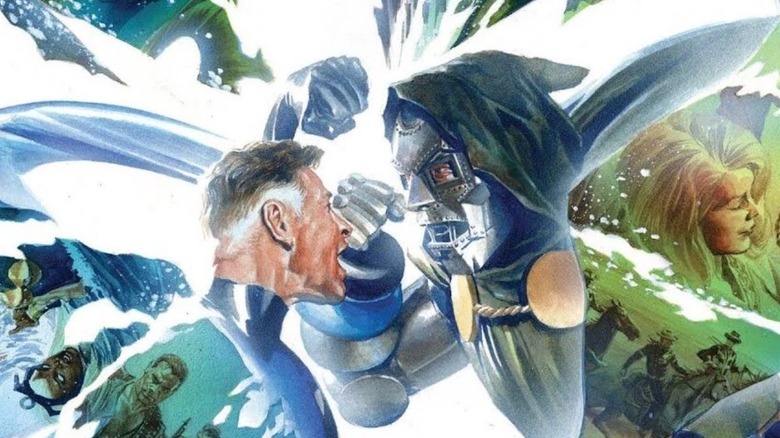
Reed Richards And Doctor Doom’s Longtime Feud, Explained

Reed Richards and Doctor Doom are mortal enemies in the pages of Marvel’s Fantastic Four comics. Here’s the backstory behind their longtime feud.

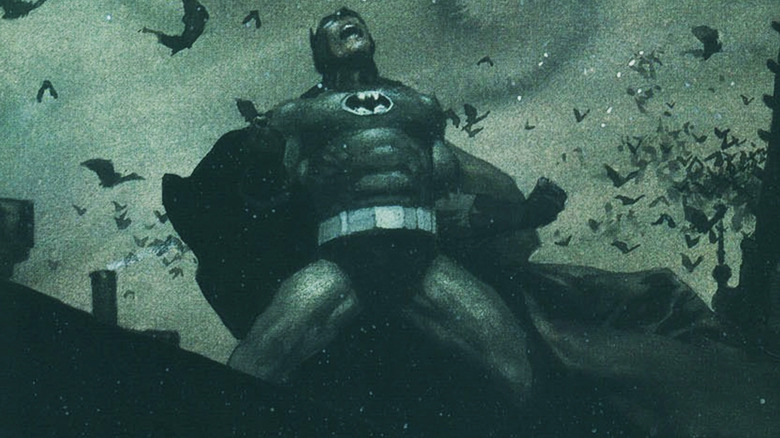
Batman’s Best And Darkest Story Tapped Into A Real-World Horror

There have been plenty of grim moments in the Dark Knight’s almost 90-year history, but 1992’s Batman: Night Cries might be the darkest (and the best).

What The Martian Author Andy Weir Really Felt About Matt Damon’s 2015 Adaptation

Most folks seem to love the film adaptation of The Martian, but what about the original book’s author, Andy Weir? Here’re his two cents on the Matt Damon flick.

How Did Anakin Skywalker Get His Scar In The Star Wars Universe?

Anakin Skywalker received his facial scar during a fight depicted in a Star Wars comic, but there still has not been a canonical explanation for how he got it.

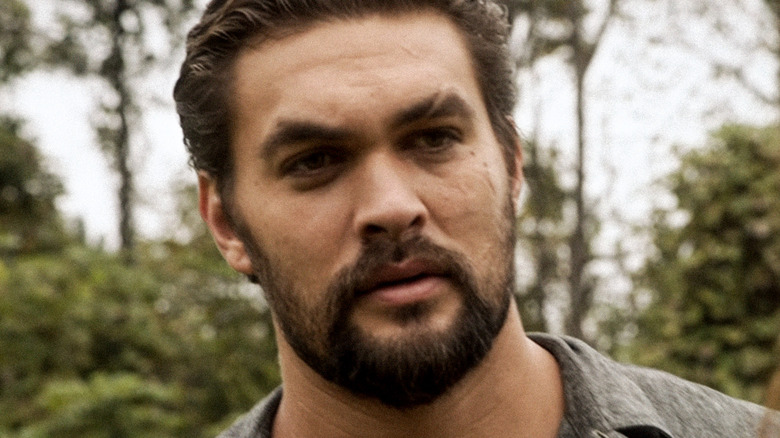
Jason Momoa’s Underrated 2010s Crime Thriller Series Is A Hidden Gem On Netflix

Jason Momoa’s short-lived SundanceTV show The Red Road didn’t get much attention when it first premiered, but it could find a second life on Netflix.

Five John Carpenter Movies to Stream This Week

Horror master John Carpenter forever changed the genre in 1978 with Halloween. This Friday, the filmmaker and composer turns 78. We’re celebrating with a themed John Carpenter Week, including a handy streaming guide of John Carpenter gems, from his horror classics to some deeper cuts.

Catch up on this week’s titles, then keep the synth vibes going by heading to Screambox for the special concert event Halloween Night: John Carpenter Live from Los Angeles.

As always, here’s where you can stream this week’s streaming picks.

For more Stay Home, Watch Horror picks, click here.


Christine – Netflix, Pluto TV

John Carpenter’s Stephen King adaptation saw a nerdy teen undergo a dramatic personality transformation after purchasing and bonding with his new car. There’s more than meets the eye with his Plymouth Fury, Christine. It turns out she’s got one severe jealousy streak, and she’s willing to kill anyone that would get between her and her owner. Christine is one slick killing machine, and her film is made memorable by Carpenter’s direction, clever approach to the car’s resurrection, and score.


Eyes of Laura Mars – Roku Channel, Tubi

Eyes of Laura Mars

Before famously helming The Empire Strikes Back, director Irvin Kershner tackled a neo-noir Giallo feature based on a treatment/source story by horror master John Carpenter. Faye Dunaway stars as the titular Laura Mars, a fashion photographer that develops a bizarre ability to see through the eyes of a killer targeting those around her. While played straight, the ending goes off the rails in the most wonderfully dramatic way. It’s stylish and studded with an all-star cast, including Tommy Lee Jones, Raul Julia, and Brad Dourif.


The Fog – Fawesome, Kanopy, Moviesphere+, Roku Channel

A coastal town approaching their centennial celebration instead find themselves combating mysterious evil brought in by an unnatural, dense fog. Evil in the form of vengeful ghosts of shipwrecked leprous sailors from a century ago. John Carpenter gives a classic ghost story a nautical makeover, with his own sense of style. The Fog boasts an all-star cast of horror stalwarts, from Jamie Lee Curtis to Tom Atkins, but it’s Adrienne Barbeau’s radio DJ Stevie Wayne that steals the film.


In the Mouth of Madness – AMC+, Shudder, Tubi

In the Mouth of Madness

Do you read Sutter Cane? Written by Michael De Luca and directed by John Carpenter, this descent into madness isn’t directly lifted from Lovecraft’s works but feels like it could be. Sam Neill plays John Trent, an insurance investigator hired to look for a missing bestselling author whose books affect his fans in brutal ways. The further into the investigation that John gets, the more surreal and dangerous things become. Hobb’s End is an insidious little town full of insanity, creatures, and death. In the Mouth of Madness closes out Carpenter’s apocalypse trilogy, this time adding a hefty dose of cosmic horror to the doom.


Someone’s Watching Me! – Tubi 

John Carpenter’s made-for-television thriller follows a TV director (Lauren Hutton), Leigh, who relocates to Los Angeles for a professional fresh start, only to find herself in a suspenseful game of cat-and-mouse when her new apartment leaves her exposed to a stalker. It’s a precursor to Carpenter’s more famous stalker, Michael Myers; this thriller was filmed immediately before Halloween. It’s efficient and suspenseful, and a solid look at Carpenter’s early career. Also look for Carpenter mainstay Adrienne Barbeau, who assists Leigh with her stalker plight.


Keep up with John Carpenter Week here. 

The post Five John Carpenter Movies to Stream This Week appeared first on Bloody Disgusting!.