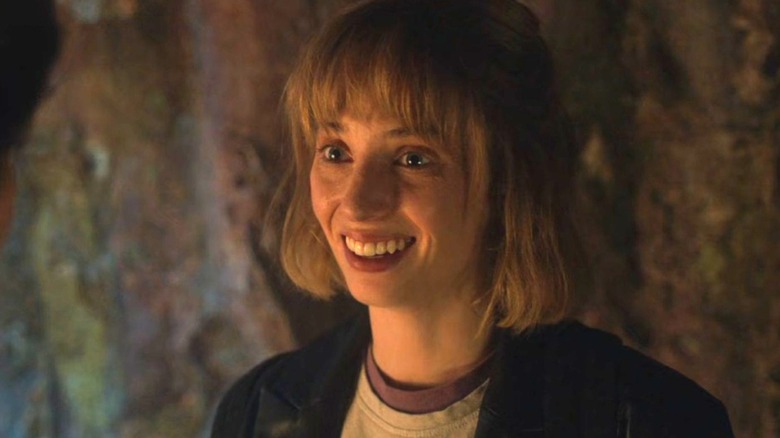
While Pluribus is a reminder that Vince Gilligan once worked on The X-Files, he also developed a similarly X-Files-like TV pilot before making that series.
News of all things scary
Of all Earth’s creatures that strike fear into the human heart, snakes rank very high. Some serpents earn their scary reputation all on their own, and others are quite harmless. That said, once the ophidiophobia has set in, it can be hard to overcome.
The many movies about snakes, particularly dangerous, big, and man-killing ones, don’t help to mitigate that aversion, but for the right audience, they can be pretty entertaining. With the new Anaconda in theaters, naturally, people would be looking for more snake horror.
So, apart from the original Anaconda—which is always a must-see—you should add these ten other snake movies to your watchlist.

Pictured: The Snake Girl and the Silver-Haired Witch (1968).
While it’s true that there could be more snake and witch action in The Snake Girl and the Silver-Haired Witch(Hebimusume to Hakuhatsuma), this adaptation of a Kazuo Umezu manga story is still an effective chiller. Directed by Noriaki Yuasa, the man behind the classic Gamera era, the movie is a moody, gothic beaut. You’ll likely wish this pushed the envelope a bit more than it actually does, considering the source material, but the visuals and wacky effects make up for the somewhat tame execution.

Pictured: Sssssss (1973).
In line with other ’70s horror movies, Bernard L. Kowalski‘s Sssssss focuses on its psychological element. Here, a herpetologist (Strother Martin) develops a secret serum that can turn people into snakes. Unfortunately, the first guinea pig is his assistant (Dirk Benedict). Fans of character studies and body horror should keep an eye out for this, although as a warning, the story does become rather heavy.

Pictured: Lisa Pelikan and Bert Convy in Jennifer (1978).
Clearly inspired by Carrie, Brice Mack‘s Jenniferreplaces telekinesis with the not-as-cool ability to control snakes. The titular snake charmer in this less-remembered, coming-of-rage film is played by Lisa Pelikan, who later starred in Ghoulies. Not-so-original as it is, Jennifer still manages to amuse with its commitment to the premise.

Pictured: Fair Game (1988).
In Mario Orfini‘s Fair Game (also known as Mamba), revenge is a dish best served scaly. An embittered man (Gregg Henry) releases a deadly mamba into his ex’s apartment, then traps her (Trudie Styler) inside. What follows is definitely what could be considered a slow burn, but the ending of this vindictive chronicle should provide some satisfaction. The movie also stars horror icon Bill Moseley.

Pictured: Curse II: The Bite (1989).
A man (J. Eddie Peck) is afflicted by a radioactive snake in Frederico Prosperi‘s Curse II: The Bite, an unrelated sequel to 1987’s The Curse. Fans of FX wizard Screaming Mad George will surely take delight in all the gross-out special effects and makeup that decorate this wild story, but for a movie so known for its sick visuals, the characters are also surprisingly well written.

Pictured: The titular star of King Cobra with Pat Morita (1999).
Even if David Hillenbrand and Scott Hillenbrand‘s King Cobra had come out before Anaconda (1997), it still would have ended up being overshadowed. On the bright side, the semi-animatronic namesake of King Cobra is fairly memorable, once it comes out of hiding and is shown in plain view. That immense, mildly goofy-looking snake is a sight to behold as it does battle with Pat Morita’s character, and later receives a flying kick to its hooded head (not courtesy of Morita, sad to say). Come for the cobra, stay for the campiness.

Pictured: Shannon Sturges in Noel Nosseck’s Silent Predators.
Remember back when the cable network TBS used to produce its own movies? Well, maybe you don’t, but they most definitely did make a couple, including this one adapted from an old John Carpenter script. After dusting off and revamping the Halloween director’s idea, and casting Harry Hamlin as the handsome snake wrangler, TBS delivered a standard yet watchable “when animals attack” kind of story. It’s ’90s movie-of-the-week all the way. Oh, and calling this Silent Predators, when the creatures involved are rattlesnakes, was a stroke of genius.

Pictured: Anacondas The Hunt for the Blood Orchid.
Anacondas aren’t native to Borneo, Indonesia, but who cares? Anacondas: The Hunt for the Blood Orchid is a whole lot of silly fun. Dwight H. Little, the director of Halloween 4: The Return of Michael Myers, gave us the best of the Anacondas sequels, although in retrospect, the bar became very low. Here, a whole cast of “fish out of water” types, plus Johnny Messner as their hunky guide, go in search of a rare and coveted flower in the jungles of Borneo. You can probably guess what they find instead.

Pictured: Samuel L. Jackson in Snakes on a Plane.
As far as high concepts go in the genre of “dangerous animals found in strange places,” David R. Ellis‘ Snakes on a Plane ranks somewhere in the middle. This bold and ridiculous thriller is a reminder of when studios put down good money to make bad cinema; however, there are some pleasures to be found in this early example of movies suffering from internet buzz. It was just impossible for Snakes on a Plane to live up to the hype.

Pictured: Anaconda: Cursed Jungle (2024).
Believe it or not, there was already an Anaconda remake back in 2024; the current reigning champion of CGI-heavy creature-features, China, slapped together bits and pieces from those first two movies. In Anaconda: Cursed Jungle, circus performers take a boat through Thailand, only to then be targeted by giant, man-eating snakes. Funnily enough, there doesn’t seem to be any anacondas in the movie. Quibbles with the title aside, this remake doesn’t offer anything of value, story or character-wise, but snake lovers might enjoy seeing all those massive danger noodles on screen. The visual effects are better than you might expect.
Anaconda (2025) is now playing in theaters.
The post 10 Snake Horror Movies to Watch After the New ‘Anaconda’ appeared first on Bloody Disgusting!.
2025 was a breakout year for horror films from across the globe, the likes of which deserve just as much accolades and attention as any domestic genre achievements.
*Keep up with our ongoing end of the year coverage here*
It’s never been a better time to be a horror fan, and this reliable genre continues to be one of the few types of film that can consistently turn a profit. Horror is an odd outlier that confidently holds its own against a surplus of superhero cinema, reheated reboots, and franchise fare. Cinema is approaching an interesting turning point as streaming continues to strengthen its stranglehold on the industry. Amidst a landscape of changing trends and leadership, horror remains a place of refuge for filmmakers and audiences alike.
Horror has seen remarkable success in 2025. Popular franchises have celebrated new entries, like V/H/S/Halloween, Black Phone 2, 28 Years Later, the Conjuring franchise’s swan song, and what might be the best Final Destination movie to date. Original films like Weapons, Good Boy, and Together helped open minds and get under their audience’s skin, while offerings like Sinners and Frankenstein are even likely to earn themselves Academy Award nominations.
There’s plenty to appreciate and learn from these domestic horror films, but audiences are selling themselves short if they don’t broaden their horizons and explore the rest of the world’s cinematic horror achievements from this year. 2025 was a very exciting year for international horror films, including many titles that are sure to impress, delight, and disturb those who are looking for something different.
Noise (South Korea)
Directed by Kim Soo-jin

Proper neighborly etiquette within apartment complexes isn’t an issue that’s unique to South Korea, yet it’s a larger societal problem there due to soundproofing and corresponding noise complaints. Kim Soo-jin’s Noise examines this topic when a mysterious noise in an apartment complex begins to drive several tenants crazy. Noise is from South Korea, but it feels like a proper throwback to vintage J-horror from the early 2000s. The atmosphere, supernatural entity, scares, and sound design are cut from the same cloth as Ju-On, Ringu, or Takashi Miike’s One Missed Call. On the topic of sound design, Noise really excels in this department as it handles its decibel disturbance and takes advantage of a character’s hearing aid. It orchestrates some clever sequences that are reminiscent of Mike Flanagan’s Hush.
Noise delivers a solid ghost story that actually has something deeper to say about South Korean culture. This social commentary turns to upsetting visuals and palpable tension that build to a debilitating breaking point, all with solid performances to back it up. Director Soo-jin keeps the audience guessing, even if the film’s third act gets a little shaggy and Noise doesn’t exactly do anything new. It’s still a powerful movie with classic vibes.
Dracula: A Love Tale (France, United Kingdom)
Directed by Luc Besson

Luc Besson is a skilled filmmaker with a discerning eye and a flair for meticulous set design, art direction, and world-building. Besson has helmed celebrated films like Léon: The Professional, La Femme Nikita, and The Fifth Element. Besson’s movies are often at their most entertaining when they truly go off the rails, and something like Dracula: A Love Tale is as gonzo as one would expect. There’s been no shortage of Dracula films as of late, but Besson is an especially interesting choice to tell Bram Stoker‘s story, having boldly stated, “I’m not a fan of horror films, nor of Dracula.” What makes Dracula: A Love Tale so fascinating is that Besson presents the story as a tragic romance, rather than a foreboding horror story. Make no mistake, there is still a copious body count and endless blood that’s spilled, yet the film’s vibrant visuals make it look like a Baz Luhrmann or Gaspar Noé picture.
Dracula: A Love Tale is a delicate balancing act, but one that works and amounts to a one-of-a-kind vampire experience. Besson portrays Dracula (Caleb Landry Jones) as a lovesick widower who has waited centuries to reunite with his reincarnated wife (Zoë Bleu). Dracula: A Love Tale is full of lavish dance sequences, gorgeous pageantry, and even a brutal battle in which Dracula wields a blade and wages warfare against the Ottoman Empire. Dracula: A Love Tale is rich in shocking sequences that take this classical figure in completely original directions. Dracula even has helpful golem minions that look like they’ve come out of Ghoulies or Puppet Master, in the best way possible. Finally, Danny Elfman’s score beautifully ties the film’s extremes together and conveys Dracula’s depth.
Ghost Train (South Korea)
Directed by Se-woong Tak

Se-woong Tak‘s Ghost Train doesn’t try to reinvent the wheel, yet it’s still an effective and atmospheric horror film that unpacks urban legends and chastises content creator culture. Da-kyeong (Joo Hyun-young) is a struggling YouTuber who attempts to get to the bottom of Gwanglim Station, a supposedly cursed location. Ghost Train really understands the inherent anxiety that stems from vacant subways and subway stations, including why they can be such creepy places and hotspots for danger. Most of Ghost Train is set within these claustrophobic locations, where both the characters and audience feel trapped.
There’s a bit of an anthology quality to Ghost Train as Da-kyeong hears about all the plagued incidents that have occurred at Gwanglim Station. Ghost Train only gets trippier as it goes on, which leads to some genuinely uncomfortable moments. One sequence in particular with an acid-toting bandaged assailant is especially disturbing. There are big mysteries at the center of Ghost Train, the likes of which actually deliver. Ghost Train is a worthwhile ride that builds to many jarring scares and a story that doesn’t overstay its welcome.
Incomplete Chairs (Japan)
Directed by Ken’ichi Ugana

Incomplete Chairs is the best Junji Ito movie that’s not based on a Junji Ito story. Two parts Audition and one part American Psycho, Ken’ichi Ugana’s Incomplete Chairs is glorious, gory madness that’s all about making the perfect chair. It’s a pitch-perfect parody of corporate culture, artisanal luxuries, and the painstaking nature of a specialized craft that couldn’t be coming out at a better time. Shinsuke Kujo (Ryu Ichinose) is obsessed with building the perfect chair, but his area of expertise could really be anything. The specifics are less important than the lengths that he will go to complete this task. When conventional furniture materials fail to suffice, Kujo turns to more organic matter to build his totemic throne.
There’s perhaps a case to be made that Incomplete Chairs grows repetitive over its economical 85-minute runtime, and it’d make a greater mark as a short film. However, Incomplete Chairs is all about getting lost in the minutiae and losing oneself to the process. Every decision in Ugana’s film is deeply intentional and part of its grander statement on the impossible pursuit of perfection. Several sequences in Incomplete Chairs feel like endurance exercises in good taste, as if to leave the viewer as desensitized and detached as its expert craftsman by the film’s end. This graphic, messy movie about obsession and artistry without compromise is the perfect double feature with Park Chan-wook’s No Other Choice.
Revelations (South Korea)
Directed by Yeon Sang-ho

Yeon Sang-ho is arguably best remembered for the Train to Busan series and his South Korean superhero epic, Psychokinesis. However, Revelations feels more in touch with Sang-ho’s The Fake regarding its approach to not just organized religion, but the zealotry that can accompany it, and what happens when it evolves into full-blown religious psychosis.
Revelations is more thriller than outright horror, but it crafts a taut, tense cat-and-mouse crime story between a serial killer pastor — Sung Min-chan (Ryu Jun-yeol) — and a grief-stricken detective, Lee Yeon-hee (Shin Hyun-been). Revelations juxtaposes Min-chan and Yeon-hee’s contrasting beliefs to great effect as the walls close in around both of them. The ways in which Min-chan unravels and cracks from the prophetic pressure that he believes God has put on him are on par with Bill Paxton’s work in Frailty.
The Ugly Stepsister (Norway)
Directed by Emilie Blichfeldt

During a time when Disney continues to release unnecessary live-action versions of its most popular animated films, movies like Emilie Blichfeldt‘s The Ugly Stepsister are more important than ever. Blichfeldt’s directorial debut takes the Cinderella fairy tale in a deliciously disturbing body horror direction that’s a terrifying and thought-provoking takedown of beauty standards. Society’s cruel and unfair approach to beauty and gender, especially in archetypal fairy tales, is nothing new. However, The Ugly Stepsister crams these ideas, along with a healthy reverence for David Cronenberg, Julia Ducournau, and Dario Argento, into a glass slipper until it starts to crack.
The Ugly Stepsister is the blackest of comedies, but the audience is sure to wince just as much as they laugh. There’s horrific body mutilation and increasingly intense surgeries that highlight the hidden horrors of Cinderella’s prescribed “happily ever after.” There’s also a truly unhinged use of tapeworms that’s the type of delicate, subtle satire that Ryan Murphy dreams of successfully tapping into. A film of this nature can easily operate with broader caricatures, yet The Ugly Stepsister treats these haunted heroines with respect. The Ugly Stepsister is hopefully just the start of Blichfeldt’s career, and the fact that it made the shortlist for “Best Makeup & Hairstyling” at the 98th Academy Awards is a testament to this tiny Norwegian movie’s impact.
Dollhouse (Japan)
Directed by Shinobu Yaguchi

Dollhouse is a delightfully demented surprise that takes a page out of doll-based horror like The Boy, Servant, or even Pin. The film offers such a raw, brutal look into grief, denial, and identity that’s born out of such a real, heartbreaking place. Yoshie Suzuki (Masami Nagasawa) and her husband, Tadahiko (Seto Koji), face an unprecedented tragedy when their five-year-old daughter dies. Yoshie retreats inward, only to find a sense of solace in a life-sized doll that she finds and begins to treat like a real child. This leads to some uncomfortable visuals, but it’s also genuinely hard to watch this vulnerable woman displace her love and grief.
Most films of this nature would flirt with the idea of Yoshie’s emotional delusions triggering some supernatural manifestation in this tiny totem. Instead, Yoshie gets pregnant and has another daughter, Mai (Aoi Ikemura). This return to normalcy triggers something sinister in the abandoned doll, who begins to grow jealous of the child who has replaced her. It’s a creepy, creative angle that does something original with well-trodden horror territory. Dollhouse conjures some unique setpieces and scares that aren’t afraid to threaten Mai’s life, not to mention a standout ending that doesn’t hold back.
New Group (Japan)
Directed by Yûta Shimotsu

Yûta Shimotsu is one of Japan’s most interesting contemporary filmmakers who will hopefully have a career that’s as prolific as Takashi Miike. New Group is Shimotsu’s follow-up to Best Wishes to All, both of which are films that are deeply consumed with societal expectations and the restricting boxes that they can keep people in. New Group is superior to Shimotsu’s debut feature, and it’s an ambitious movie that goes to even more gonzo places than Best Wishes to All. New Group uses cosmic horror-like chaos to say something very profound about conformity, blind obedience, and the collective versus the individual.
A troubling trend begins where individuals are willed into human pyramids of increasing size, like some toxic mental parasite. Two high school students with opposing views on conformity, Ai (Anna Yamada) and Yu (Yuzu Aoki), seek to survive and understand this horrifying hivemind. New Group begins as such a rare and special spectacle that culminates in such an outrageous conclusion. It’s one of the few films that actually manages to tap into the anarchic energy of Sion Sono’s filmography and even feels like a spiritual successor to Sono’s Tag.
No Other Choice (South Korea)
Directed by Park Chan-wook

Park Chan-wook has ten feature films to his name, all of which are absolute cinematic gems, but he’s turned out some of his best work with his latest films, The Handmaiden, Decision to Leave, and now No Other Choice. No Other Choice hits like a sledgehammer and comes across as a timely evolution of Parasite, in many respects. After 25 years at his job, Yoo Man-soo (Lee Byung-hun) is laid off after the paper company that he works for is acquired by an American company and begins restructuring.
Without a job, Man-soo’s sense of self is destroyed, and he’s pushed to desperate tactics in order to eliminate his competition…literally. No Other Choice is darkly comical, and Byung-hun plays the part to perfection, yet there’s a scathing rawness to the film that shines a light on society’s tendency to equate professional success without personal satisfaction. No Other Choice may not seem like a horror film at first glance, but this is a movie where bodies are chainsawed apart and contorted into sick, stealth sculptures.
Beyond No Other Choice’s emotional performances, timely storytelling, and rich themes, it’s also a visually gorgeous movie with exceptional, innovative cinematography. Park Chan-wook continues to prove that he’s one of the best directors when it comes to filming technology. No Other Choice is a triumph on every level, but it’s also extremely impressive how Chan-wook takes Donald Westlake’s American source material and turns it into a story that’s so quintessentially Korean, yet simultaneously universal. If there’s any justice, No Other Choice will at least take home one trophy from the Academy Awards.
Exit 8 (Japan)
Directed by Genki Kawamura

Exit 8, based on the cult classic video game of the same name, is not just one of 2025’s greatest horror films, but one of Japan’s best horror films of the decade. Director Genki Kawamura takes the meticulous, minimalist horror game and arguably improves upon the experience. Exit 8 understands the value in methodical, patient storytelling that celebrates how less can be more. The film’s plot appears to be incredibly straightforward: a man attempts to navigate himself through a labyrinthine underground subway platform. However, this simple task turns into a seemingly impossible feat.
Exit 8 is perhaps the best liminal space horror film of all time. There are shades of The Backrooms, Cube, and even P.T. as more of this surreal purgatory reveals itself. It seems like this would be a finite idea that struggles to sustain itself, but Exit 8’s story and perspective naturally evolve and pivot at the perfect time whenever one angle begins to run the risk of wearing thin. Exit 8 effortlessly sells the hopeless feeling of being lost in a place that defies logic and understanding. There are certain moments that feel like they could be taking place within Twin Peaks’ Black Lodge. This also leads to one of the best and most disturbing jump scares I’ve seen in years.
The film’s absurdist quality concludes with a satisfying ending that’s open to so many interpretations, all of which are correct in their own way. Yet beyond the passageway’s creepy complications is a main character whom the audience wants to see survive and escape. Exit 8 will get under your skin and change the way you look at the world.
Honorable Mentions: The Cursed (South Korea), Bring Her Back (Australia), Buffet Infinity (Canada), Dark Nuns (South Korea)
The post Bloody Disgusting’s 10 Best International Horror Films of 2025 appeared first on Bloody Disgusting!.
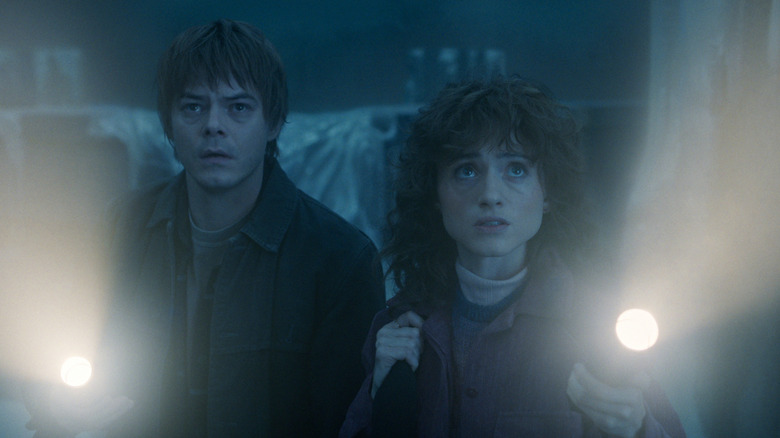
Star Wars’ star Daisy Ridley is searching for her husband in the wake of catastrophe in We Bury the Dead, and our exclusive new clip sees her character pondering an encounter with the resurrecting dead.
Vertical will release the zombie film in theaters on January 2, 2026.
After a catastrophic American military experiment results in mass casualties across Tasmania, Ava (Ridley) joins a body retrieval unit to help identify the dead and search for her husband in the southern part of the island. As Ava makes her way south, across the ravaged landscape, she soon learns that some of the victims of the disaster are coming back to life.
We Bury the Dead is written and directed by Zak Hilditch (1922).
Brenton Thwaites (Ghosts of War, Maleficent), Mark Coles Smith (Beast of War), and Matt Whelan (“Narcos”) co-star.
Kelvin Munro, Grant Sputore, Ross M. Dinerstein, Joshua Harris, and Mark Fasano produce.
“We Bury The Dead has been a true labor of love since day one from everyone involved, and it’s been great seeing the responses to the film so far. I can’t wait for a wider audience to experience the film on the big screen across North America,” Hilditch said in a statement.
While We Bury the Dead favors drama over horror, Hilditch ensures his zombies have bite. I wrote in my SXSW review, “Hilditch peppers in a few intense horror sequences that get the pulse pounding, making you wish he’d commit more fully to exploring the rules of this new type of outbreak more fully.”
Watch the clip below, which sees Ridley and Thwaites’ characters discussing the eerie undead predicament that arises in the catastrophe’s wake. Ava finds hope amidst the unsettling new development.
The post Daisy Ridley Realizes The Dead Are Returning in ‘We Bury the Dead’ Exclusive Clip appeared first on Bloody Disgusting!.