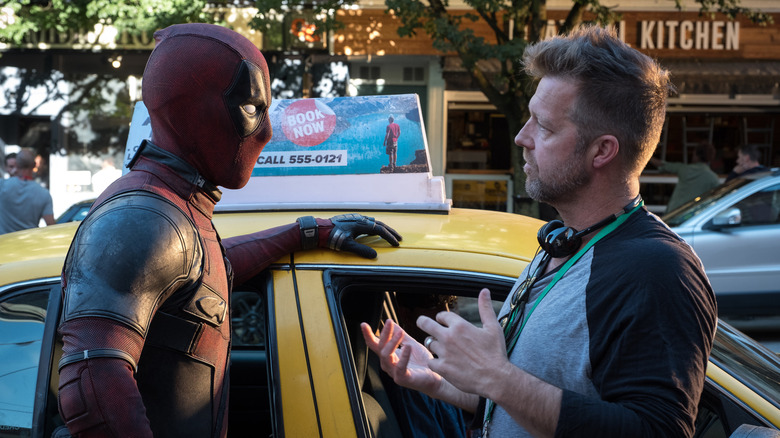
Deadpool 2 director David Leitch has only made one superhero movie so far. Recently, he said he’d return to the world of Marvel under one condition.
News of all things scary
It’s always strange when two movies come along around the same time with around the same idea, but it happens more often than you’d think. While we wait for Good Boy, the haunted house movie from the perspective of a canine protagonist, Gregg Bishop (Dance of the Dead, SiREN, V/H/S: Viral) has released his award-winning short film Howl at the Dead this week.
Howl at the Dead also takes the approach of telling a haunted house story from the perspective of the pets, including a dog, a cat, and a talking parrot. It’s described as “a gateway, Amblin-style horror short inspired by classics like Poltergeist, Frankenweenie, and E.T.,” and while it’s got a few really strong jump scares, it’s also likely to warm even the coldest of hearts.
After premiering at Screamfest 2023, the short horror film went on to play the Fantasia International Film Festival, Panic Fest, SoHo Horror Film Festival, and won Best Genre Short at the Mammoth Film Festival. Bishop said in a statement, “After playing at festivals around the world, I am thrilled to finally share Howl at the Dead with audiences everywhere.”
Watch Gregg Bishop’s Howl at the Dead below!
In the 8-minute short horror film, “When a family moves into a haunted house, their loyal pet dog struggles to protect them from the malevolent ghosts that only animals can see.”
Bishop was inspired by strange behaviors of his own childhood pets, whose uncanny fixation on empty corners and “invisible” things convinced him they had a sixth sense. This notion that pets can see spirits evolved into a haunted house story told from a dog’s perspective, blending spooky thrills with heartfelt moments that highlight the bond between pets and their owners.
Howl at the Dead stars DJ as the lovable Paws the dog, alongside human actors Luke Speakman (Josh Brolin’s son in Weapons), Ashley Watkins, and Stephen Caudill.

The post ‘Howl at the Dead’ – The Pets Are the Main Characters in This Haunted House Horror Short appeared first on Bloody Disgusting!.
In my younger years I had two horror obsessions: the Universal Monsters and the stalker slashers that came to prominence in the ’80s, two very different approaches to the concept of the horror icon. In the ’30s and ’40s, the heyday of the classic monsters, most of them were imbued with a sense of empathy; audiences could somehow relate to the poor souls depicted on screen. Even Dracula and the Invisible Man, the least sympathetic among them, occasionally displayed at least some modicum of humanity.
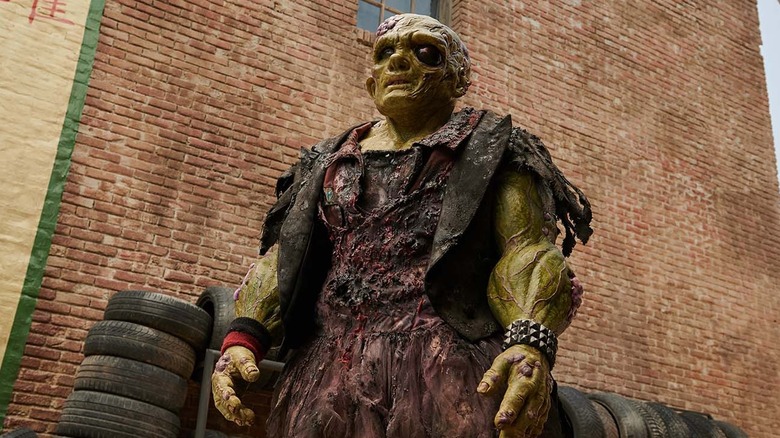
In the case of the later decades, the killers were usually a personification of pure evil, especially in the cases like Michael Myers, Freddy Krueger, Pinhead, and Chucky. There were occasional exceptions to this as with Leatherface just wanting to protect his home or Jason wanting to avenge his mother, but those aspects were often left by the wayside in sequels and later iterations. The one big, hulking, hideously deformed exception of superhuman size and strength was Melvin, The Toxic Avenger.
I first encountered Toxie in my favorite place on earth, Video Spotlight, our local video store. In the days before the big chains, the place seemed to have a copy (though likely only a single copy) of every VHS tape ever released. The walls were lined with thousands of boxes, propped with Styrofoam blocks to keep their shape, just waiting to be taken to the front desk and traded for a brown clamshell case containing the actual cassette. It was in this glorious place that I spent hours of my childhood haunting the horror aisle, marveling at the terrifying cover art and occasionally sneaking a peek at the publicity photos on the back of the box, which felt like tasting forbidden fruit to my young mind.

The actual movies rarely lived up to the depraved scenes I made up in my mind based on these images, but I would not trade those experiences for anything. Then there were the cardboard standees that adorned the endcaps, my favorite of which was The Toxic Avenger with his mangled face and strong hands holding a mop in a heroic pose. It boasted the greatest tagline I had ever seen: “The First Superhero From New Jersey.” Being from the other side of the country, I had no idea what that meant, but it didn’t matter—it was awesome.

Somehow, I eventually convinced my parents to let me see not only the old Universal movies, which they had no problems with, but the more graphic ’80s fare. Eventually that included all the greats, The Toxic Avenger (1984) among them. As the years have gone by, I have discovered that Toxie has a lot more in common with my beloved Universal Monsters than I first realized. Along with a healthy dose of inspiration from Marvel superheroes like Spider-Man and The Hulk, Toxie specifically resembles three of the classic monsters most: The Wolf Man, The Phantom of the Opera, and above all the Frankenstein Monster. None of these characters choose to be a monster, or even to kill, but are driven to it by forces beyond their control. They just want to be loved and accepted for who they are. They are misunderstood, bullied, and pursued by powers bent on destroying them. In other words, they are all sympathetic, relatable characters.
In the original The Toxic Avenger, Melvin (Mark Torgl) is just trying to get by, working as a janitor at the Tromaville health club. He’s awkward, an outcast, certainly what we would call a nerd, and back in those days that was much less acceptable than it is today. Like is often the case in ’80s horror, he is the victim of a prank-gone-wrong and ends up in a barrel of toxic radioactive waste which turns him into The Toxic Avenger (Mitch Cohen). Now, Larry Talbot (Lon Chaney, Jr.) from The Wolf Man (1941) is a pretty suave dude before his transformation, but like Toxie, that transformation is unwelcome and represents a massive change in his stage of life. The idea of the werewolf carries with it the subtext on the transition to adulthood. That’s right, it’s a puberty metaphor, which is explicitly stated in The Toxic Avenger when, as Melvin is undergoing his transformation, his mother remarks after hearing his deepened voice for the first time that he has finally hit puberty.
Also, like Larry Talbot, Toxie seems to have no control over his actions in certain situations. After saving a police officer from a group of gangsters early in the film, Toxie says “I don’t know what came over me. I just couldn’t control myself. I’ve never done anything like this before.” In the sequels, it is revealed that Toxie has biochemical agents in his blood called “Tromatauns” that are a bit like a cross between Peter Parker’s “Spidey-sense” and the out-of-control nature of The Wolf Man. He is driven not only to stop crime, but to tear criminals limb-from-limb in the most creatively violent ways possible, usually climaxing with stuffing mops in their mouths. After his outbursts abate, he generally returns to his docile, controlled self, and even lovable. The big difference between this and Larry Talbot is that Melvin remains in his monstrous form rather than returning to his previous state.

In this way he is more like The Phantom or the Frankenstein Monster, who always appear “monstrous.” He is most like The Phantom in the sense that, at least in the earliest days of his transformation and crime-fighting spree, Toxie stays in the shadows, making himself known only when absolutely necessary. He also makes a home for himself where he feels most comfortable. After being rejected by his mother, he creates a shack in the local toxic waste dump. This reminds me not only of The Phantom, but The Creature from the Black Lagoon. For a time, it seems he mostly just wants to be left alone to deal with his issues, though his Tromatauns force him to go into the world to fight crime.
Above all, Toxie has a great deal in common with the Frankenstein Monster. There are several plot elements from Frankenstein (1931) and Bride of Frankenstein (1935) that find their way into the original Toxic Avenger film series. As with Frankenstein, The Toxic Avenger even begins with a warning about the content of the film, but this is only the beginning. A key aspect of the Frankenstein mythos is that the Monster (Boris Karloff) is rejected by everyone, including his own family. Dr. Frankenstein (Colin Clive) is very much the Monster’s father, and the root of the trouble stems from his refusal to take any responsibility for his child. The same happens in The Toxic Avenger when Melvin’s mother (Sarabel Levinson), upon seeing his new form, runs screaming from him, forcing her son into the world on his own. Like the Monster, Melvin did not choose to exist in this form, and both are considered by the outside world to be hideous in appearance. That leads to a lonely life and a search for love and acceptance.
Like the Monster, Toxie eventually finds true companionship with a blind person who sees the goodness of his soul rather than any physical differences. In Bride of Frankenstein, the Monster befriends an unsighted hermit in the woods and the two come to depend upon each other. The hermit teaches him to talk, plays music for him, and above all accepts him as a friend. In The Toxic Avenger, Toxie befriends Sara (Andree Maranda), a woman he saves from a gang of thugs who hold up a fast food restaurant. He soon realizes that she is unsighted but as with the hermit, she finds much more beauty in Toxie than he can find in himself. Their relationship is the heart of the film and part of what makes it work as well as it does. In Bride of Frankenstein, the Monster and the hermit are unfortunately torn away from each other due to some hunters who fear the Monster, but happily, this is not the case with Toxie and Sara.
Another similarity between the Monster and Toxie occurs in The Toxic Avenger Part III: The Last Temptation of Toxie (1989) when our hero is tempted away from his path by the chairman of the evil corporation Apocalypse, Inc. played by Rick Collins. This is not all that far removed from the Monster encountering rogue scientist Dr. Pretorius (Ernest Thesiger) in Bride, who becomes a new father figure to the Monster but leads him down a path of evil rather than good. In both cases these characters are very much like Mephistopheles in the Faust legend, the “man” who convinces Faust to sell his soul in exchange for great knowledge. In the case of the Chairman, he quite literally turns out to be the Devil and forces Toxie to undergo a series of challenges to save Tromaville and his own soul.

One other big similarity between the Monster, along with The Phantom and the Creature from the Black Lagoon, is the idea of class conflict. These classic monsters and Toxie represent the working classes who are oppressed by those in political and economic power. As with the earlier films, those in power, especially Mayor Belgoody (Pat Ryan) and his cronies, attempt to turn the people against what they see as a threat to their power and way of life. In the case of The Phantom of the Opera (1925) and Frankenstein, these powers are successful, and angry mobs pursue and overtake the perceived “monsters.” In the case of The Toxic Avenger, however, they are not successful. This is a welcome turn of events as the oppressed, who have been saved by Toxie, rally to his defense and good triumphs over evil.
This is the modern twist on the classics, which in most cases are the heirs of Shakespearian tragedy. The Toxic Avenger at last realizes that the true monsters are not the outcasts, the deformed, and those who merely have monstrous appearances, but those who have monstrous souls and actions. That is part of what makes the classic monsters and Toxie so continually compelling. Most of us can relate to being the outcast, the underdog, the bullied. Deep down, we know they are reflections of us. Toxie is part of a long line of horror stars and perhaps more than any other ’80s horror icon, is the true heir to the great classic monster heroes. And to me, they are heroes. Some of them even wear capes.
The Toxic Avenger returns to theaters with a brand new movie on August 29.
The post How ‘The Toxic Avenger’ Is the Unsung Heir to the Classic Universal Monsters appeared first on Bloody Disgusting!.
Cooper Hoffman (Licorice Pizza), David Jonsson (Alien: Romulus), Tut Nyout (“The Witcher: Blood Origin”), and Ben Wang (Karate Kid: Legends) form the Four Musketeers in a new clip from The Long Walk.
Based on the first novel Stephen King ever wrote, the film walks into theaters on September 12 from Lionsgate.
In a dystopian United States ruled by a totalitarian regime, 50 young men enter an annual walking contest in which they must maintain a speed of at least three miles per hour or risk execution. The contest ends when only one walker remains alive.
Francis Lawrence (I Am Legend, Constantine) directs from a script by JT Mollner (Strange Darling).
Garrett Wareing (“Manifest”), Charlie Plummer (The Clovehitch Killer), Roman Griffin Davis (Jojo Rabbit), Jordan Gonzalez (“Pretty Little Liars: Origin Sin”), Joshua Odjick (Welcome to Derry), Josh Hamilton (“The Walking Dead”), Judy Greer (Halloween), and Mark Hamill (The Life of Chuck) round out the cast.
Lawrence produces with Roy Lee (IT, Doctor Sleep), Steven Schneider (Insidious, Paranormal Activity), and Cameron MacConomy (The Hunger Games: The Ballad of Songbirds & Snakes).

The post The Four Musketeers Are All for One in ‘The Long Walk’ Clip appeared first on Bloody Disgusting!.
It’s not a secret that horror fans turn to scary movies to find a sense of comfort. Many have tackled the “phenomenon” of film buffs looking to some of the darkest media to find peace and relaxation, and it lines up with horror aficionados’ insistence that the biggest scares are the best way to calm down. Often that can mean walking away from what began as a moment of struggle with a whisper of fright that could take us from one powerful emotion to another.
So, while individual viewers could craft long lists of the best horror comfort movies, there is something particularly cozy about those that begin with Hell House LLC. Writer and director of the films, Stephen Cognetti, created a haunting collection of movies with a specific structure, style, and progression that makes them exceptional for cozy consumption.
Jumping off the psychological reasoning behind viewers using horror for comfort, there’s another psychological element that contributes to the comforting vibe of these movies. The way the found footage filming style is unleashed in these movies often leaves the camera sitting casually between a group of people conversing. The moments shown aren’t always of big events or “recordable” moments, but sometimes just of the characters having casual discussions. Whether at the rest stop lunch spot, a bar, or around a campfire, the camera is often an eye of a fly on the wall in conversations happening outside of them.

This story technique runs adjacent to the concept of parallel play. Parallel play refers to the form of interface where more than one party plays nearby another, without necessarily interacting. Often referenced in terms of childhood development, this is seen when children will play near, but not with, each other and perhaps learn from each other and modify what they’re doing. It’s mirrored later in life in things like independent coworking as employed by “study with me” videos and even the concept of podcasting as a whole.
In terms of childhood development, it’s considered a way people find comfort in an unfamiliar situation remaining parallel until the player feels comfortable enough. By exploiting this concept in the filming style, the Hell House LLC movies aren’t exclusively throwing the viewer into a POV shot of the scariest moments but are instead allowing the viewer to sit comfortably and choose how much to interact with the characters based on their initial level of comfort.

Another major contributor to the comforting element of this franchise comes by way of its constant forecasting. This happens in two major ways: the movies often starting at the end and thus forecasting exactly how scary the ending will be, and then forecasting the largest individual scares. Each installment doesn’t exactly give away its ending out of the gate, but it does often set up the climax as well as the known survivors. This way, the audience can be comfortable knowing which characters will meet their makers, and exactly what they’re being set up to experience.
Further, by utilizing the faux-documentary or faux-newscast framing device, the movies also brace the viewer for each individual large scare. “You’ll never guess what happened next,” isn’t even as direct as some of the talking head commentary in these movies. Scares are then presented like controlled burns, the audience appropriately teed up before each big moment and thus able to brace. This allows for shoulders to drop during the remaining parts of the film once the audience is trained to expect large moments only after a subtle warning and thus allows for a more comfortable horror consumption experience. Scares are then often sandwiched between cutaways to talking heads and daylight scenes which further give the audience an opportunity to take a breather.

An additional way these movies incidentally forecast and brace the audience is by sticking very close to trilogy (and later, reboot) rules. In a way that’s not subverted nor meta in the way the Scream movies are, the Hell House LLC movies opt to remain close to the trilogy model by, for instance, adding something in the third installment that changes things from the beginning. By walking on a well beaten path, these movies are able to surprise the audience with innovative characters, locations, and scares while letting them be subconsciously aware of what they’re in for, which allows them to remain prepared and comfortable.
Another subgenre popular for comfort viewing is, believe it or not, true crime. True crime has its faults but is often referenced as comforting and mindless for many viewers, perhaps as a result of them telling stories at you instead of to you. Documentaries with talking heads (especially the low rent true crime variety) often have someone staring down the barrel of the camera and explaining to the audience exactly what happened. The Hell House LLC movies do something similar by using their framing style and are able to do so in a completely low stakes way since they’re works of fiction.
The Hell House LLC movies aren’t looking for gold plated accolades and it’s obvious in their way of never asking you to take them too seriously. By using innovative scare tactics and a fun wild story, they craft a scary narrative around a haunted hotel and the town that might have created the monsters within it. With the franchise releasing its first non-found-footage installment in theaters last week, it’s nice to remember why the first four make such exceptional and rewatchable comfort movies.
Stay tuned for an at-home release date for fifth and final installment Hell House LLC: Lineage.

The post Why the ‘Hell House LLC’ Movies Make the Best Comfort Watches appeared first on Bloody Disgusting!.
Jennifer’s Body meets Ginger Snaps by way of “Buffy the Vampire Slayer” in the queer indie vampire film What’s Wrong Wendy.
Hell hath no fury like a girl reborn in our exclusive teaser trailer below.
Wendy Day is an ordinary, perpetually-baked pizza delivery girl, the kind of stoner sweetheart who’s always running late but somehow still gets invited to the afterparty. Victoria Sinclair has just returned to Sequoia Lake to care for her ailing mother, determined to keep her head down and avoid the ghosts of her teenage years.
Then comes a midnight collision: a chance run-in, a one-night stand, and the rekindling of old high school crushes. But Wendy isn’t the same girl Victoria remembers. She’s faster now. Hungrier. Sharper. And she’s not asking before she takes a bite.
Spooky Madison, Alexandra Boulas, Anthony Dain, Tova Weinberger, Dana Weddle, Jace Carson, Leah Voysey (Terrifer 2), and Andrew J. Ferchland (“Buffy the Vampire Slayer”) star.
Madison co-directs with Hell House LLC II: The Abaddon Hotel actress Dusty Austen from a script by Madison.
“What’s Wrong Wendy is for anyone who’s ever lost something they can’t replace,” Madison tells Bloody Disgusting. “It’s revenge on the surface, but at heart it’s about love that survives the wreckage, and refuses to die. I wrote it for the queer and feral souls who were told they were too much, and for the monsters inside them that deserve to finally breathe.”
“With What’s Wrong Wendy, I feel like we’ve made the kind of film we wished we had as queer youths growing up during the teen horror boom of late ’90s and early ’00s,” Austen adds. “Wendy at its heart is one of those films, but made through a queer lens. Maybe our teenage selves had to miss out on that, but so many more looking for more queer characters, stories and heroes in the horror space now, don’t have to.”
Produced by StreetRat Studios & FinalGhoul Films, What’s Wrong Wendy is currently in post-production. It’s aiming to hit the festival circuit early next year ahead of a Fall 2026 release.

The post ‘What’s Wrong Wendy’ Teaser – ‘Jennifer’s Body’ Meets ‘Buffy’ in Queer Vampire Film [Exclusive] appeared first on Bloody Disgusting!.
