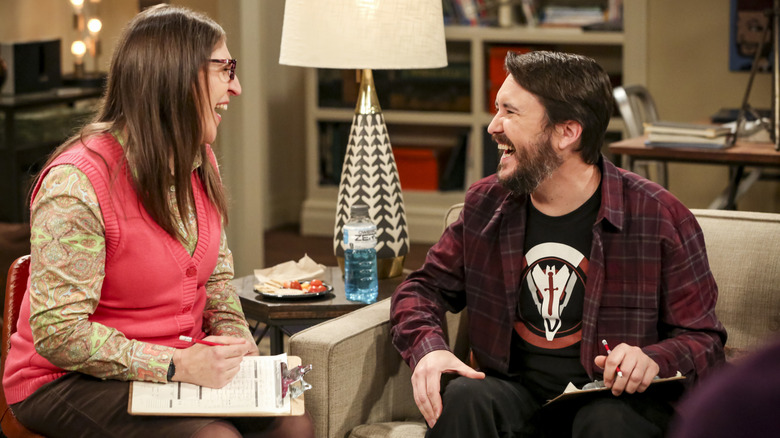
It’s hard to imagine The Big Bang Theory without Evil Wil Wheaton, but there was some serious convincing needed to get the Star Trek star on board.
News of all things scary
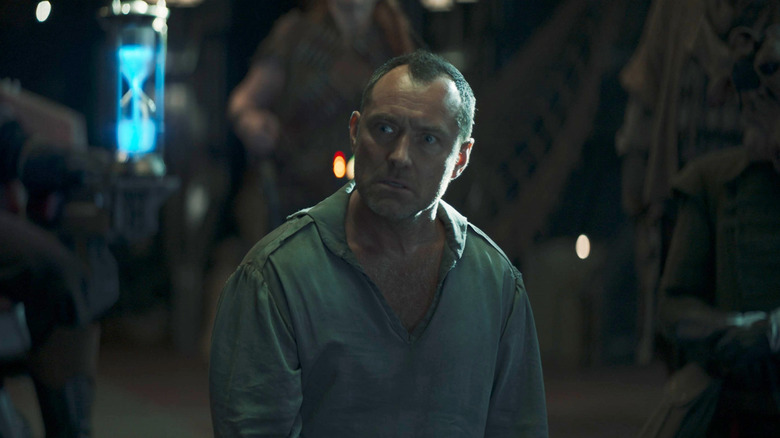

It’s been two years since production wrapped on the screenlife J-horror movie Bloat. Now, it appears as though a release date announcement may be imminent as the Lionsgate horror movie has earned an official R-rating.
Bloat has been rated “R” for “language and some violent content,” which sounds like a more ominous, foreboding style of horror.
Ben McKenzie (“Gotham”) and Bojana Novakovic (Beyond Skyline) star.
The film tells of “a military officer (McKenzie) stationed in Turkey while his wife (Novakovic) is vacationing in Japan with their kids. During the stay, their younger son almost drowns in a lake. Soon after the accident, the parents realize that something is wrong with their boy.”
Bloat will also feature Bon Koizumi, great-grandson of the legendary Japanese folklorist and horror story collector Lafcadio Hearn and the director of his museum. Previously released details reveal that the film’s characters will “eventually come to him searching for answers about the mysterious Japanese folklore demons. His great-grandfather Hearn became the adopted father of the Kaidan (ghost story) and the first foreigner to retell these folktales for a Western audience. Classic Japanese ghost stories and horror tales like The Story of Mimi-Nashi-Hōïchi and Yuki-Onna are known thanks to his retellings.”
The J-horror movie’s filming locations included Tokyo, featuring one of its most recognizable sights, Shibuya Crossing, as well as Yamanashi, known for the iconic Mount Fuji.
The horror movie was written and directed by Tokyo-based horror filmmaker Pablo Absento and produced by Bazelevs, the production banner of Screenlife pioneer Timur Bekmambetov (Unfriended, Searching, Profile). Interestingly, Bloat is also a co-production of Pulsar Content, which was behind the aquatic supernatural horror movie The Deep House.
Now that Bloat has received an official rating stay tuned for Lionsgate’s release date announcement for what sounds like an East-meets-West Kaidan.
The post ‘Bloat’ – Eerie Screenlife J-Horror Movie Gets Official “R” Rating appeared first on Bloody Disgusting!.
It should likely come as no surprise that the upcoming Valentine’s Day slasher Heart Eyes received an appropriate slasher rating, and that R-rated stamp comes ahead of the film’s full trailer arriving next week.
The slasher is set to arrive in theaters on February 7, 2025.
Heart Eyes has been rated “R” for “strong violence and gore, language and some sexual content.”
In the film, “For the past several years, the Heart Eyes Killer has wreaked havoc on Valentine’s Day by stalking and murdering romantic couples. This Valentine’s Day, no couple is safe.”
Heart Eyes’ first red-band teaser signaled an R-rated slasher ahead, complete with a brutal kill, but it’s nice to receive official confirmation that this horror movie will embrace the holiday’s “red“ color scheme via bloodletting and gore.
Josh Ruben (Werewolves Within, Scare Me) is directing the Valentine’s Day-themed horror movie, with Mason Gooding (Scream) and Olivia Holt (“Cruel Summer”) starring.
Gigi Zumbado (The Real Bros of Simi Valley) and Michaela Watkins (“Dinner with the Parents”) will also star in the upcoming Heart Eyes, alongside Devon Sawa (Final Destination, “Chucky”) and Jordana Brewster (The Texas Chainsaw Massacre: The Beginning).
The new horror movie from Screen Gems and Spyglass (Scream, Scream VI, Thanksgiving) features a screenplay written by Phillip Murphy (The Hitman’s Wife’s Bodyguard) and Christopher Landon (Happy Death Day, Freaky) & Michael Kennedy (Freaky).
Christopher Landon and Divide/Conquer’s Greg Gilreath and Adam Hendricks (M3gan, Totally Killer) are producing. Spyglass Media Group’s Gary Barber and Chris Stone will serve as Executive Producers with Mel Turner, Philip Murphy, and Michael Kennedy.
The official R-rating arrives ahead of the slasher’s full trailer, which will arrive this Tuesday, according to writer and producer Michael Kennedy. Stay tuned.
The post ‘Heart Eyes’ Rated R for “Strong Violence and Gore”; Full Trailer Arrives Next Week appeared first on Bloody Disgusting!.
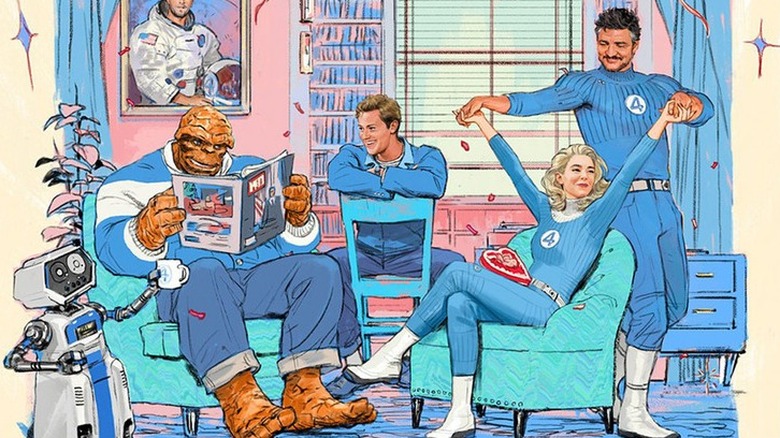
War is hell, and it’s been that way for a very long time. However, when it comes to moviemaking, many filmmakers have difficulty portraying large scale combat as anything but thrilling. This accidental glorification of collective violence is especially true when it comes to epic tales of historical warfare, with films like Braveheart and even Excalibur tending to shy away from the more horrific side of dark age violence.
And as someone who enjoys less glamorized takes on history, today I’d like to look back on Jonathan English’s underappreciated historical action film Ironclad, a 2011 flick that – while not really historically accurate – provides a disturbingly intimate view of a time when combat meant having to look your opponent in the eyes as your cleave their head in half and bathe in their fresh, steaming blood.
Funnily enough, the story of Ironclad begins during the 2008 recession, with the independent production company Mythic attempting to find investors for a big-budget historical epic starring Megan Fox. Of course, large-scale funding was nearly impossible to secure after the market collapse, so the folks at Mythic decided to rework their pitch into a smaller siege story featuring less characters and locations.
Even with a reduced budget, the retitled Ironclad still required nearly 20 executive producers to get the cinematic ball rolling, with most of the $25 million budget going towards the cast as well as the construction of a life-size replica of Rochester castle in southern Wales. In fact, as of 2009, Ironclad was known as the most expensive indie production to ever film in Wales.
While the finished film was marketed as something akin to a feature-length fantasy-metal music video (with a tagline boasting “Heavy Metal Goes Medieval!”), the actual plot is much more nuanced than its distributors would have you believe. Starring Solomon Kane’s James Purefoy as Thomas Marshall, Ironclad follows a disgraced Templar Knight who finds himself in the middle of a brutal conflict between the Barons of England and the cruel King John (Paul Giamatti). Realizing that John and his mercenary army must be stopped before they reach London, our haunted protagonist reluctantly joins a small group of rebels in an action-packed retelling of the real-life siege of Rochester Castle.
SO WHY IS IT WORTH WATCHING?

Ironclad may not have been the blockbuster hit that Mythic was originally hoping for, with most mainstream critics dismissing the flick as yet another forgettable entry in that short-lived wave of mid-budget historical action flicks in the vein of Centurion, The Eagle and Pathfinder, but it still found plenty of fans in the home video market.
Personally, while I admit that the film is deeply flawed in its execution, most of its structural and narrative issues are more than made up for by the sheer cinematic energy on display as English disguises an indie production as an epic war movie. It may not always work (the transition from mediocre love story to one of the best medieval action sequences of all time is so sudden that it’ll likely give you whiplash), but there’s plenty to like here if you can handle some shaky camerawork and cheap CGI disguising the production’s lack of resources.
For starters, we have a legitimately compelling protagonist in the form of James Purefoy’s tortured Templar. From Marshall’s reckless acts of suicidal bravery to his wartime PTSD that harkens back to haunted action heroes like John Rambo, English and Purefoy make it easy to root for our Dane-slaying protagonist despite his lack of traditionally heroic traits.
And speaking of actors, there’s also the matter of the film’s arguably overqualified cast. Paul Giamatti gives a deliciously hateable performance as King John (making a classic historical villain even more detestable), but I also really enjoyed Brian Cox as the steadfast Baron William d’Aubigny that leads the good guys against tyranny. The script doesn’t exactly make the most of these secondary characters – and don’t even get me started on how most of these people died in different times/places in real life – but it’s clear that everyone took their roles seriously. Hell, Daniel O’Meara even ate a live beetle on camera during the starvation sequence!
Lastly, I also appreciate how the film’s less-than-epic budget forced the filmmakers to rely on physical locations and smaller, more realistic battles instead of trying to recreate a poor man’s version of The Battle of Helm’s Deep like you see in most other medieval action flicks.
AND WHAT MAKES IT HORROR ADJACENT?

Despite its overall viciousness, Ironclad likely won’t be frightening anyone anytime soon. That being said, there’s no denying that the film’s visceral use of violence and suspense makes it stand out amongst its historical action peers. In fact, I haven’t seen this much brutal dismemberment in any other film in this genre, with English shooting the carnage in ways that make it clear that, during wartime, even the good guys are monsters.
Of course, the best part is that nearly all this maiming is done practically, with every swing of our lead’s sword carrying a devastating amount of weight. The director also uses a few exceedingly nasty moments (like the torture sequence where King John dismembers d’Aubigny in front of his men) as a way of rallying the audience’s emotions in case you’re starting to get desensitized. Cinematographer David Eggby (who shot the original Mad Max) even went so far as to disguise cameramen as extras during battle sequences in order to get more intimate footage of the horrors of war – an idea that goes a long way on a small budget.
The film also benefits from the claustrophobic tension created by the siege itself, with the Dane invaders often feeling more like a mindless horde of undead warriors than regular soldiers – something that the film has in common with its most obvious inspiration, John Carpenter’s Assault on Precinct 13. You really get the sense that these hardened soldiers are scared out of their minds, with some of our protagonists being driven to suicide while others discuss how it might be more merciful to kill the women in the castle before the enemy can reach them.
Ironclad isn’t exactly a misunderstood classic, suffering from an overstuffed script, uneven pacing and questionable production value, but there’s an undeniable passion for filmmaking both in front of and behind the cameras here. That’s why I’d recommend this 2011 gem to fans of hyper-violent siege films who don’t mind the occasional historical inaccuracy.
There’s no understating the importance of a balanced media diet, and since bloody and disgusting entertainment isn’t exclusive to the horror genre, we’ve come up with Horror Adjacent – a recurring column where we recommend non-horror movies that horror fans might enjoy.
The post Heavy Metal Goes Medieval: Revisiting the Violent Action of ‘Ironclad’ appeared first on Bloody Disgusting!.