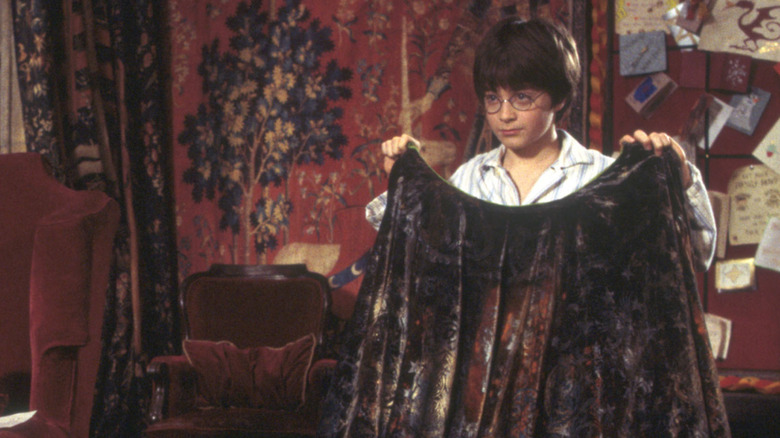
The Invisibility Cloak in the Harry Potter franchise is one of the most important magical objects so we’ve created a guide.
News of all things scary
We’re excited to announce today that Cineverse has saved director Macon Blair’s The Toxic Avenger remake and plans an unrated wide theatrical release later this year.
Bloody Disgusting’s parent company Cineverse acquired all U.S. and Canadian theatrical, home entertainment, and streaming rights through a deal with Legendary Entertainment.
The news was first reported by Variety this afternoon.
This fresh take on the beloved anti-hero known as “Toxie” was directed by Macon Blair (I Don’t Feel at Home in This World Anymore) and stars Emmy and Golden Globe winner Peter Dinklage (“Game of Thrones”), Kevin Bacon (Friday the 13th, Stir of Echoes), and Elijah Wood.
The Toxic Avenger is a daring and darkly comedic reimagining of the cult-classic franchise that first took the world by storm in the 1980s.
“In this bold new chapter of the classic midnight movie franchise created by Lloyd Kaufman and Troma Entertainment; a shocking accident transforms downtrodden janitor Winston Gooze (Dinklage) into a mutant vigilante. Armed with his signature mop, the unlikely hero battles freaks, gangsters and corrupt CEOs while trying to save his relationship with his son.”
The story channels the subversive gonzo energy of the original Toxic Avenger while delivering a fresh, contemporary twist. The film features an all-star cast that also includes Jacob Tremblay, Julia Davis, and Taylour Paige.
Opening to critical acclaim at Fantastic Fest, The Toxic Avenger has been hailed as a riotous blend of social satire, inventive gore, and unexpected heart. With a 92% score on Rotten Tomatoes, the film reaffirms the enduring power of subversive cinema to captivate and challenge audiences.
“The Toxic Avenger isn’t just a great film; it’s an important one,” said Cineverse Chairman and CEO Chris McGurk. “Peter Dinklage’s transformative performance and Macon Blair’s fearless direction deliver a story that speaks to the anxieties of our time with outrageous humor and unflinching creativity. This is the kind of movie that major studios are averse to release because it dares to push boundaries, but Cineverse is rooted in championing bold, uncompromising storytelling. We believe audiences are ready – and eager – for films like this to take center stage.”
In reaction to the upcoming release, Lloyd Kaufman, President of Troma and creator of The Toxic Avenger commented, “Michael Herz, Toxie, and I have mopped our tears away! Macon Blair’s Fantoxic reimagining of Toxie’s life is even better than Troma’s! The Troma Fans will be ecstatic!”
Cineverse’s proven track record with unrated films, including last October’s box-office phenomenon Terrifier 3 – the highest-grossing non-rated film in U.S. history – underscores its ability to connect audiences with bold, authentic stories.
“I’m beyond grateful to the team behind The Toxic Avenger who were so supportive and steady-handed as we searched for the perfect distribution partner for our film,” said Director Macon Blair. “It’s so cool that folks will have the chance to see this in theaters, it’s a fun rowdy movie you wanna see with a crowd. Mutant hero smashes bad guys with a mop: perfect entertainment for the whole family! Our goal was always to preserve the heart and spirit of the original Toxie (which was seared into my brain at a very young age) and try to make something that Troma fans would dig and at the same time do something with the character that feels fresh. Lloyd and Michael at Troma have been a blast to work with, absolutely everyone at Legendary are stars, and I can’t wait to start working with the champs at Cineverse to bring this version of Toxie to fans new and old.”
Macon Blair directed the film from a screenplay he wrote based on Lloyd Kaufman’s The Toxic Avenger (1984). The film is produced by Mary Parent, Alex Garcia, Lloyd Kaufman and Michael Herz. The executive producers are Andrew Pfeffer, Jay Ashenfelter and Macon Blair with casting by Mark Bennett and Julie Harkin.
Blair’s collaborators behind the camera include Emmy Award winning director of photography, Dana Gonzalez; production designer Alexander Cameron; editors Brett W. Bachman and James Thomas; visual effects supervisor Chris Ritvo; costume designer Vanessa Porter; with music by Will Blair and Brooke Blair.
On behalf of Cineverse, the deal was negotiated by Chief Legal Officer, Gary Loffredo, Chief Content Officer, Yolanda Macias and Executive Director, Acquisitions, Brandon Hill.
The post Cineverse Saves ‘The Toxic Avenger’ Remake With UNRATED Theatrical Release Later This Year appeared first on Bloody Disgusting!.
Horror has always been queer, reclaimed in recent years by countless LGBTQ+ writers and directors, and 2024 proved to be a banner year. From mainstream commercial successes to indie gems, the genre flourished over the past 12 months – with numerous queer-focused horror bringing in the big bucks and stirring up conversation online. When it comes to the socio-political landscape these days, we need more diverse voices than ever.
In our breakdown, we look at 10 titles that caused the most brouhaha in the theaters and through online discourse. There are even a few that might have flown under your radar, yet still offered stories and perspectives resonant and relevant to today.

I Saw the TV Glow
The film that best encompasses the angst and uncertainty of identity is Jane Schoenbrun’s I Saw the TV Glow. Rightfully acclaimed, the feature follows Owen (Justice Smith) as he reckons with himself and deep-seated anxieties about coming out. His love for The Pink Opaque, a TV show introduced to him by Maddy (Brigette Lundy-Paine), who becomes a lifeline for him. Through their shared obsession, they grow closer and more intimate. While dissecting identity, the writer/director explores nostalgia and its effects on our lives.
Schoenbrun uses Owen’s struggle to capture the experience of so many queer youth. Regardless of background and social standing, coming out is never an easy threshold to cross. What transmits through the screen is a relentlessly emotional and agonizing portrayal of one young person’s attempt to accept themselves and find the light at the end of the tunnel. Decades from now, I Saw the TV Glow will be discussed as a pivotal moment in queer cinema.

Love Lies Bleeding
Rose Glass veers away from straight religious horror (Saint Maud) for an erotic thriller. Love Lies Bleeding might not adhere to the typical genre structure or conventions, yet there’s plenty to ruminate on and keep you hooked. Kristen Stewart stars as Lou, a gym manager, who falls in love with Jackie (Katy O’Brian), a bodybuilder. While Jackie has ambitions of going to Las Vegas and making it big, she’s pulled into murder by Lou’s criminal family. Her dreams dashed, the film takes a hard left turn in the finale, leading to quite the climax.
With strong performances from Stewart and O’Brian, Glass unfurls a dark, dangerous tale of two lovers becoming inextricably tied. What is most interesting is the messiness of queer relationships taking center stage – the friction between characters allows for an intense give and take of emotions. Each harbors their own intentions, allowing for investment by the audience. Love Lies Bleeding might vault into absurd territory by the credits, but there’s no denying it as a vital piece of queer cinema.

Cuckoo
Cuckoo is perhaps the most low-key queer film on this list. Director Tilman Singer invites the viewer into an outrageous premise that follows Gretchen (Hunter Schafer) after she moves to the German Alps. While there, she begins having frightening visions and hears strange noises. She takes up a post as a clerk at a nearby resort, where she meets a young woman named Ed (Àstrid Bergès-Frisbey) checking into the hotel one evening. The two strike up a quick infatuation, which leads Gretchen to steal money from the hotel and run away with her new lover.
But the two don’t get very far. Gretchen can’t seem to leave the mountain, pulled back into its web by some unseen force. While the relationship is just a blip, it still leaves a mark on Gretchen and her story. Her realization that perhaps fate has a hand in keeping her there shakes her down to the core. Their car crash leaves Gretchen confined to the resort, where she figures out exactly what’s going on with the hooded lady. Cuckoo might not feature much queerness, but it still remains one of the year’s best.

Femme
Billed as a thriller, Femme more than earns its place on this list. Co-directed by Sam H. Freeman and Ng Choon Ping in their feature debut, the film tells the dark tale about Jules (Nathan Stewart-Jarrett), who’s viciously attacked by Preston (George MacKay) and his gang of cohorts. Three months later, Jules struggles to overcome the assault and has even given up drag performance. He’s wilted from who he used to be, and nothing can seem to make it okay.
When he encounters Preston again, the pair strike up a dangerously toxic physical relationship. Their dynamic – an openly gay man and a closeted, self-loathing gay man – allows for a poignant, and ultimately tragic, discussion about revenge, violence, and accountability. With electrifying performances and great attention to nuance, Femme captures the complicated nature of coming out, self-hatred, and what it means to let someone else in.

Slay
Slay arrived on Tubi with very little fanfare in March 2024, but has slowly and surely cultivated a cult following online. With its incisive glimpse into small-minded bigots, dressed up as a vampire story, the film suggests self-expression and community remain the best tools to combat hate. Through a wonderfully campy performance of Cardi B and Megan Thee Stallion’s “WAP,” a troupe of drag queens – Mama Sue Flay (Trinity the Tuck), Olive Wood (Cara Melle), Robin Banks (Heidi N Closest), and Bella Da Boys (Crystal Methyd) – teardown homophobia brick by brick.
When a horde of vampires shows up, the group – which also includes hilarious local Sheila (Robyn Scott) – must set aside their differences and fight for their lives. Writer/director Jem Garrard shows the power of being yourself through bar owner Rusty’s (Neil Sandilands) emotional transformation. The abrasive and scruffy Travis (Daniel Janks) also learns to accept the LGBTQ+ as valuable human beings. Slay bottles up today’s climate (pronouns included) and presents an important conversation about the nature of individuality and how we treat others.

Carnage for Christmas
There are no up-and-coming filmmakers that have the output of Alice Maio Mackay. Coming off such critical successes as So Vam and T-Blockers, she tackles the slasher genre with Carnage for Christmas, a slasher that more than lives up to its name. Popular podcaster Lola (Jeremy Moineau) returns home for the holidays only to find that a killer has risen again to kill. It’s the first time Lola has been home since she left town and transitioned, so Mackay supplies plenty of emotional friction between the characters to add dimension. In doing so, she depicts a poignant tale about one young woman’s struggle to confront her past.
Carnage for Christmas stands in stark contrast to Mackay’s previous work but remains nonetheless as powerful as anything she’s done to date. While it certainly allows for plenty of holiday-tinged murder and violence, the thematic underpinnings provoke important conversations about family and identity.

Lowlifes
This Tubi original is the year’s biggest surprise. Lowlifes, co-directed by Mitch Oliver and Tesh Guttikonda, takes what you think you know and flips it on its head. What starts as a lovely family road trip across the country twists into something else entirely. Amanda Fix plays Amy, a jaded teenager looking for a connection through her phone. When Amy and her family are forced to spend the night in a secluded homestead, Amy hooks up with one of the daughters. But as the family excursion takes a hard left turn, her will to survive is tested.
The film excels in keeping its cards close to the vest, only revealing the truth part-way through and flooring the audience. Lowlifes might not engage in any socio-political commentary like many other entries on this list, but sometimes, all you need is a good time to get you by.

Ganymede
Co-directed by Sam Probst and Colby Holt, Ganymede addresses religious extremism, trauma, and sexuality. Much like many similarly themed films, Probst and Holt’s offering explores the damage fanaticism does to one’s mental and emotional states. Lee Fletcher (Jordan Doww) comes from an incredibly religious home, where the Bible and its flawed teachings have been hammered into his brain. When he develops a crush on an openly gay classmate, his feelings throw a wrench into his reconciliation with his faith. When is parents discover the truth, they force him to seek guidance from their local pastor, who forces him to undergo severe physical punishment.
There’s no better time to have a film like Ganymede. During a time when religious texts are weaponized against the marginalized, particularly the trans community, it becomes crucial to understand the enemy and combat the hate spewing from alt-right mouthpieces. The house might be burning, but we have queer voices like Probst and Holt daring to speak truth to power.

Departing Seniors
Clare Cooney delivers one of the all-time best friendships in horror. In Departing Seniors, a campy slasher with tremendous heart, Javier (Ignacio Diaz-Silverio) and Bianca (Ireon Roach) raise the bar on what makes great relationships. Their loyalty to one another is intoxicating, lending weight to the otherwise fluffy fare. As Javier contends with a group of bullies, one of which is his low-key lover, a masked killer starts stalking and killing those around him.
Departing Seniors offers up a good time, wrapped up tightly in a generational trauma package. Is matching violence for violence the answer? What if the antagonists never get their comeuppance otherwise? The film asks and answers these questions, causing the audience to reflect upon their own lives.

Hauntology
You might not know Parker Brennon’s name yet, but you will soon enough. Their new anthology film Hauntology, which features Nancy Kyes’ big horror comeback, feels ripped from Are You Afraid of the Dark? (a compliment) and finds Brennon commanding attention with every single segment. “Paint and Black Lace” and “The Old Dark Cashel House” demonstrate the filmmaker’s strengths as a horror storyteller.
What’s even more, Brennon delivers a diverse cast and stories. As we watch countless corporations rolling back their DEI initiatives, we can depend on horror movies to at least aim for diverse talent in front of and behind the camera. Hauntology is a testament to that.
The post Best of 2024: The Queer Horror That Shaped An Uncertain Year appeared first on Bloody Disgusting!.
The older I get the more I appreciate and connect with Werewolf of London. It is a movie that does not follow the established rules of werewolf movies because it was created in a time before those rules were written. Many, if not most, of the most notable and enduring films of the subgenre deal in externalizing the internal struggles of the young using the metaphor of the beast within. Most of these characters are breaking away from their parents and childhoods, seeking to make their own way in the world.
Though Larry Talbot in The Wolf Man (1941) appears in the mature body of Lon Chaney, Jr., he is in many ways an angsty teenager tormented by the conflicting feelings of simultaneously falling in love for the first time while part of himself that he cannot control wishes to ravage her and tear her to shreds in the process. It makes sense that An American Werewolf in London (1981) was written by John Landis when he was eighteen years old as it deals similarly with puberty, budding sexuality, and uncontrollable desires. Ginger Snaps (2000) took similar ideas and finally applied them to a uniquely female perspective.
This is not really the case with Werewolf of London, though. Instead, it centers around a successful adult, deeply entrenched in the world he inhabits, who finds himself changing in a way that has seismic ramifications for his comfortable, long-established life and routines. In other words, rather than a puberty film, it is a dealing with adulthood film and what happens when the world is turned upside down.
Werewolf of London is usually spoken of as little more than Universal’s unsuccessful first draft of The Wolf Man. There is some truth to this as it was a box office disappointment in its day, a polite way of saying a flop, though it did receive generally positive critical notices at the time. In reality, it fits in rather well with many of the films in the later years of the first wave of Universal Monster movies. It may not contain the directorial je ne sais quoi of the James Whale, Edgar G. Ulmer, or even Robert Florey films, but it is a film of humor, style, elegance, and innovation, largely due to the screenplay by John Colton, performances by seasoned actors, and the ingenuity of its behind-the-scenes players.

By the mid-30s, dark humor had crept into the films, most notably in The Invisible Man (1933), The Black Cat (1934) in which the humor borders on sadistic, and Bride of Frankenstein (1935)—the crown jewel of the entire Universal Monsters cycle. Attempts at that kind of humor are very present in Werewolf with a great deal of it seemingly directly inspired by The Invisible Man. One of the most notable sequences of the film takes place at an inn with its hard-drinking proprietors Mrs. Whack (Ethel Granville) and Mrs. Moncaster (Zeffie Tilbury) getting drunk and spying on the titular werewolf of the story Dr. Wilfred Glendon, played by Broadway star Henry Hull. Ettie Coombes (Spring Byington) provides much of the comic relief in the early part of the film with her clear amusement with Glendon’s carnivorous plants as she simultaneously feigns disgust.
One of the main criticisms brought to Werewolf of London over the years is why Universal chose to pit Henry Hull against Warner Oland rather than reteam Karloff and Lugosi, by far the biggest horror stars of the era. It’s a worthy question and might have made for a more successful film.
As far back as 1932, Karloff was to star as a werewolf in a film called “The Wolf Man” though that version was obviously never made. Lugosi was announced in late 1934 to be starring in Werewolf of London along with Hull, but this also never materialized as a change in director, producer, and screenwriter all occurred before the film was finally cast. It was set before the cameras with Hull, Oland, Valerie Hobson fresh off Bride of Frankenstein as Glendon’s wife Lisa and Lester Matthews as Glendon’s rival Paul Ames. Karloff and Lugosi did team up that same year, however, for The Raven.
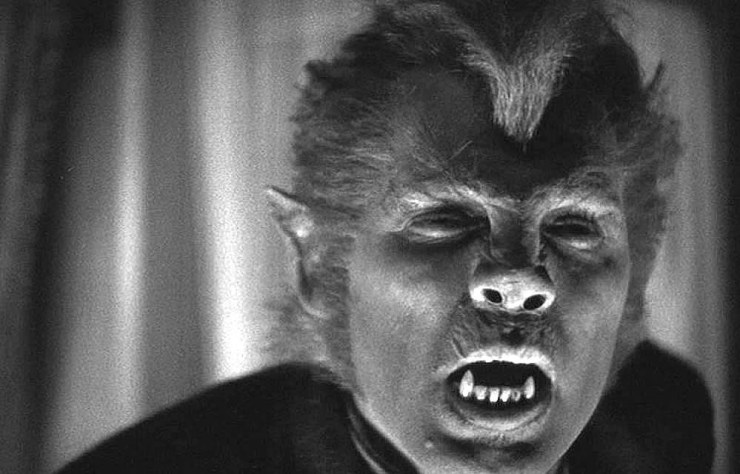
Though Jack Pierce’s makeup for Hull was originally more along the lines of what he would eventually use in The Wolf Man, the filmmakers opted for a more minimal look as to not obscure the star’s face too much. The final makeup is certainly not as iconic as the Chaney look but remains an effective makeup and I may be in the minority here, but I believe the transformations in Werewolf of London top those of its more famous cousin. The first is the best known, a tracking shot in which we see Glendon transform more and more as he passes pillars, and is emblematic of the film’s innovative use of combining makeup and visual effects. In most of the later Universal werewolf films, lap dissolves are used to transform a stationary actor, usually Lon Chaney, Jr. The lap dissolves are still present here but are combined with movement by the camera and the actor. Though the use of process shots and opticals is clear to modern eyes, the illusion of transformation is greatly enhanced when combined with something as simple as these movements.
The true strength of the film, however, is the script. Like Curt Siodmak for The Wolf Man, John Colton had a great deal of leeway available to him to create a lore for the werewolf film. Most werewolf folklore was sparse with few defined “rules” and the smattering of films made before 1935 usually had a psychological rather than supernatural explanation. Really the only familiar werewolf elements in Werewolf of London are a man who becomes part beast and the full moon. Just about everything else is unique to this specific telling. There is a different approach to transformation than most werewolf films in that Glendon retains his consciousness when he changes. As Yogami tells him, “the werewolf is neither man nor wolf but a satanic creature, with the worst qualities of both.” So, Glendon is something of a Jekyll and Hyde character yielding to the basest elements of human nature. According to a book Glendon studies “the werewolf must kill at least one human being each night of the full moon or become permanently afflicted.” The mariphasa works as a kind of antidote to lycanthropy and can be used to keep the transformation at bay, but it is not a cure. Yogami also warns that “the werewolf instinctively seeks to kill the thing it loves best,” ostensibly in Glendon’s case, his wife Lisa, though the film itself calls this into question.
Not only does the screenplay at least attempt to supply the wit and humor of the Whale films, and often succeeds, it layers in theme and subtext that make it profoundly relevant then and now. Like Bride of Frankenstein the same year, there is a clear queer subtext to the film that I, as a straight, cis male, feel very unequipped to discuss meaningfully, but I will make just a few comments. The attraction between Glendon and Yogami is clear. Upon meeting at his home, Yogami tells Glendon that they have met before “in the dark,” implying the secret nature of their relationship, as though they are both closeted gay men. “Lycanthrophobia” as Yogami calls their condition, is a shared secret between the two men who struggle to fit into the high society circles that they often must deal in. It is also clear that Glendon has very little interest in his wife Lisa, though he does love her deeply. As the film goes on and his transformations take hold, he practically pushes her into the arms of her former fiancé Paul Ames as he goes about his work.
As compelling as this subtext is, my own attachment to the film has to do with a very universal issue—turning forty. For many, myself included, something about that number makes people go a little crazy. The underlying fear is the thought “I have lived half my life and what do I have to show for it?” and related to that “There are so many things I thought I would have accomplished by now.” This is really where the film begins, with Glendon finding the fabled mariphasa lupina lumina flower in Tibet that responds to the light of the moon rather than the sun. Star Trek fans will recognize “Tibet” in this film as the Vasquez Rocks in Southern California, where Captain Kirk faced off against the Gorn in the episode “Arena.” His finding of the flower seems to indicate a culmination, but instead it triggers a huge life change as he is bitten by a werewolf on the arm. When he returns home, he throws himself into his research of the mariphasa, ignoring practically everything else in his life including his wife and friends. His work becomes his mistress, demanding every ounce of his energy.

For me, my discovery that became an obsession was fitness. I spent hours at the gym, calculated my food intake with almost neurotic precision, and became intent on transforming my body to the detriment of practically everything else. Now, moderation in all this would have been a good thing, but I really went down the rabbit hole. Perhaps worst of all, I found myself doing it because I was trying to impress people, or rather a specific person, rather than for the benefit of better health. In the beginning, I intended to improve my health to increase my ability to do things with my family, be a more energetic teacher, and increase my chances of living a long and robust life. Ironically, all of that suffered because of my self-centered motivations. Like Glendon, I became increasingly isolated without even realizing it and when things didn’t go as planned, I could become downright beastly, transforming into something I eventually realized I didn’t much like.
Being well past that particular stage of my life, I am happy to say, I can view it with clear eyes. Fortunately for me, relationships have been mended and are in fact better than ever. I discovered balance in regards to health and fitness, reaping the positives of focus while steering far clear of obsessive behaviors, minimizing the negatives that were harmful to myself and others. I discovered new avenues of expression, the greatest being a newfound love of writing which has yielded many rewards and an unexpected new outlet. So, in a way, if you’re reading this, you have been part of this renewed and vastly improved outlook on life. In other words, I was able to tame the beast. Werewolf of London is the tragedy of a man who could not find a way to do that. Perhaps there is a beast within us all. Something that seeks to destroy all that we love. It demands isolation and secrecy. The antidote, its mariphasa, is connection and truth.
In Bride of Frankenstein, Dr. Pretorius, played by the inimitable Ernest Thesiger, raises his glass and proposes a toast to Colin Clive’s Henry Frankenstein—“to a new world of Gods and Monsters.” I invite you to join me in exploring this world, focusing on horror films from the dawn of the Universal Monster movies in 1931 to the collapse of the studio system and the rise of the new Hollywood rebels in the late 1960’s. With this period as our focus, and occasional ventures beyond, we will explore this magnificent world of classic horror. So, I raise my glass to you and invite you to join me in the toast.
The post Taming the Beast: Learning to Love ‘Werewolf of London’ appeared first on Bloody Disgusting!.
A woman ghosted by her charming dating app suitor refuses to let go of their relationship in The Dead Thing.
Preview the erotic thriller in the new trailer and images below, ahead of its Shudder release on February 14.
Blu Hunt (The New Mutants) and Ben Smith-Petersen (Mad Max: Fury Road) star with John Karna (“Scream”), Katherine Hughes (Me and Earl and the Dying Girl), and Brennan Mejia (“Power Rangers Dino Charge”).
The indie film marks the solo feature directorial debut of Elric Kane, co-host of Fangoria’s Colors of the Dark podcast, who wrote the script with Webb Wilcoxen.
In the movie, “Alex is trapped in a downward spiral of shallow hookups and tepid connections, but she is caught off guard when her dating app swipes lead her into the arms of a mysterious, charming young man Kyle. Despite their passionate night, when the sun rises, the mystery man is nowhere to be found.
“Alex then sets out to find the one person who made her feel alive. Through her investigation, she reconnects with Kyle, but also digs up a ghastly supernatural secret. The pair quickly descend into a whirlwind of obsession, dependence, lust, and infatuation that has grave consequences. ”
Joe Lipsett wrote in his review out of the film’s Fantasia premiere, “The Dead Thing is a bold, stylish film and audiences willing to invest in a toxic relationship between two actors with great sexual chemistry and tinged with ghostly phenomena will find plenty to appreciate.”


The post ‘The Dead Thing’ Trailer – Dating Can Be Deadly in Shudder’s Erotic Thriller appeared first on Bloody Disgusting!.
Director Sam Raimi is headed back into the horror genre with his next movie Send Help, and Deadline reports that Dylan O’Brien (Love and Monsters) has joined the cast.
O’Brien is fresh off playing Dan Aykroyd in Jason Reitman’s Saturday Night, an immersive look at the 90 minutes preceding the first ever episode of “Saturday Night Live,” and he also starred in last year’s M. Night Shyamalan-produced thriller Caddo Lake for streamer Max.
Rachel McAdams (Doctor Strange in the Multiverse of Madness) will also star.
Deadline details the upcoming 20th Century Studios project, “The film is a survival horror thriller about two colleagues (O’Brien and McAdams) who become stranded on a deserted island, the only survivors of a plane crash. On the island, they must overcome past grievances and work together to survive, but ultimately, it’s a battle of wills and wits to make it out alive.”
Damian Shannon & Mark Swift (Freddy vs. Jason, Friday the 13th 2009) wrote the screenplay. Raimi will produce alongside Zainab Azizi under Raimi Productions.
Sam Raimi most recently directed Marvel’s horror-heavy sequel Doctor Strange in the Multiverse of Madness, but he hasn’t directed a full-on horror movie of his own since Drag Me to Hell. That film was also a return to horror for Raimi back in 2009, and it similarly came in the wake of Raimi putting his own stamp on superhero cinema with his three Spider-Man movies.

Pictured: Rachel McAdams in ‘Red Eye’
The post ‘Send Help’ – Rachel McAdams & Dylan O’Brien Starring in Director Sam Raimi’s Horror Return appeared first on Bloody Disgusting!.
