The House of the Dragon season 2 dragonriders storyline raises some big questions about Laenor Velaryon.

News of all things scary
Fritz Lang’s M is the greatest serial killer movie ever made. Of course, there have been dozens, even hundreds, of films on the subject with various innovations and evolutions along the way from the early days of cinema all the way to the most recent twists on the subgenre in MaXXXine and Longlegs. A few can be counted among the greatest films of all time regardless of genre, but all of them owe at least some measure of influence to M. Whether it is the best or not is a matter of opinion, but there is no real argument regarding its greatness. M is a true cinematic masterpiece, a touchstone of innovation in image, sound, performance, structure, editing, writing, and practically every other element of filmmaking. But as with most great films, audiences have been drawn to it again and again over the past ninety-plus years because of its story and characters and the unique ways that M presents them.
M was inspired by real events and current concerns of Germany’s Weimar Republic, the government that ruled the nation between the end of World War I in 1918 and the rise to power of Hitler and the Nazi Party in 1933. During this time, there was unprecedented inflation, unemployment, economic depression, and political strife. It also proved to be a fertile time for the arts with some of the greatest stage and screen art of the early 20th century flourishing throughout the era. F.W. Murnau, G.W. Pabst, Robert Weine, Paul Wegener, Ernst Lubitsch, Josef von Sternberg, and more all thrived behind the camera in these years and Bertolt Brecht was a force of nature for the stage. The era also produced an unprecedented number of “Sex Murderers” as they were most often called at the time. Lang wanted to make the film as a call for society to protect its people, especially children, from such fiends while also exploring the psychological drive of these killers, the pros and cons of the death penalty, and other political and social concerns. Written by Lang and his then-wife Thea von Harbou, the film explores various dimensions of the problem at hand by splitting the narrative three ways with one character epitomizing each aspect of the story being told—the murderer, the official police investigation, and the underworld manhunt.
The introduction of the killer is unforgettable. A young girl, Elsie Beckmann (Inge Landgut) bounces a ball against a reward notice about the murderer that has been terrorizing the town. The silhouette of a man in a hat moves into frame, casting its shadow over the word Mörder (Murderer). Throughout the sequence to follow, the audience is not shown the murderer’s face but is introduced to his quirk of whistling a few bars of Edvard Grieg’s “In the Hall of the Mountain King,” a familiar tune that serves as the killer’s recurring leitmotif (think “The Imperial March” for Darth Vader) but also leads to his undoing. The tune, which is a prime example of M’s innovative use of sound, is brought back time and again throughout the film and serves to indicate that the killer’s dark compulsion has been awakened. It is heard a second time as he writes a letter to the police and press confirming that he is “not done yet!” with his deeds.
And how heinous his deeds are. They are so sickening, in fact, that none of the murders are shown on screen. Lang wrote of this several years later:
“Because of the loathsome nature of the crime M dealt with, there was a problem of how to present such a crime so that it would not sicken the audience, yet would have full emotional impact. That is why I only gave hints—the rolling ball, the balloon caught in the wires, after being released from a little hand. Thus I make the audience an integral part in the creation of this special scene by forcing each individual member of the audience to create the gruesome details of the murder according to his personal imagination.”
And there is no doubt that that “personal imagination” will leave most viewers not only sickened by the killer’s actions but perhaps a little with themselves in the process. This serves as a form of implicating the audience in the crime as would be so effectively done in films like Peeping Tom (1960) and Man Bites Dog (1992) with the filmmakers practically daring us to be entertained by what we are watching.

When the killer’s face is finally shown, he cherub-cheeked, short and stocky, with large, expressive eyes. He manipulates his face with his fingers in a mirror to make himself look like the monster the newspapers describe him to be. This is entirely the point—the murderers are among us (the film’s original title was Mörder unter uns—Murderers Among Us) and pass by unnoticed. They are ordinary, even amiable in our eyes. Even worse, they are us. Quoted in the August 12, 1947 edition of the Los Angeles Herald Express Lang said, “Gradually, and at times reluctantly, I have come to the conclusion that every human mind harbours a latent compulsion to murder…” and that idea is deeply expressed in M and in the casting of Peter Lorre as the killer Hans Beckert. That there is nothing immediately monstrous about him is disarming. This was a philosophy shared by Alfred Hitchcock who insisted on casting attractive men as murderers in his films as they would much more easily be able to gain the trust of their victims. Joseph Cotten as Uncle Charlie in Shadow of a Doubt (1943) is a perfect example of this. It has also proven, more often than not, to be the case in the real world. Serial killers rarely come in the guise of monstrosity but are instead often amiable, charming, and even attractive, upstanding members of society.
Many have argued that we are drawn by the filmmakers to feel sympathy for Beckert. To me it is more complicated than that. At no point are the characters in the film, including Beckert himself, or the viewers anything but repulsed by his acts. Instead, we are lured through Lorre’s performance and final speech to an understanding that there are mechanisms beyond his control that compel his actions. Traumas experienced in childhood, during the War, or in the societal turmoil following it could have sent him into the state we find him in the film. Perhaps we are drawn to see that he is not exactly a villain but a social victim. This is the kind of argument is raised again in movies like Henry: Portrait of a Serial Killer (1986) and Monster (2003) in which the killers’ evil acts are in part a product of being discarded by society. Then again, perhaps this does not apply after all. As the decades go by and more is learned about psychology, Beckert’s pleas could all be a façade constructed by an observant psychopath who feels neither empathy for his victims nor remorse for his actions. Beckert’s defense speech in the climactic kangaroo court sequence is compelling but may well be an act, the kind of mask of humanity that Dexter Morgan (Michael C. Hall) wore to hide his Dark Passenger.

Beckert’s point of view is intercut with two simultaneous investigations. The official pursuit is led by Inspector Lohmann (Otto Wernicke), based on real life Berlin police inspector Ernst Gennat. According to the terrific book Behind the Horror: True Stories that Inspired Horror Movies by Dr. Lee Mellor, Gennat coined the term “Serienmörder” which gradually found its way into use as “Serial Killer” in the United States a few decades later to describe to “new” brand of elusive killer that began terrorizing parts of the country in the 1960s and 70s. Lohmann’s physical appearance is not far removed from Beckert’s. He is also a somewhat short and stocky man in a hat and long coat, but Lohmann has an air of maturity, self-control, and authority that Beckert lacks. The police investigation is meticulous, characterized by procedure and careful detective work. There is a heightened police presence in the streets and Lohmann must balance the investigative work of his force with the political backlash he faces from the fact that the killer is still at large.
The Lohmann character represents an intellectual approach to the situation but does little of the leg work himself, not unlike the Jack Crawford (Scott Glenn) character in The Silence of the Lambs (1991). He puts the pieces together but is several steps behind the killer and at least one step behind the “unofficial” investigation which is going on simultaneously to his, that of the criminal underworld and the ordinary people on the street. In fact, Beckert is found out by a blind balloon salesman who recognizes his whistling of “In the Hall of the Mountain King” from when he bought a balloon for Elsie Beckmann. The peddler sends someone after Beckert who marks him with a chalk “M” so that the townspeople and the criminals organizing them can pursue and capture him.
The underworld manhunt is represented by Schränker (Gustaf Gründgens) whose appearance is much more like we would expect the killer to look than Beckert. He wears a long black leather coat and gloves, carries a cane, and a bowler pulled low over his eyes. His appearance, criminal behavior, and brutal beliefs about the death penalty seem in hindsight to be Lang’s commentary on the rising Nazi Party. In fact, later in the film, we learn that Schränker is indeed a killer, though of a different breed, adding a dimension of hypocrisy to his character. We see in him an element of the thread from the Expressionist movement, where Fritz Lang got his start, that winds its way through M. Schränker would be at home in the world of Dr. Mabuse or assisting Rotwang from Metropolis (1927). His motives for finding the killer are not entirely pure, however. He is less concerned about children being murdered than the fact that the increased police presence in the city has taken a bite out of his ill-gotten profits.

Lang uses the multiple viewpoints to great effect during the manhunt and kangaroo court sequences of the film, easily shifting allegiances from Beckert, to criminal pursuers, to police, and back again. We cringe when Beckert breaks his knife in a lock, thrill that the safecrackers are using their techniques to track the killer, and laugh when the police catch the burglar. But it is the kangaroo court sequence that carries M’s greatest poignancy. Here the frustrations of a society are aired, and the discussion has changed little in the nine decades since it was first presented in the film. As Lang put it, “In M I was not only interested in finding out why someone is driven to a crime as horrible as child murder, but also to discuss the pros and cons of capital punishment.” And the film compellingly lays out these arguments and examinations. It allows us a window into the mind of a killer when Beckert is allowed to speak and declare that he is compelled by a force beyond his control to kill. His advocate states that he cannot be put to death because he does not have control of his faculties. Others declare his compulsion to be the very reason why he should be put to death rather than allowed to plea insanity and live off the government dime in an institution for the rest of his life.
In the film, the final word comes from the mother of a murdered child who asks the audience directly if putting Beckert to death will really make any difference at all because it will in no way bring hers, not the other murdered children, back to them and demands that all of us are responsible for keeping closer watch over the children. This is not a mere personal warning but an indictment of a system that forces adults into a state of constant labor that takes them away from their children. On how exactly to make that happen, the film is silent. This is a major part of the power of M. The purpose of great art is to present the truth as honestly and effectively as possible, not tell its audience how to feel about it. All these decades later, our killers have only become more brutal, our filmic depictions of them more graphic, our fascination with them more acute, but still so many of the questions presented in M remain unanswered.
In Bride of Frankenstein, Dr. Pretorius, played by the inimitable Ernest Thesiger, raises his glass and proposes a toast to Colin Clive’s Henry Frankenstein—“to a new world of Gods and Monsters.” I invite you to join me in exploring this world, focusing on horror films from the dawn of the Universal Monster movies in 1931 to the collapse of the studio system and the rise of the new Hollywood rebels in the late 1960’s. With this period as our focus, and occasional ventures beyond, we will explore this magnificent world of classic horror. So, I raise my glass to you and invite you to join me in the toast.
The post Killer Instincts: The Innovation and Influence of Fritz Lang’s ‘M’ appeared first on Bloody Disgusting!.
Horror returns to the box office with the release of M. Night Shyamalan’s latest movie this week, and it’s being joined by seven other horror movies in theaters and streaming at home.
Here’s all the new horror releasing July 29, 2024 – August 4, 2024!
For daily reminders about new horror releases, be sure to follow @HorrorCalendar.

Director Michael Sarnoski’s A Quiet Place: Day One just passed $250 million at the worldwide box office, and the prequel movie is now available on Digital at home.
Experience the day the world went quiet in the blockbuster hit A Quiet Place: Day One, arriving to buy or rent on Digital today (July 30) from Paramount Home Entertainment.
A three-movie collection including A Quiet Place, A Quiet Place: Part II and A Quiet Place: Day One is also be available to purchase on Digital platforms beginning today, July 30.
“When Samira (Lupita Nyong’o) returns home to New York City, her simple trip turns into a harrowing nightmare when mysterious creatures that hunt by sound attack. Accompanied by her cat Frodo and an unexpected ally (Joseph Quinn), Samira must embark on a perilous journey through the city that has suddenly gone silent, where the only rule is to stay quiet to stay alive. Djimon Hounsou and Alex Wolff also star in this intensely suspenseful thriller.”

From the writer of Shark Side of the Moon comes The Asylum’s Shark Warning, which first swam to limited theaters on July 26 before arriving on VOD outlets today, July 30.
In Shark Warning, “After 20 years, a man returns to the town where his brother was killed by a shark. But when it resurfaces and kills again, the man decides to hunt down the predator.”
Of course, the storyline is set into motion when a bunch of pesky humans commit the cardinal sin of shark attack movies, putting their own greed ahead of the safety of the town’s residents. Yup, it’s another low-budget Jaws. You already know what you’re getting from this one.
David Chokachi, Andrew J. Katers and Angela Cole star.
Jimmy Gadd directed Shark Warning, written by Ryan Ebert.

Escape Room meets Cube in Lionsgate’s new horror movie The Abandon, which first arrived in select theaters on July 19. Beginning today, the film is now available on VOD outlets.
Jonathan Rosenthal, Tamara Perry, and Regis Terencio star.
In the film, “Injured U.S. soldier Miles Willis awakens after witnessing a blinding white light from a battlefield in Iraq to discover he is trapped in a mysterious cube armed only with his combat gear. His dire situation escalates as the cube begins to change with violent shifts in gravity and the appearance of cryptic writing on the walls.
“As Miles begins to question his sanity, he finds a lifeline – a voice on the other end of his satellite phone who claims to be a prisoner in a similar space. As the walls close in, these two strangers must put their heads together if they are to outwit their captors and unlock this deadly puzzle.”
Jason Satterlund directed The Abandon.

A South Korean horror anthology featuring the works of Won-kyung Choi, Byeong-deock Jeon, Jisam, Jang-mi Kim, Gwang-Jin Lee, and Wally Seo, the SCREAMBOX Exclusive Body Parts is now streaming on SCREAMBOX and also available on VOD outlets.
In the film, “Si-kyung, the youngest reporter, infiltrates an unnamed religious group. Invited to a special ceremony, she witnesses strange things happening in the prayer house.
“Five sacrifices and five stories are offered by the people who desperately wait to be heard by their god. When the story is over, she too must make a sacrifice.”

A wildly unofficial sequel to the Charles Bronson movie 10 to Midnight from 1983, the upcoming werewolf film 12 to Midnight stars Bronson lookalike Robert Bronzi (Death Kiss).
The film comes to DirecTV and VOD outlets this Thursday, August 1.
UFC champion Tito Ortiz (Trauma Center, The Crow: Wicked Prayer), Daniel Roebuck (Rob Zombie’s The Munsters, the upcoming Terrifier 3), and Sadie Katz (Wrong
Turn 6: Last Resort) also star in 12 to Midnight.
The film concerns a detective, despondent after the murder of his wife and forced to resign, who is brought back to the force when a new string of murders seem connected to his wife’s and the killer appears to be taunting him. Only the killer may be superhuman…
12 to Midnight also stars Helene Udy (My Bloody Valentine), Evan Strand, Patrick Voss Davis, Juliet Biscotti, A.C. Bernardi, Tom Parnell, Sarah Cugini, Searra Sawka, Destiny Leilani Brown (Hell House LLC Origins: The Carmichael Manor), and Valerie Bittner.
Mark Savage (Purgatory Road, Bring Him Back Dead) directs from a screenplay by Joe Knetter (Blind), Jeff Miller (Ouija House), Tom Parnell, and Savage, based on a story by Miller.

Hammer Films returns to life with a new owner and a new slate of movies, and up first is the Eddie Izzard-starring Doctor Jekyll. It’s coming to U.S. theaters on VOD August 2.
Director Joe Stephenson, of acclaimed drama “Chicken” and feature documentary “McKellen: Playing the Part,” developed the new adaptation of the classic tale from Robert Louis Stevenson’s 1886 novella with first time writer Dan Kelly-Mulhern.
Doctor Jekyll focuses on a reclusive Nina Jekyll finding friendship with her newly hired help, Rob, played by rising star Scott Chambers, who must work together to prevent Hyde from destroying her life. The film is described as “a slow-burn gothic horror that delves into themes of duality, concocting a surprising mix of dark humor and flashes of camp within a twisted fairytale.”
Doctor Jekyll also stars Scott Chambers, Simon Callow, Lindsay Duncan, Jonathan Hyde, Morgan Watkins and Robyn Cara. Watch the official trailer from Hammer below.

A group of young friends staying at an Airbnb are picked off one by one by a killer whose elaborate murder set pieces are inspired by the seven deadly sins in our latest production, #AMFAD: All My Friends Are Dead, which comes to select theaters and VOD August 2.
The slasher comes from Saw IV-3D writer and The Collector director Marcus Dunstan.
“In the horror thriller #AMFAD: All My Friends Are Dead, a group of college friends rent an Airbnb for the biggest music festival of the year. A weekend of partying quickly takes a turn, as the group is murdered one by one, according to their sin.”
Jade Pettyjohn, Jennifer Ens, Ali Fumiko Whitney, Michaella Russell, Julian Haig, Justin Derickson, Cardi Wong and Jack Doupe-Smith star with singer JoJo Siwa.

Take your seats. The show is about to begin. M. Night Shyamalan’s Trap, the filmmaker’s sixteenth movie, comes to theaters from Warner Bros. this Friday, August 2.
Saleka Shyamalan stars in the new thriller as fictional pop star Lady Raven.
In the upcoming thriller also starring Josh Hartnett, “A father and teen daughter attend a pop concert, where they realize they’re at the center of a dark and sinister event.”
Hartnett had recently described the mysterious film as “very bizarre” and “very dark.”
According to IMDb, the cast for Trap also includes Hayley Mills, Marnie McPhail, Vanessa Smythe, Saleka Shyamalan, Scott Ian MacDougall, Kristi Woods, and Cali Lorella.
Trap is the first film Shyamalan has made under his new deal with Warner Bros., which has been described as a “multi-year first-look directing and producing agreement.”
The post 8 New Horror Movies Releasing This Week Including Shyamalan’s ‘Trap’ appeared first on Bloody Disgusting!.
Bleecker Street’s psychological thriller Slingshot has debuted its official trailer this afternoon, giving us a peek at psychological terror and even a nasty bit of body horror in outer space.
Slingshot will release in theaters nationwide August 30, 2024.
Watch the official trailer below.
Casey Affleck (Manchester by the Sea, A Ghost Story) and Laurence Fishburne (The Matrix, John Wick) star alongside Emily Beecham (Daphne, Little Joe), Tomer Capone (“The Boys,” One Week and a Day), and David Morrissey (“The Walking Dead”).
The film is directed by Mikael Håfström (The Rite, 1408, Evil) and written by R. Scott Adams (Donner Pass) and Nathan Parker (Moon, Equals).
“Slingshot follows an elite trio of astronauts aboard a years-long, possibly compromised mission to Saturn’s moon Titan. As the team gears up for a highly dangerous slingshot maneuver that will either catapult them to Titan or into deep space, it becomes increasingly difficult for one astronaut to maintain his grip on reality.”

The post ‘Slingshot’ – The Director of ‘1408’ Finds Terror in Outer Space This August [Trailer] appeared first on Bloody Disgusting!.
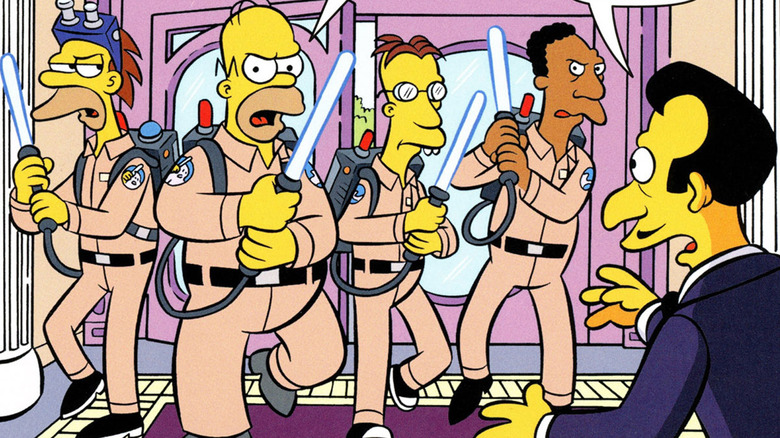
Religious horror anthology Body Parts has made its sacrifice on SCREAMBOX, now streaming on the Bloody Disgusting-powered horror service.
The South Korean film follows a young reporter to a mysterious ceremony in which five stories are offered by people who desperately wait to be heard by their god.
Fans of horror anthologies will love Body Parts, not to mention the handful of other anthologies on SCREAMBOX including CreepyPasta, HeBGB TV, Story Game, Sinphony, Theatre Bizarre, and Vietnamese Horror Story!
Start screaming now with SCREAMBOX on iOS, Android, Apple TV, Prime Video, Roku, YouTube TV, Samsung, Comcast, Cox, and Screambox.com.


The post ‘Body Parts’ Religious Horror Anthology Now on Screambox! [Trailer] appeared first on Bloody Disgusting!.